 Indietro
Chemistry of Life: Water, Biomolecules, and Macromolecular Structure
Guida di studio - Note intelligenti
 Appunti personalizzati basati sui tuoi materiali, ampliati con definizioni chiave, esempi e contesto.
Chemistry of Life
Properties of Water
Water is essential for life due to its unique chemical properties, which arise from its molecular structure and the interactions between water molecules. These properties are fundamental to biological processes and the maintenance of life.
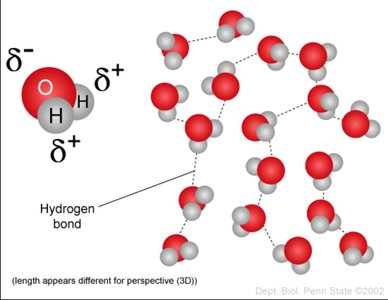
Polarity: Water molecules are polar because of the unequal sharing of electrons in the covalent bonds between hydrogen and oxygen atoms. This results in a partial positive charge on the hydrogen atoms and a partial negative charge on the oxygen atom.
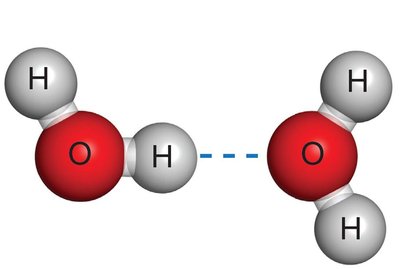
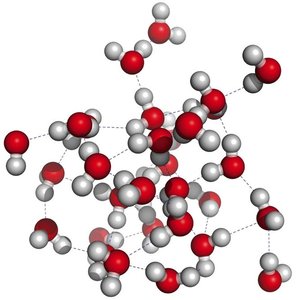
Hydrogen Bonding: The polarity of water allows it to form hydrogen bonds with other water molecules or similarly polar molecules. Hydrogen bonds are weak attractions between a highly electronegative atom (like oxygen) and a hydrogen atom in a separate polar covalent bond. These bonds do not form molecules but stabilize the structure of large biological molecules and give water its unique properties.
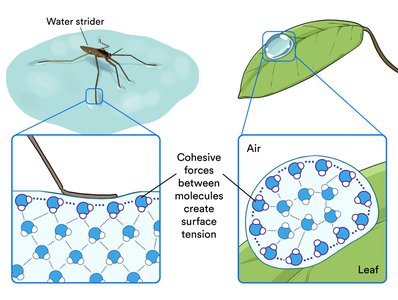
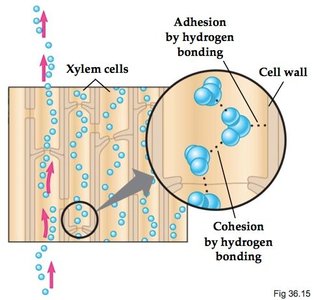
Cohesion: Water molecules stick to each other through hydrogen bonding, resulting in cohesion. This property provides surface tension and helps draw water up from plant roots.
Adhesion: Water molecules can also stick to other substances, such as plant cell walls, through adhesion.
Capillary Action: The combination of cohesion and adhesion allows water to travel up small tubes, which is vital for transporting water in plants.

Surface Tension and Soap
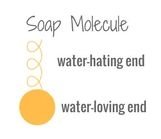
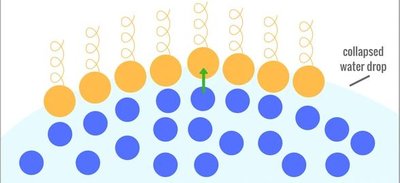
Surface tension is the result of cohesive forces between water molecules at the surface. Soap molecules disrupt these forces by having a hydrophobic end and a hydrophilic end, weakening the attraction between water molecules and reducing surface tension.
Hydrophobic End: Repels water.
Hydrophilic End: Attracts water.
Effect: Soap molecules align at the surface, causing water drops to collapse and reducing surface tension.
Water and Temperature Regulation
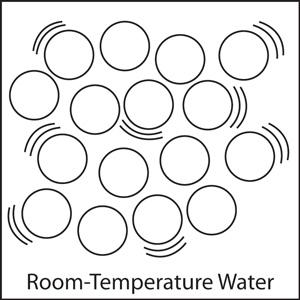
Water has a high specific heat and heat of vaporization, meaning it absorbs more heat before its temperature rises and takes longer to evaporate. This property is crucial for temperature regulation in organisms and environments.
Specific Heat: The amount of heat required to raise the temperature of water is higher than most other substances due to hydrogen bonding.
Evaporative Cooling: As water evaporates, it cools the surface, aiding in temperature regulation and homeostasis (e.g., sweating).
Ice Density: Ice is less dense than liquid water because hydrogen bonds form a lattice structure during freezing, causing ice to float and insulate aquatic environments.
Organic Molecules and Biomolecules
Carbon Chemistry
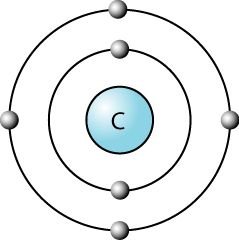
Carbon is the backbone of organic molecules due to its versatile bonding behavior. It can form up to four covalent bonds, allowing for a variety of structures such as rings and chains.
Organic Molecules: Molecules containing carbon, hydrogen, and oxygen.
Versatility: Carbon atoms can be assembled and remodeled into a wide range of organic compounds.
Macromolecules: Structure and Synthesis
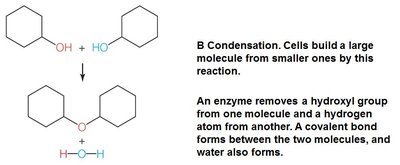
Macromolecules are large biological molecules built from smaller subunits called monomers. The process of building and breaking down macromolecules involves dehydration synthesis and hydrolysis.
Monomers: Small, repeatable subunits (e.g., amino acids, monosaccharides).
Polymers: Chains of monomers (e.g., proteins, polysaccharides).
Dehydration Synthesis: An enzyme removes a hydroxyl group from one molecule and a hydrogen atom from another, forming a covalent bond and releasing water.
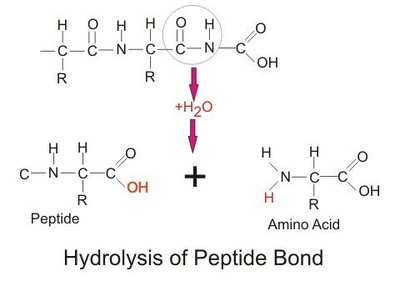
Hydrolysis: An enzyme adds a hydroxyl group and a hydrogen atom (from water) to split a large molecule into smaller ones.

Functional Groups
Functional groups are clusters of atoms that give molecules specific chemical properties, such as polarity or acidity. They play a key role in determining how molecules behave in biological systems.
Proteins
Amino Acids and Protein Structure
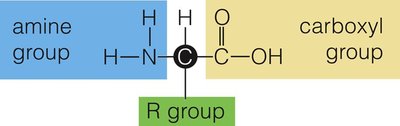
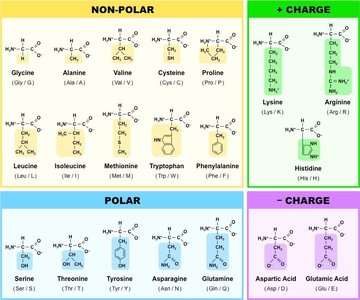
Proteins are the most diverse biomolecules, involved in nearly all cellular processes. They are polymers of amino acids, which have an amine group, a carboxyl group, and a variable R group that determines their properties.
Amino Acids: 20 types, each with unique R groups (hydrophobic, acidic, basic, polar).
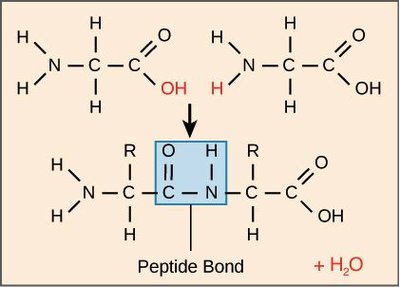
Polypeptides: Linear chains of amino acids linked by peptide bonds.
Peptide Bond: Formed between the amine group of one amino acid and the carboxyl group of another via dehydration synthesis.
Levels of Protein Structure
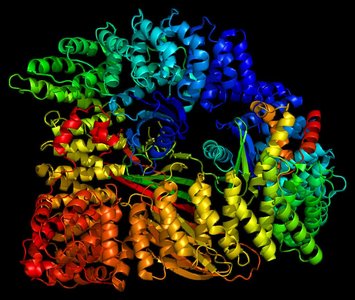
The function of a protein depends on its structure, which is organized into four levels:
Primary Structure: Unique sequence of amino acids in a polypeptide chain.
Secondary Structure: Folding of the polypeptide chain into alpha helices or beta sheets due to hydrogen bonding.
Tertiary Structure: Further folding based on interactions between R groups (hydrogen bonds, hydrophobic interactions, disulfide bridges, ionic bonds).
Quaternary Structure: Association of two or more polypeptide chains (e.g., hemoglobin).
Denaturation
Proteins can lose their functional shape due to changes in temperature, pH, salts, or detergents, a process called denaturation. Denatured proteins cannot perform their biological functions.
Enzymes
Enzyme Function and Regulation
Enzymes are proteins that speed up chemical reactions by lowering activation energy. They are substrate-specific and not consumed in the reaction. Several factors affect enzyme activity:
Enzyme and Substrate Concentration: Increasing enzyme or substrate concentration increases reaction rate until saturation is reached.
Environmental Factors: Temperature and pH affect enzyme activity. Each enzyme has an optimal range; deviations can decrease activity or cause denaturation.
Activators and Inhibitors: Activators stabilize the active form (coenzymes, cofactors), while inhibitors stabilize the inactive form (competitive, noncompetitive/allosteric, feedback inhibition).
Carbohydrates
Types and Functions
Carbohydrates are composed of carbon, hydrogen, and oxygen in a 1:2:1 ratio. They serve as energy sources, structural components, and energy storage/transport molecules.
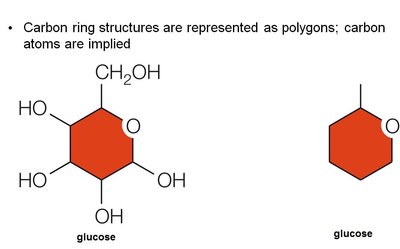
Monosaccharides: Simple sugars (e.g., glucose, fructose, galactose), soluble in water, used for energy and structure.
Disaccharides: Two monosaccharides joined together (oligosaccharides).
Polysaccharides: Complex carbohydrates with many monomers (e.g., cellulose, chitin, starch, glycogen), can be branched or straight chains.
Lipids
Types and Functions
Lipids are nonpolar, hydrophobic molecules that function as long-term energy storage and form the structural foundation of cell membranes.
Fatty Acids: Organic compounds with a carboxyl group and hydrocarbon tail.
Saturated Fatty Acids: Single bonds, flexible, solid at room temperature (animal fats).
Unsaturated Fatty Acids: One or more double bonds, bent tails, liquid at room temperature (vegetable oils).
Fats: Lipids with one, two, or three fatty acids bonded to glycerol (triglycerides, phospholipids).
Waxes: Complex lipids with long fatty acid tails bonded to alcohols or carbon rings, water-resistant.
Steroids: Lipids with a rigid backbone of four carbon rings, no fatty acid tails (cholesterol, hormones).
Nucleic Acids
Structure and Function
Nucleic acids (DNA and RNA) are polymers of nucleotides, which consist of a phosphate group, a 5-carbon sugar, and a nitrogen base. DNA is antiparallel, with complementary strands running in opposite directions (5' to 3' and 3' to 5').
Phosphate Group: Negatively charged, links nucleotides.
Deoxyribose Sugar: 5-carbon sugar, positions for bonding.
Nitrogen Bases: Four types (A, T, C, G), base pairing rules (A-T, G-C).
Hydrogen Bonds: Hold bases together (A-T: 2 bonds, G-C: 3 bonds).
Phosphodiester Bonds: Covalent bonds holding nucleotides together at the backbone.
Base Pairing: Pyrimidines (T, C) pair with purines (A, G).
DNA vs. RNA
DNA: Deoxyribose sugar, double-stranded, bases A, T, C, G.
RNA: Ribose sugar, single-stranded, bases A, U, C, G.
Additional info: These notes cover the chemical context of life, focusing on water, carbon chemistry, macromolecules, and their biological significance, directly relevant to General Biology chapters 2, 3, and 5.
