 Indietro
Lecture 24 (Unit 2)-- Chromatin Structure and Epigenetics: Mechanisms and Biological Implications
Guida di studio - Note intelligenti
 Appunti personalizzati basati sui tuoi materiali, ampliati con definizioni chiave, esempi e contesto.
Chromatin Structure and Organization
Levels of Chromatin Structure
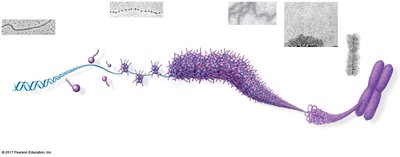
Chromatin is the complex of DNA and proteins that forms eukaryotic chromosomes. Its structure is highly organized and hierarchical, allowing for efficient packaging of DNA and regulation of gene expression.
DNA Double Helix (2 nm): The fundamental structure of genetic material.
Nucleosome (10 nm): DNA wraps twice around a histone octamer, forming the basic unit of chromatin.
30-nm Fiber: Nucleosomes are further coiled into a thicker fiber.
Looped Domains (300 nm): The 30-nm fiber forms loops attached to a protein scaffold.
Replicated Chromosome (1,400 nm): The highest level of compaction, visible during cell division.
Nucleosome Structure
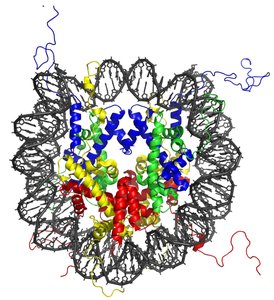
The nucleosome consists of DNA wrapped around a histone octamer (two copies each of H2A, H2B, H3, and H4). Histone tails protrude from the nucleosome and are sites for post-translational modifications.
Histone Tails: Amino-terminal regions that can be chemically modified.
Globular Domains: Core regions of histones involved in nucleosome assembly.
Epigenetics and Chromatin Modifications
Definition and Importance of Epigenetics
Epigenetics refers to heritable changes in phenotype or gene expression that do not involve alterations in the DNA sequence. These changes are primarily mediated by chromatin modifications, including DNA methylation and histone modifications.
Key Mechanisms: DNA methylation, histone acetylation, and histone methylation.
Heritability: Epigenetic marks can be transmitted through cell division, affecting gene expression in progeny cells.
DNA Methylation
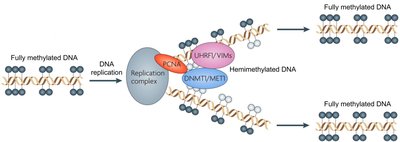
DNA methylation involves the addition of a methyl group to the 5-position of cytosine, primarily at CG dinucleotides. This modification is catalyzed by DNA methyltransferases and is crucial for gene silencing, especially in repetitive DNA and transposable elements.
De Novo Methylation: Establishment of new methylation patterns (e.g., by DNMT3 in mammals, siRNA-directed in plants).
Maintenance Methylation: Preservation of methylation patterns during DNA replication (e.g., by DNMT1 in animals, MET1 in plants).
Symmetrical Methylation: Both DNA strands are methylated at CG sites.
Histone Modifications
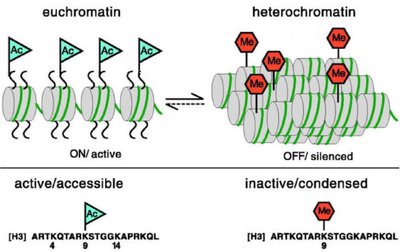
Histone proteins, especially the tails of histone H3, are subject to various post-translational modifications that influence chromatin structure and gene expression.
Acetylation (e.g., H3K9ac): Addition of acetyl groups by histone acetyltransferases (HATs) opens chromatin (euchromatin), making DNA accessible for transcription.
Deacetylation: Removal of acetyl groups by histone deacetylases (HDACs) compacts chromatin (heterochromatin), repressing transcription.
Methylation (e.g., H3K9me, H3K27me3): Addition of methyl groups by histone methyltransferases is associated with gene silencing and heterochromatin formation.
Chromatin States: Euchromatin vs. Heterochromatin
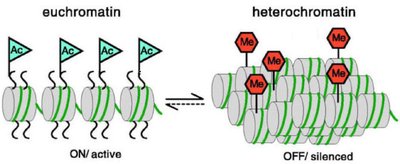
Chromatin exists in two primary states that influence gene expression:
Euchromatin: Loosely packed, transcriptionally active, enriched in acetylated histones.
Heterochromatin: Densely packed, transcriptionally silent, enriched in methylated DNA and histones.
Assaying Chromatin Structure: DNase Sensitivity
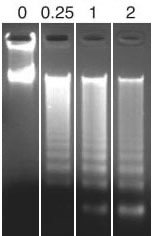
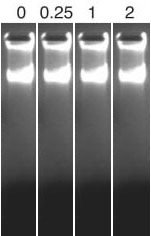
DNase I digestion assays are used to probe chromatin accessibility. Euchromatin is sensitive to DNase digestion, resulting in a ladder pattern on agarose gels, while heterochromatin is resistant.
DNase Sensitivity: Indicates open chromatin regions.
DNase Resistance: Indicates closed, compacted chromatin.
Reader, Writer, and Eraser Proteins
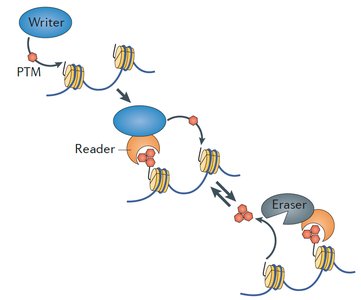
Chromatin modifications are regulated by three classes of proteins:
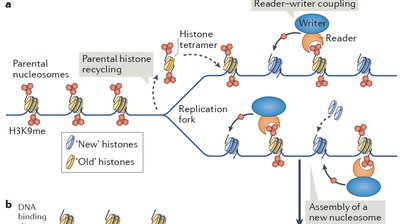
Writers: Enzymes that add modifications (e.g., methyltransferases, acetyltransferases).
Readers: Proteins that recognize and bind specific modifications.
Erasers: Enzymes that remove modifications (e.g., demethylases, deacetylases).
Maintenance of Histone Modifications
During DNA replication, parental nucleosomes are randomly distributed to daughter strands. Reader-writer complexes recognize old histone marks and re-establish them on new histones, maintaining chromatin states through a dispersive mechanism.
Dispersive Mechanism: Old and new histones are mixed on daughter strands, and modifications are copied to new histones.
Role of Small RNAs in Chromatin Modification
RNA-Directed DNA Methylation (RdDM) in Plants
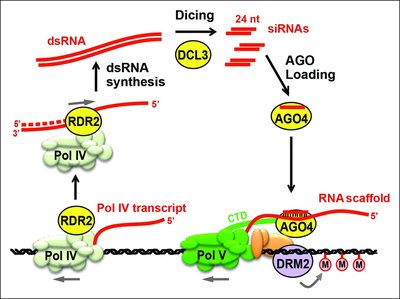
Small interfering RNAs (siRNAs) guide chromatin-modifying enzymes to specific genomic loci, particularly transposable elements, to induce de novo DNA methylation and heterochromatin formation.
siRNAs: Generated from double-stranded RNA precursors by Dicer-like enzymes.
RISC-like Complex: siRNAs are loaded onto Argonaute proteins, forming a complex that recruits DNA methyltransferases (e.g., DRM2 in plants).
Genome Defense: Silences transposable elements, maintaining genome stability.
Transposable Element Silencing and Genome Stability
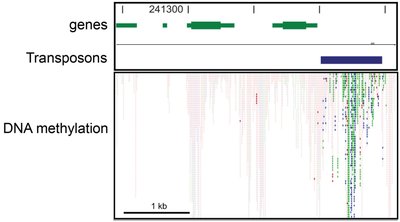
Transposable elements (TEs) are silenced by heterochromatin formation, preventing their transcription and movement. Mutations in DNA methylation pathways can reactivate TEs, leading to genome instability.
TE Silencing: Essential for protecting genome integrity.
Mutant Phenotypes: Loss of methylation leads to increased TE activity and new insertions.
Summary Table: Chromatin Modifications and Their Effects
Modification | Enzyme | Effect on Chromatin | Effect on Gene Expression |
|---|---|---|---|
DNA Methylation (5-methylcytosine) | DNA methyltransferase (DNMT) | Condenses chromatin (heterochromatin) | Gene silencing |
Histone Acetylation (e.g., H3K9ac) | Histone acetyltransferase (HAT) | Opens chromatin (euchromatin) | Gene activation |
Histone Deacetylation | Histone deacetylase (HDAC) | Condenses chromatin (heterochromatin) | Gene silencing |
Histone Methylation (e.g., H3K9me, H3K27me3) | Histone methyltransferase | Condenses chromatin (heterochromatin) | Gene silencing |
Histone Demethylation | Histone demethylase | Opens chromatin (euchromatin) | Gene activation |
Key Equations and Concepts
Symmetrical DNA Methylation:
Maintenance Methylation (Semi-conservative):
Histone Modification (Dispersive):
Conclusion
Chromatin structure and epigenetic modifications play a central role in regulating gene expression, maintaining genome stability, and enabling heritable changes in phenotype without altering the DNA sequence. Understanding these mechanisms is fundamental to modern biology and genetics.
