 Indietro
Chromosomal Basis of Inheritance and Exceptions to Mendelian Genetics
Guida di studio - Note intelligenti
 Appunti personalizzati basati sui tuoi materiali, ampliati con definizioni chiave, esempi e contesto.
Chapter 11: Mendelian Laws of Inheritance
Mendel’s Law of Segregation
The law of segregation states that the two alleles for a heritable character separate during gamete formation, ensuring each gamete receives only one allele. This principle explains the inheritance patterns observed in monohybrid crosses.
Key Point: Each parent contributes one allele to their offspring.
Example: In pea plants, the allele for purple flowers segregates from the allele for white flowers during gamete formation.
Mendel’s Law of Independent Assortment
This law states that each pair of alleles segregates independently of other pairs during gamete formation. It accounts for the genetic variation seen in dihybrid crosses.
Key Point: Genes located on different chromosomes are inherited independently.
Example: The inheritance of seed color and seed shape in peas occurs independently.
Exceptions to Mendelian Patterns
Inheritance may deviate from simple Mendelian patterns when alleles are not completely dominant or recessive, when a gene has more than two alleles, or when a gene produces multiple phenotypes.
Key Point: Incomplete dominance, codominance, and multiple alleles are examples of non-Mendelian inheritance.
Example: Blood type in humans is determined by three alleles (A, B, O).
Chapter 12: Chromosomal Basis of Inheritance
Chromosome Theory of Inheritance
Mendelian inheritance has its physical basis in the behavior of chromosomes. Early geneticists, including Thomas Hunt Morgan, provided evidence that genes are located on chromosomes.
Key Point: Chromosomes carry Mendel’s “hereditary units.”
Example: Morgan’s experiments with Drosophila melanogaster (fruit flies) linked specific traits to specific chromosomes.
Fruit Flies as Model Organisms
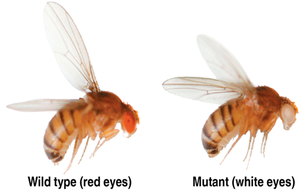
Fruit flies are ideal for genetic studies due to their short generation time, high offspring number, and simple chromosome structure.
Key Point: Wild type (red eyes) and mutant (white eyes) phenotypes were used to study inheritance.
Correlating Gene Behavior with Chromosome Behavior
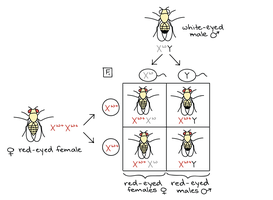
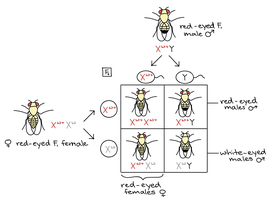
Morgan’s crosses demonstrated that the white-eyed allele in fruit flies is located on the X chromosome, supporting the chromosome theory of inheritance.
Key Point: Sex-linked traits are inherited differently in males and females.
Sex Chromosomes and Sex Determination
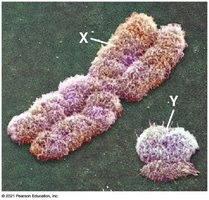
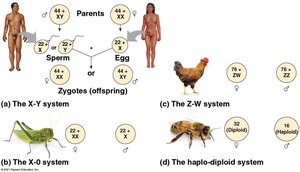
Humans and other mammals have two types of sex chromosomes: X and Y. The X-Y system is one of several chromosomal sex determination systems.
Key Point: The SRY gene on the Y chromosome determines male development.
Example: Other systems include X-0 (in insects), Z-W (in birds), and haplo-diploid (in bees).
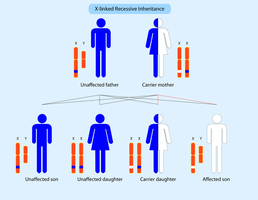
Inheritance of X-Linked Genes
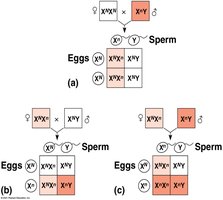
X-linked genes follow specific inheritance patterns. Females require two copies of a recessive allele to express a trait, while males need only one.
Key Point: X-linked recessive disorders are more common in males.
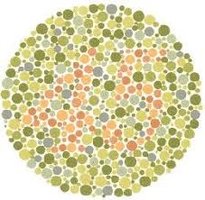
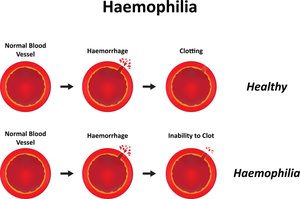
Example: Color blindness, Duchenne muscular dystrophy, and hemophilia are X-linked disorders.
X Inactivation in Female Mammals
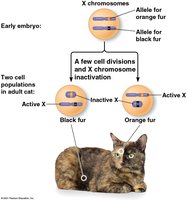
In female mammals, one X chromosome is randomly inactivated, forming a Barr body. This results in mosaic expression of X-linked genes.
Key Point: X inactivation ensures dosage compensation between males and females.
Example: Tortoiseshell cats display mosaic fur coloration due to X inactivation.
Linked Genes and Genetic Recombination
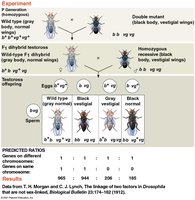
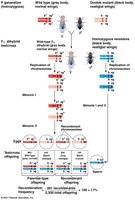
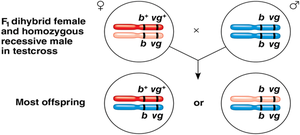
Genes located close together on the same chromosome are called linked genes and tend to be inherited together. Morgan’s experiments with fruit flies demonstrated genetic linkage and recombination.
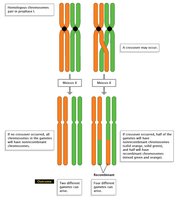
Key Point: Genetic recombination produces offspring with new combinations of traits.
Recombination of Linked Genes: Crossing Over
Crossing over during meiosis breaks the physical connection between linked genes, allowing for genetic recombination.
Key Point: The frequency of recombination depends on the distance between genes.
Mapping the Distance Between Genes Using Recombination Data
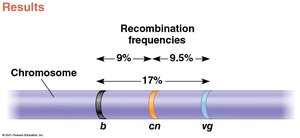
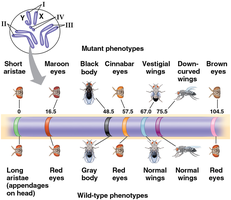
Genetic maps, or linkage maps, are constructed based on recombination frequencies. One map unit equals a 1% recombination frequency.
Key Point: The farther apart two genes are, the higher the probability of crossing over.
Example: Sturtevant’s linkage map of Drosophila chromosomes.
Alterations of Chromosome Number: Aneuploidy and Polyploidy
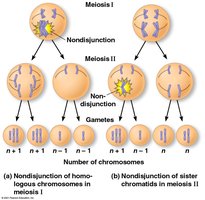
Abnormal chromosome number results from nondisjunction during meiosis. Aneuploidy refers to the presence of an abnormal number of chromosomes, while polyploidy involves more than two complete sets.
Key Point: Aneuploidy can cause genetic disorders such as Down syndrome, Klinefelter syndrome, and Turner syndrome.
Example: Down syndrome results from trisomy 21.
Alterations of Chromosome Structure
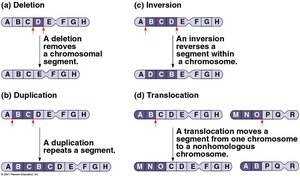
Chromosome breakage can lead to deletion, duplication, inversion, or translocation. These structural changes can cause genetic disorders.
Key Point: Each type of alteration affects gene expression and inheritance differently.
Type | Description |
|---|---|
Deletion | Removes a chromosomal segment |
Duplication | Repeats a segment |
Inversion | Reverses orientation of a segment |
Translocation | Moves a segment to another chromosome |
Inheritance of Organelle Genes
Extranuclear genes are found in mitochondria and chloroplasts. These genes are inherited maternally, as the zygote’s cytoplasm comes from the egg.
Key Point: Mutations in mitochondrial genes can cause diseases affecting energy production.
Example: Mitochondrial myopathy affects muscular and nervous systems.
Summary of Key Concepts
Mendelian inheritance is based on chromosome behavior.
Sex-linked genes exhibit unique inheritance patterns.
X inactivation in females leads to mosaic gene expression.
Linked genes are inherited together unless separated by crossing over.
Genetic maps are constructed using recombination frequencies.
Chromosomal alterations can cause genetic disorders.
Organelle genes are inherited maternally.
