 Indietro
Chapter 15
Guida di studio - Note intelligenti
 Appunti personalizzati basati sui tuoi materiali, ampliati con definizioni chiave, esempi e contesto.
Chromosome Theory of Inheritance
Physical Basis of Mendelian Inheritance
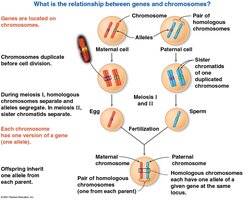
The chromosome theory of inheritance states that genes are located on chromosomes, and the behavior of chromosomes during meiosis accounts for Mendel’s laws of segregation and independent assortment.
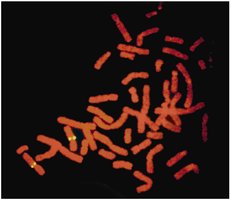
Chromosomes are structures within cells that carry genetic information in the form of genes.
Genes are segments of DNA located on chromosomes.
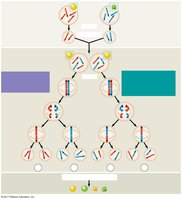
During meiosis, chromosomes duplicate, segregate, and assort independently, leading to genetic variation.
Morgan’s experiments with Drosophila melanogaster (fruit flies) provided evidence for this theory.
Fruit flies are ideal for genetic studies due to their short generation time, high offspring number, and only four pairs of chromosomes.
Wild Type and Mutant Phenotypes
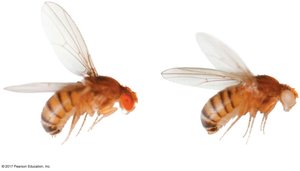
Wild type refers to the normal phenotype commonly found in a population, while mutant phenotypes are variations caused by mutations.
Morgan discovered a mutant fruit fly with white eyes, differing from the wild-type red eyes.
Sex-Linked Inheritance
Patterns of Sex-Linked Gene Inheritance
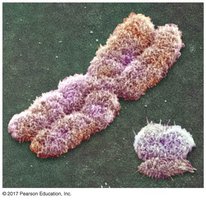
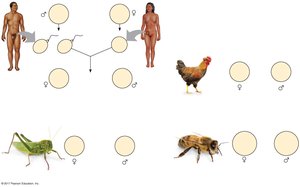
Sex-linked genes are located on sex chromosomes (X or Y). In humans, females have two X chromosomes (XX), and males have one X and one Y (XY).
X-linked genes are found on the X chromosome and often exhibit unique inheritance patterns.
Y-linked genes are found on the Y chromosome and are passed only from father to son.
Disorders caused by recessive alleles on the X chromosome are more common in males (e.g., color blindness, hemophilia).
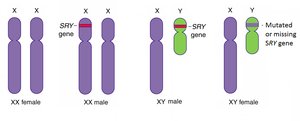
The SRY gene on the Y chromosome determines male development.
X Inactivation and Barr Bodies
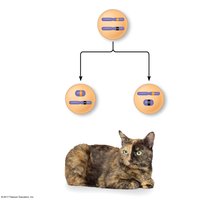
In female mammals, one X chromosome in each cell is randomly inactivated, forming a Barr body. This ensures dosage compensation between males and females.
If a female is heterozygous for an X-linked gene, she may be a mosaic for that trait.
X inactivation is controlled by the XIST gene.
Linked Genes and Genetic Mapping
Linkage and Recombination
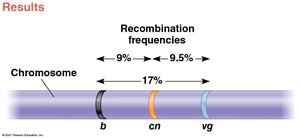
Linked genes are located close together on the same chromosome and tend to be inherited together. Genetic recombination can occur through crossing over during meiosis, producing recombinant phenotypes.
Recombination frequency is used to map the distance between genes.
Genes far apart on the same chromosome may appear genetically unlinked due to high recombination frequency.
Alterations in Chromosome Number and Structure
Nondisjunction and Aneuploidy
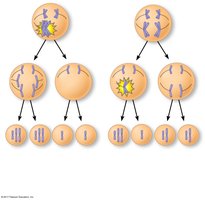
Nondisjunction occurs when chromosomes fail to separate properly during meiosis, resulting in gametes with abnormal chromosome numbers.
Aneuploidy is the presence of an abnormal number of chromosomes (e.g., trisomy, monosomy).
Polyploidy is the presence of more than two complete sets of chromosomes, common in plants.
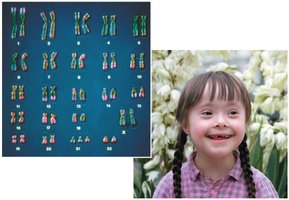
Down syndrome (trisomy 21) is a common human aneuploidy.
Alterations of Chromosome Structure
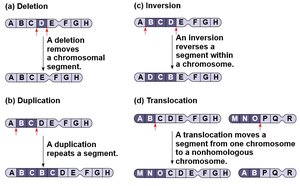
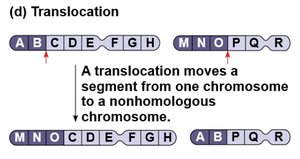
Chromosome breakage can lead to structural changes, including deletion, duplication, inversion, and translocation.
Deletion: Removes a chromosomal segment.
Duplication: Repeats a segment.
Inversion: Reverses a segment within a chromosome.
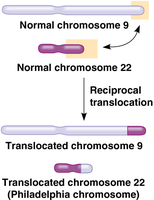
Translocation: Moves a segment to a nonhomologous chromosome.
Exceptions to Mendelian Genetics
Genomic Imprinting
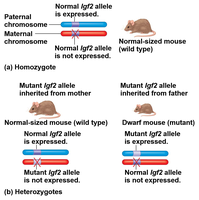
Genomic imprinting is a phenomenon where the expression of a gene depends on whether it is inherited from the mother or father. This is due to epigenetic modifications such as DNA methylation.
Imprinted genes are often found on autosomes.
Imprinting can affect growth and development, as seen in mice with the Igf2 gene.
Inheritance of Organelle Genes
Some genes are located outside the nucleus, in organelles such as mitochondria and chloroplasts. These genes are inherited maternally because the egg provides most of the cytoplasm to the zygote.
Defects in mitochondrial genes can cause diseases affecting energy production, such as mitochondrial myopathy.
Inheritance patterns of organelle genes do not follow Mendelian rules.
Summary Table: Types of Chromosomal Alterations
Type | Description | Example |
|---|---|---|
Deletion | Removes a chromosomal segment | Cri du chat syndrome |
Duplication | Repeats a segment | Some cancers |
Inversion | Reverses a segment within a chromosome | May cause infertility |
Translocation | Moves a segment to a nonhomologous chromosome | Chronic myeloid leukemia |
Key Equations
Recombination Frequency:
Map Unit: 1 map unit = 1% recombination frequency
Additional info:
Genetic maps are used to estimate the relative positions of genes on chromosomes.
Random fertilization and recombination increase genetic variation, which is essential for evolution by natural selection.
