 Indietro
Chromosomal Basis of Inheritance: Mendelian Laws, Chromosome Theory, and Linkage
Guida di studio - Note intelligenti
 Appunti personalizzati basati sui tuoi materiali, ampliati con definizioni chiave, esempi e contesto.
The Chromosomal Basis of Inheritance
Mendel's Laws of Inheritance
Mendel’s experiments with pea plants established foundational principles of genetics, known as the laws of inheritance. These laws explain how traits are passed from parents to offspring.
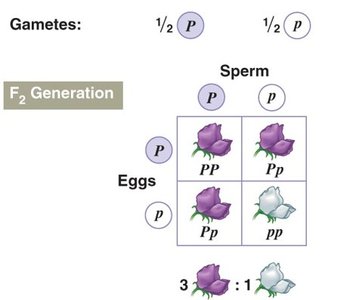
Law of Segregation: Each individual has two alleles for each gene, which segregate during gamete formation so that each gamete receives only one allele. This explains why offspring inherit one allele from each parent.
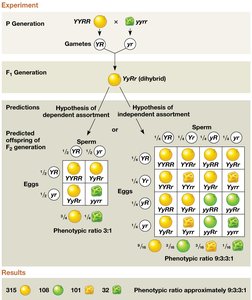
Law of Independent Assortment: Alleles of different genes are distributed to gametes independently, allowing for genetic variation. This law was demonstrated through dihybrid crosses, where two traits are tracked simultaneously.
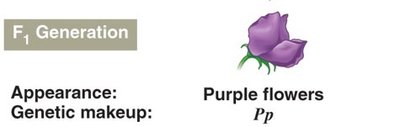
Example: In a cross between pea plants with purple (P) and white (p) flowers, the F1 generation is heterozygous (Pp) and displays purple flowers. The F2 generation shows a 3:1 ratio of purple to white flowers, illustrating segregation.
Dihybrid Crosses and Independent Assortment
Dihybrid crosses involve tracking two traits at once, such as seed color and shape. Mendel’s experiments showed that the alleles for these traits assort independently, resulting in a 9:3:3:1 phenotypic ratio in the F2 generation.
Key Point: If alleles always stayed together, only parental combinations would appear. Independent assortment allows for new combinations, increasing genetic diversity.
Example: Crossing YYRR (yellow, round) with yyrr (green, wrinkled) produces F1 plants (YyRr). Self-fertilization yields four phenotypes in the F2 generation.
The Chromosome Theory of Inheritance
Chromosome Theory and Experimental Evidence
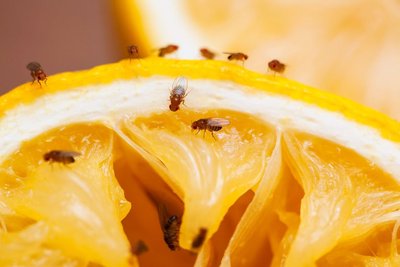
The chromosome theory of inheritance, developed by Sutton and Boveri, states that genes are located on chromosomes, and their behavior during meiosis explains Mendel’s laws. Thomas Hunt Morgan provided experimental evidence using fruit flies (Drosophila melanogaster).
Key Point: Genes occupy specific loci on chromosomes, and their segregation and assortment during meiosis mirror Mendel’s patterns.
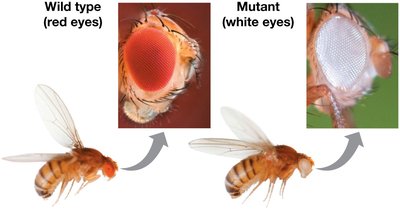
Example: Morgan’s experiments with fruit flies linked the eye-color gene to the X chromosome, confirming the chromosome theory.
Morgan’s Experiments: X-Linked Inheritance
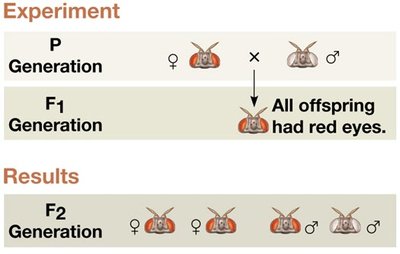
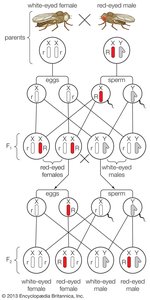
Morgan crossed male flies with white eyes (mutant) and female flies with red eyes (wild type). The F1 generation had all red eyes, but the F2 generation showed sex-linked inheritance, with white eyes appearing only in males.
Key Point: The eye-color gene is located on the X chromosome. Males (XY) have only one X, so a single recessive allele causes the trait.
Example: Reciprocal crosses confirmed the gene’s location on the X chromosome.
X-Linked Inheritance in Humans
Human X and Y Chromosomes
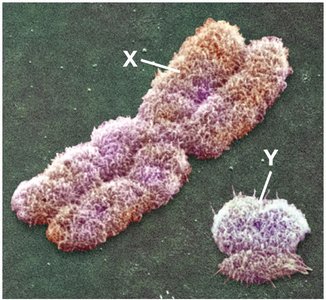
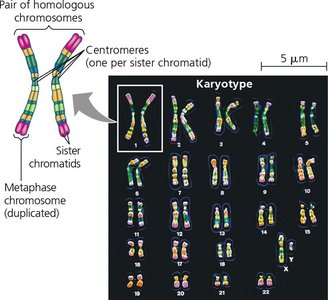
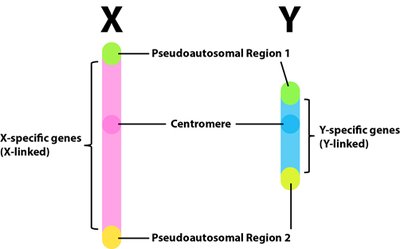
Humans have 23 pairs of chromosomes: 22 pairs of autosomes and one pair of sex chromosomes (XX in females, XY in males). The X chromosome is larger and carries many genes, while the Y chromosome is smaller and carries fewer genes, including SRY for male development.
Key Point: Most genes on X have no corresponding copy on Y. X and Y share pseudoautosomal regions for pairing during meiosis.
Inheritance Patterns of X-Linked Traits
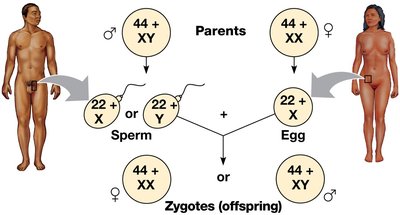
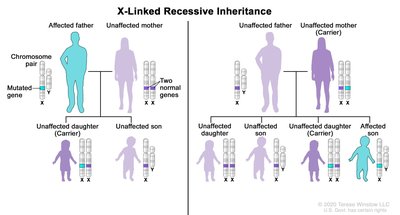
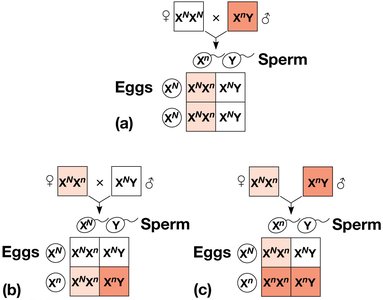
X-linked traits show distinct inheritance patterns. Fathers pass their X chromosome to daughters and Y to sons; mothers pass one X to each child. For X-linked recessive traits, males are more likely to be affected.
Key Point: X-linked recessive disorders include hemophilia A, Duchenne muscular dystrophy, and red-green color blindness.
Example: Carrier mothers can have affected sons and carrier daughters.
X-Linked Dominant Traits
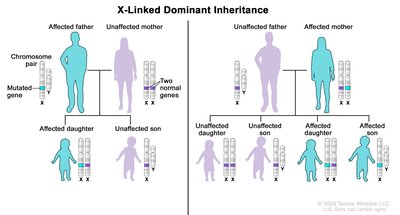
X-linked dominant disorders require only one altered allele to cause disease. Affected fathers pass the trait to all daughters but not sons; heterozygous mothers pass it to half of their children.
Key Point: X-inactivation in females can influence disease severity.
Example: Rett syndrome and incontinentia pigmenti are X-linked dominant disorders.
X-Inactivation and Mosaicism
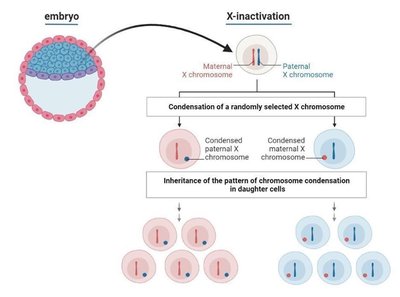
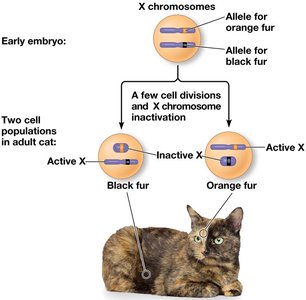
In female mammals, one X chromosome is randomly inactivated in each cell early in development, balancing gene expression between XX and XY individuals. This leads to mosaicism, where different cells express different alleles.
Key Point: Descendant cells retain the same inactive X. Mosaicism is visible in tortoiseshell cats, which have patches of different fur colors.
Linked Genes and Genetic Recombination
Linked Genes
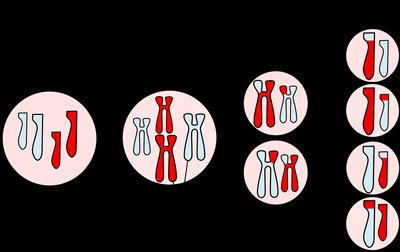
Genes located close together on the same chromosome are called linked genes and tend to be inherited together. However, crossing over during meiosis can separate linked alleles, creating new combinations (genetic recombination).
Key Point: The closer two genes are, the less likely they are to be separated by crossing over.
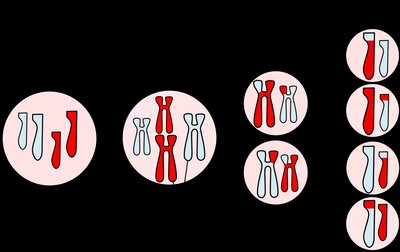
Recombination Frequency
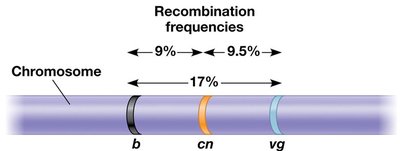
Recombination frequency measures how often linked alleles are separated by crossing over. It is calculated as:
Formula:
Key Point: Genes farther apart show higher recombination frequencies.
Chromosomal Alterations
Types and Effects of Chromosomal Alterations
Chromosomal alterations can affect chromosome number or structure. Structural changes include deletions, duplications, inversions, and translocations, which can disrupt gene function and lead to genetic disorders or cancer.
Deletions: Loss of chromosome segments, potentially removing essential genes.
Duplications: Repetition of segments, leading to excess gene products.
Inversions: Reversal of segments, possibly disrupting gene regulation.
Translocations: Movement of segments between chromosomes, which can activate or silence genes.
Example: Cri du chat syndrome (deletion on chromosome 5) and chronic myelogenous leukemia (CML, caused by translocation).
Summary Table: Types of Chromosomal Alterations
Type | Description | Example |
|---|---|---|
Deletion | Loss of chromosome segment | Cri du chat syndrome |
Duplication | Repeat of chromosome segment | Gene dosage effects |
Inversion | Reversal of segment orientation | May disrupt gene regulation |
Translocation | Segment moved to another chromosome | Chronic myelogenous leukemia |
Additional info: Chromosomal alterations can be detected through karyotyping and molecular techniques, and their impact depends on the genes involved.
