 Indietro
Ch. 33 Circulatory Systems: Structure, Function, and Diversity
Guida di studio - Note intelligenti
 Appunti personalizzati basati sui tuoi materiali, ampliati con definizioni chiave, esempi e contesto.
Circulatory Systems: Major Features and Functions
Overview of Circulatory Systems
The circulatory system, also known as the cardiovascular system, is essential for transporting oxygen, nutrients, and waste products throughout the body. All circulatory systems share three major components: a transport medium (blood or hemolymph), a pump (heart), and a system of tubes (blood vessels).
Blood: Serves as the medium for transport of gases, nutrients, and wastes.
Heart: Acts as the pump to keep blood circulating.
Blood Vessels: Include arteries (carry blood away from the heart), veins (return blood to the heart), and capillaries (exchange materials with tissues).
Open vs. Closed Circulatory Systems
Animals possess either open or closed circulatory systems, each with distinct structural and functional characteristics.
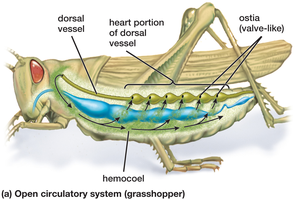
Open Circulatory System: Blood (hemolymph) leaves vessels and bathes organs directly. Found in most invertebrates, including arthropods and mollusks.
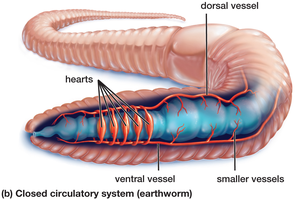
Closed Circulatory System: Blood remains within vessels, allowing higher pressure and more efficient distribution. Present in all vertebrates and some active invertebrates.
Comparison Table: Open vs. Closed Circulatory Systems
Feature | Open System | Closed System |
|---|---|---|
Blood Pressure | Low | High |
Control of Flow | Less control | More control |
Efficiency | Lower | Higher |
Examples | Insects, mollusks | Vertebrates, earthworms |
Functions of the Vertebrate Circulatory System
The vertebrate circulatory system performs diverse functions:
Transports oxygen and carbon dioxide
Distributes nutrients
Removes toxins and wastes
Transports hormones
Regulates body temperature
Stops bleeding and heals wounds
Protects against disease
The Vertebrate Heart
Heart Structure and Evolution
The vertebrate heart consists of muscular chambers (atria and ventricles) that contract to circulate blood. Heart complexity increases from fishes to mammals.
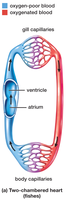
Fish: Two-chambered heart (one atrium, one ventricle)
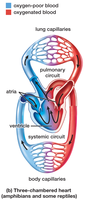
Amphibians and most reptiles: Three-chambered heart (two atria, one ventricle)
Birds, crocodiles, mammals: Four-chambered heart (two atria, two ventricles)
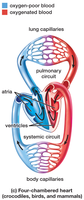
Double Circulation
Double circulation separates pulmonary (lung) and systemic (body) circuits, improving efficiency in oxygen delivery.
Pulmonary Circuit: Heart → Lungs → Heart
Systemic Circuit: Heart → Body → Heart
Human Heart Anatomy
The human heart is a four-chambered organ with valves that ensure one-way blood flow.
Atrioventricular Valves: Between atria and ventricles
Semilunar Valves: Between ventricles and arteries
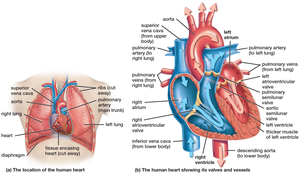
Cardiac Muscle Structure
Cardiac muscle cells are linked by intercalated discs, which allow rapid electrical signal transmission and synchronized contraction. 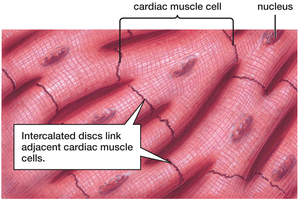
Special Adaptations: Giraffe Circulation
Giraffes have unique circulatory adaptations, such as a rete mirabile (network of small vessels) near the brain, to regulate blood pressure and flow in their long necks. 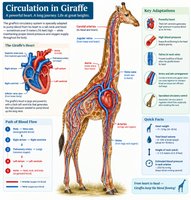
Blood
Components of Blood
Blood consists of plasma (liquid) and cell-based components (red blood cells, white blood cells, platelets).
Plasma: 55-60% of blood volume; contains water, proteins, ions, nutrients, and wastes.
Red Blood Cells (Erythrocytes): Transport oxygen via hemoglobin.
White Blood Cells (Leukocytes): Defend against disease.
Platelets: Aid in blood clotting.
Plasma Proteins
Albumin: Maintains osmotic strength.
Globulins: Antibodies for immune response.
Fibrinogen: Essential for blood clotting.
Red Blood Cells and Hemoglobin
Hemoglobin: Iron-containing protein that binds oxygen. Each molecule can carry four oxygen molecules.
Hemoglobin color changes with oxygenation: bright red when oxygenated, maroon when deoxygenated.
White Blood Cells and Platelets
Leukocytes: Five types (neutrophils, eosinophils, basophils, lymphocytes, monocytes); protect against pathogens.
Platelets: Fragments of megakaryocytes; initiate clotting.
Types and Functions of Blood Vessels
Blood Vessel Structure
Blood vessels include arteries, arterioles, capillaries, venules, and veins.
Arteries: Thick, elastic walls; carry blood away from heart.
Arterioles: Smaller branches; regulate blood flow.
Capillaries: Thin walls; site of exchange of nutrients and wastes.
Venules and Veins: Return blood to heart; thinner walls, contain valves.
Capillary Function
Capillaries allow exchange of substances by diffusion. Red blood cells pass through single file, and most body cells are close to a capillary.
Venous Return and Valves
Veins rely on skeletal muscle contractions and one-way valves to return blood to the heart, especially from lower body parts.
Interaction between the Lymphatic System and the Circulatory System
Lymphatic System Functions
The lymphatic system returns excess extracellular fluid to the bloodstream, transports fats, filters debris, and defends against pathogens.
Lymphatic Capillaries: Highly permeable, branch throughout the body.
Lymph Nodes and Spleen: Filter lymph and blood, house immune cells.
Lacteals: Specialized lymph capillaries in the small intestine for fat absorption.
Clinical Relevance: Elephantiasis
Blockage of lymphatic vessels by parasites can cause elephantiasis, a condition characterized by severe swelling due to fluid accumulation.
Summary Table: Circulatory and Lymphatic System Functions
System | Main Functions |
|---|---|
Circulatory | Transport gases, nutrients, wastes; regulate temperature; protect against disease |
Lymphatic | Return fluid; transport fats; filter blood/lymph; immune defense |
Key Terms
Hemolymph: Fluid in open circulatory systems
Intercalated Discs: Specialized cardiac muscle junctions
Rete Mirabile: Network of vessels for pressure regulation
Lacteals: Lymph capillaries for fat absorption
Equations
Blood Pressure:
Cardiac Output:
Example:
In cold weather, arterioles constrict to preserve heat; in hot weather, they dilate to dissipate heat.
People with hemophilia lack clotting factors and require medical intervention to prevent excessive bleeding.
Additional info:
Some details about the lymphatic system's role in immunity and fat transport were inferred for completeness.
