 Indietro
Classification and Evolutionary Relationships of Microorganisms
Guida di studio - Note intelligenti
 Appunti personalizzati basati sui tuoi materiali, ampliati con definizioni chiave, esempi e contesto.
The Classification of Microorganisms
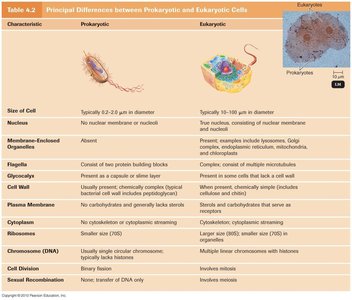
Prokaryote vs. Eukaryote
Understanding the distinction between prokaryotic and eukaryotic cells is fundamental in biology, as it underpins the classification of all living organisms. Prokaryotes lack a nucleus and membrane-bound organelles, while eukaryotes possess these structures, leading to significant differences in cellular complexity and function.
Prokaryotes: Include Bacteria and Archaea; lack a nucleus; DNA is circular; reproduce by binary fission.
Eukaryotes: Include Animals, Plants, Fungi, and Protists; have a nucleus; DNA is linear; reproduce by mitosis and meiosis.
Importance: Classification affects understanding of evolutionary relationships, disease mechanisms, and ecological roles.
Example: Pneumocystis jirovecii was reclassified from protozoan to fungus based on DNA analysis.
The Binomial System and Taxonomy
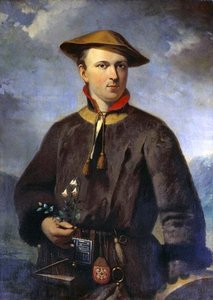
Taxonomy is the science of classifying organisms, providing a universal language for identification. The binomial system, established by Carolus Linnaeus, uses two names: genus and species, both italicized, with genus capitalized.
Genus: First name, capitalized and italicized (e.g., Homo).
Species: Second name, lowercase and italicized (e.g., sapiens).
Examples: Homo sapiens (human), Rhizopus stolonifer (bread mold).
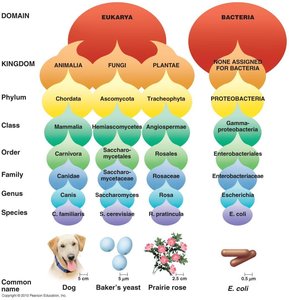
Hierarchy: Domain → Kingdom → Phylum → Class → Order → Family → Genus → Species.

Hierarchical Classification and Phylogeny
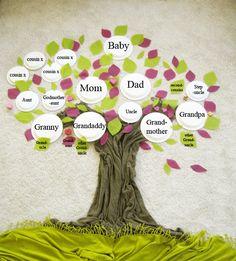
Organisms are classified hierarchically to reflect evolutionary relationships. Phylogeny is the study of these relationships, often inferred from similarities in anatomy, fossils, and molecular data such as rRNA.
Taxa: Groups of organisms classified together based on shared characteristics.
Phylogeny: Reflects evolutionary history and relatedness.
Systematics: The broader study of evolutionary relationships and classification.
Domains of Life
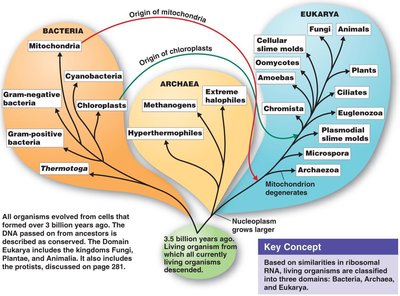
Based on cell type and molecular evidence, all life is classified into three domains: Bacteria, Archaea, and Eukarya. This classification reflects fundamental differences in cell structure and genetic makeup.
Bacteria: Prokaryotes with peptidoglycan cell walls; diverse metabolic processes.
Archaea: Prokaryotes without peptidoglycan; often extremophiles.
Eukarya: Eukaryotes; includes animals, plants, fungi, and protists.
Comparing Archaea, Bacteria, and Eukarya
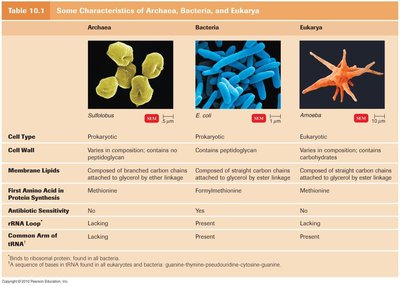
Each domain has unique characteristics, including differences in cell wall composition, membrane lipids, and sensitivity to antibiotics.
Characteristic | Archaea | Bacteria | Eukarya |
|---|---|---|---|
Cell Type | Prokaryotic | Prokaryotic | Eukaryotic |
Cell Wall | Varies; no peptidoglycan | Contains peptidoglycan | Varies; contains cellulose or chitin |
Membrane Lipids | Branched carbon chains | Straight carbon chains | Straight carbon chains |
Antibiotic Sensitivity | No | Yes | No |
rRNA Loop | Lacking | Present | Present |
Endosymbiotic Theory
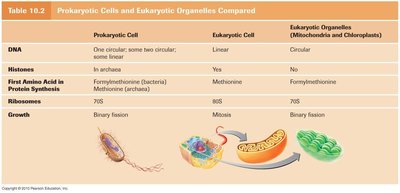
The endosymbiotic theory explains the origin of eukaryotic organelles such as mitochondria and chloroplasts, suggesting they arose from symbiotic relationships between ancestral prokaryotes and eukaryotes.
Mitochondria and Chloroplasts: Contain their own DNA; replicate independently; similar to prokaryotes.
Evidence: DNA sequencing, ribosome structure, and binary fission.
Defining Species in Microbiology
Species definitions differ between prokaryotes and eukaryotes. Prokaryotic species are populations of cells with similar characteristics, often clones, while eukaryotic species are defined by the ability to produce fertile offspring.
Clone: Population of cells derived from a single parent; genetically identical.
Strain: Pure cultures of the same species that are not clones; identified by numbers, letters, or names.
Overview of Eukaryotic Kingdoms
Eukaryotes are grouped into four kingdoms: Animalia, Plantae, Fungi, and Protista. Each kingdom has distinct characteristics and modes of nutrition.
Animalia: Multicellular; ingest food; no cell walls.
Plantae: Multicellular; photosynthetic; cellulose cell walls.
Fungi: Unicellular or multicellular; absorb nutrients; chitin cell walls.
Protista: Diverse group; mostly unicellular; grouped by rRNA clades.
Viruses: Non-Cellular Life
Viruses are not classified within the three domains because they are not composed of cells. They are obligate intracellular parasites, requiring a host cell for replication.
Genome: Can be DNA or RNA; directs biosynthesis inside host cell.
Ecological Niche: Viral species occupy specific niches based on host specificity.
Methods for Identifying Bacteria
Bacteria are identified using a combination of morphological, biochemical, and molecular methods. Reference manuals and dichotomous keys are essential tools in clinical and research settings.
Morphological Characteristics: Useful for identifying eukaryotes.
Differential Staining: Gram staining, acid-fast staining.
Biochemical Tests: Detect presence of specific bacterial enzymes.
Phage Typing: Identifies bacteria based on susceptibility to bacteriophages.
DNA Base Composition: Compares guanine and cytosine content.
DNA Fingerprinting: Uses electrophoresis to separate restriction enzyme digests.
Ribotyping: Analyzes rRNA sequence changes.
Nucleic Acid Hybridization: Determines relatedness among species.
Building Phylogenetic Trees
Phylogenetic trees, or cladograms, are constructed using molecular data such as rRNA sequences to visualize evolutionary relationships among organisms.
Cladogram: Diagram showing evolutionary relationships based on shared characteristics.
Example: rRNA sequence comparison among four organisms.
Summary Table: Principal Differences between Prokaryotic and Eukaryotic Cells
This table summarizes the key differences between prokaryotic and eukaryotic cells, including size, nucleus, organelles, cell wall, and reproduction.
Characteristic | Prokaryotic | Eukaryotic |
|---|---|---|
Size of Cell | 0.2–2.0 μm | 10–100 μm |
Nucleus | Absent | Present |
Membrane-Enclosed Organelles | Absent | Present |
Cell Wall | Peptidoglycan (Bacteria) | Cellulose (Plants), chitin (Fungi) |
Cell Division | Binary fission | Mitosis |
Sexual Reproduction | None | Involves meiosis |
Additional info:
Taxonomy and systematics are essential for understanding evolutionary relationships and for accurate identification of organisms in clinical and research settings.
Modern classification relies heavily on molecular data, especially rRNA sequencing, to resolve evolutionary relationships.
