 Indietro
Cnidarians and Early Diverging Animals: Structure, Diversity, and Ecological Importance
Guida di studio - Note intelligenti
 Appunti personalizzati basati sui tuoi materiali, ampliati con definizioni chiave, esempi e contesto.
Early Diverging Animals
Animal Phylogeny & Evolution
Early diverging animals include groups such as Porifera (sponges), Ctenophora (comb jellies), and Cnidaria (jellies, corals, anemones). These groups are foundational to understanding animal evolution and the development of complex traits.
Metazoa: All multicellular animals.
Eumetazoa: Animals with true tissues, including Cnidaria and all bilaterians.
Bilateria: Animals with bilateral symmetry and three germ layers.
Choanoflagellates: The sister group to animals, unicellular protists with collar cells similar to sponge choanocytes.
Key evolutionary innovations: true tissues, body symmetry, nervous system, and gastrovascular cavity.
Cnidaria: Structure and Synapomorphies
Defining Features of Cnidaria
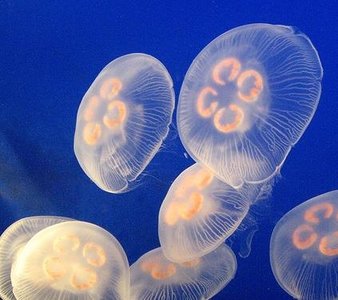
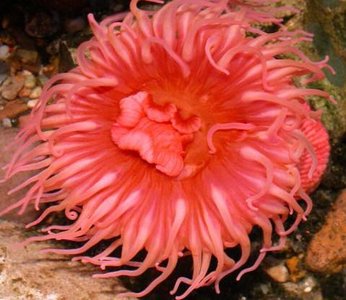
Cnidarians are a diverse phylum characterized by specialized stinging cells, radial symmetry, and polymorphic body forms. They include both sessile and motile species such as jellies, sea anemones, corals, and hydras.
Cnidocytes: Specialized stinging cells containing toxins, most commonly nematocysts.
Planula larvae: Free-swimming, ciliated larvae that settle and transform into polyps.
Radial symmetry: Body parts arranged around a central axis, allowing interaction with the environment from all directions.
Polymorphism: Presence of different body shapes (polyp and medusa) in some species.
Example: Jellyfish and sea anemones exhibit radial symmetry and possess cnidocytes for prey capture.
Cnidocytes and Nematocysts
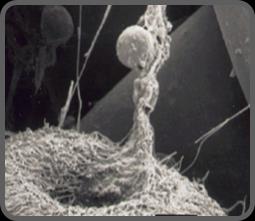
Cnidocytes are a key innovation for cnidarian success, enabling defense and prey capture. Nematocysts are the most common type, consisting of a capsule with a coiled thread that discharges upon stimulation.
Nematocyst mechanism: Triggered by contact, the thread rapidly uncoils and injects toxins into prey.
Function: Immobilizes prey and deters predators.
Body Symmetry
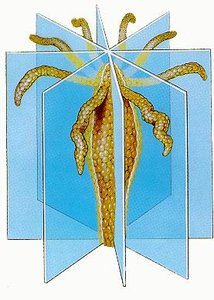
Cnidarians exhibit radial symmetry, which allows them to effectively interact with their environment from all directions. This is advantageous for sessile and slow-moving organisms.
Oral end: Contains the mouth and tentacles.
Aboral end: Opposite the mouth.
Cnidarian Body Forms
Polyp and Medusa
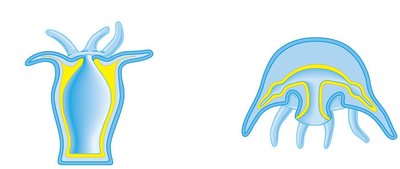
Cnidarians display two main body forms: polyp (sessile) and medusa (motile). Many species alternate between these forms during their life cycle.
Polyp: Sedentary or sessile form, e.g., sea anemones.
Medusa: Free-swimming form, e.g., jellyfish; moves by contracting the bell.
Cnidarian Life Cycle
Alternation of Generations
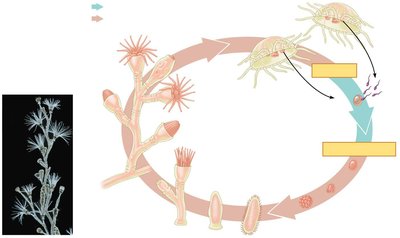
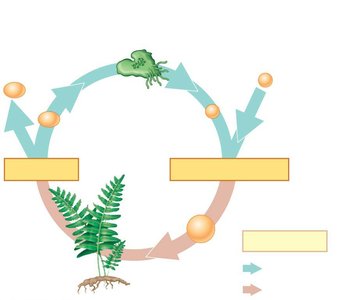
Cnidarians exhibit a life cycle known as alternation of generations, involving both asexual and sexual reproduction. The general scheme includes polyps reproducing asexually and medusae reproducing sexually.
Asexual reproduction: Budding in polyps.
Sexual reproduction: Medusae produce gametes; fertilization results in a zygote, which develops into a planula larva.
Difference from plants: Cnidarians are diploid except for gametes, while plants alternate between haploid and diploid generations.
Cnidarian Diversity
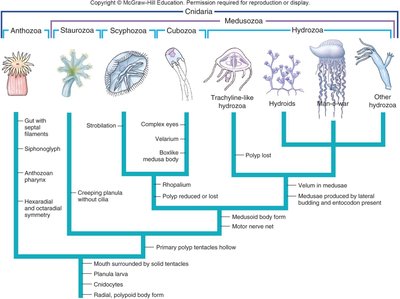
Major Clades: Anthozoa & Medusozoa
Cnidarians are divided into several major clades, each with unique characteristics and ecological roles.
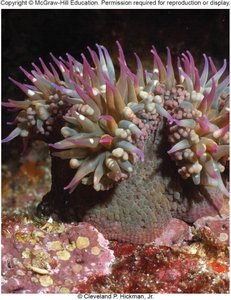
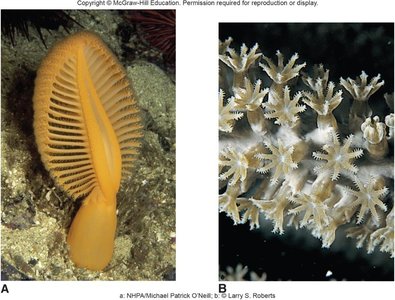
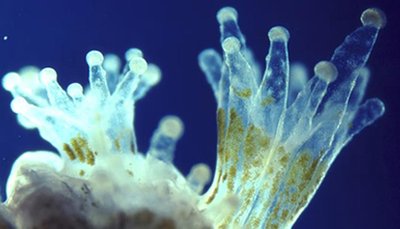
Anthozoa: Includes sea anemones, stony corals, sea fans, and sea pens. Polyps are the adult form; body plans are hexamerous or octamerous.
Medusozoa: Includes Hydrozoa, Scyphozoa, and Cubozoa, which often exhibit alternation of generations.
Anthozoa: Sea Anemones and Corals
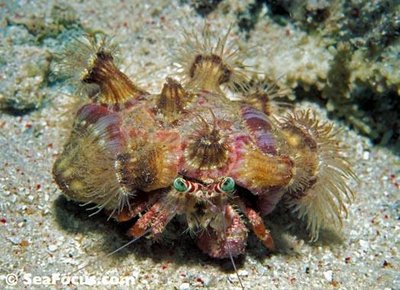
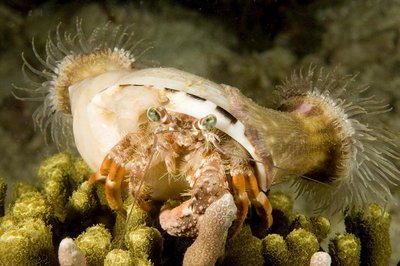
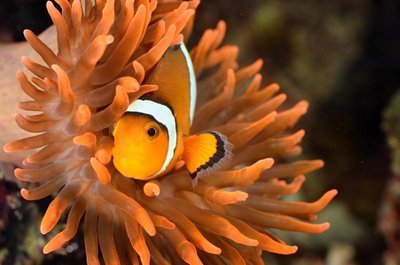
Anthozoans are primarily polyps as adults and can be solitary or colonial. They often form mutualistic relationships with other species, such as zooxanthellae, hermit crabs, and clownfish.
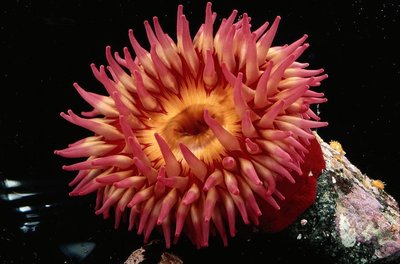
Sea anemones: Solitary, sedentary polyps; carnivorous, with tentacles surrounding the oral disc.
Stony corals: Colonial polyps in calcareous cups; form coral reefs, which are highly productive and diverse ecosystems.
Mutualism: Zooxanthellae provide photosynthetic products; clownfish and hermit crabs gain protection.
Coral Reefs and Coral Bleaching
Coral reefs are vital ecosystems, providing habitat, coastal protection, food, and economic benefits. Many corals form mutualistic relationships with photosynthetic dinoflagellates (zooxanthellae), which supply up to 90% of their food.
Coral bleaching: Loss of dinoflagellates due to increased ocean temperatures leads to coral death.
Ecological importance: Coral reefs support thousands of species and protect coastlines.
Medusozoa: Hydrozoa, Scyphozoa, Cubozoa
Medusozoans include several clades with distinct life cycles and body forms.
Hydrozoa: Includes hydras, Portuguese Man-of-War, and fire corals. Most are marine and colonial, exhibiting alternation of generations.
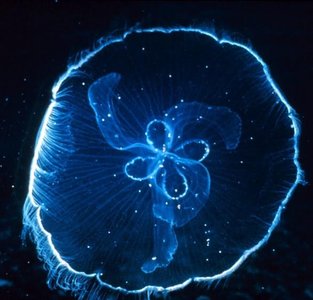
Scyphozoa: Large sea jellies; medusa is the dominant form, distinguished by the absence of the velum.
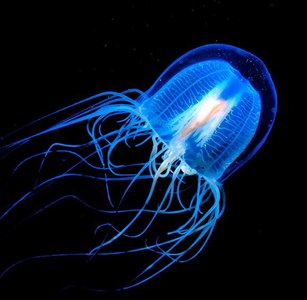
Cubozoa: Box jellies; cube-shaped bodies, potent toxins.
Ctenophora: Comb Jellies
Structure and Function
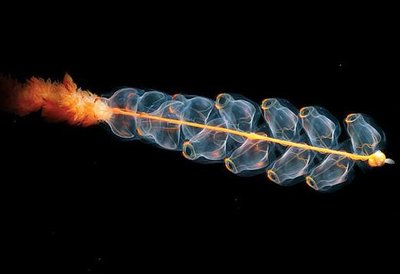
Ctenophores, or comb jellies, are marine animals with two tissue layers and a unique locomotion system using cilia arranged in comb rows. They lack nematocysts but possess adhesive cells called colloblasts.
Statolith: Sensory structure at the aboral end, regulates cilia movement.
Diploblastic: Two tissue layers, similar to cnidarians.
Example: Comb jellies are motile and capture prey using colloblasts.
Porifera: Basal Animals
Structure and Function
Porifera, or sponges, are basal animals lacking true tissues. They filter feed using specialized cells called choanocytes and have a simple body plan with pores, spongocoel, and osculum.
Choanocytes: Collar cells that capture food particles.
Amoebocytes: Cells involved in digestion and distribution of nutrients.
Spicules: Structural elements providing support.
Example: Sponges are important for water filtration in aquatic ecosystems.
Summary Table: Cnidarian Clades and Features
Clade | Body Form | Key Features | Examples |
|---|---|---|---|
Anthozoa | Polyp | Mutualism, septa in gastrovascular cavity | Sea anemones, stony corals |
Hydrozoa | Polyp & Medusa | Colonial, alternation of generations | Hydras, Portuguese Man-of-War |
Scyphozoa | Medusa | Large jellies, absence of velum | Sea jellies |
Cubozoa | Medusa | Cube-shaped, potent toxins | Box jellies |
Additional info: Academic context was added to clarify evolutionary relationships, life cycles, and ecological importance. All images included are directly relevant to the explanation of the adjacent paragraph.
