 Indietro
Bio 2 ch 26 pt 3
Guida di studio - Note intelligenti
 Appunti personalizzati basati sui tuoi materiali, ampliati con definizioni chiave, esempi e contesto.
Colonization of Land: Seed Plants and Their Evolution
Key Adaptations for Life on Land
Seed plants evolved several adaptations that allowed them to thrive in terrestrial environments. These adaptations include the development of seeds, pollen grains, ovules, and reduced gametophytes, which collectively enabled plants to reproduce and survive away from water.
Seeds: Multicellular structures containing an embryo, food supply, and protective coat. Seeds can remain dormant and are dispersed by wind or animals.
Pollen: Male gametophyte surrounded by a protective wall, allowing fertilization without water.
Ovules: Female gametophyte surrounded by sporophyte tissue (integument), which develops into a seed after fertilization.
Reduced Gametophytes: Gametophytes are small and protected within the sporophyte tissue.
Example: The seed allowed plants to colonize diverse terrestrial habitats by providing protection and nourishment to the developing embryo.
Distinguishing Characteristics of Plants vs. Charophytes
Plants are distinguished from their closest algal relatives, the charophytes, by several key features:
Apical Meristems: Regions of cell division at the tips of roots and shoots.
Cuticle: Waxy covering that prevents water loss.
Stomata: Pores for gas exchange.
Alternation of Generations: Life cycle with both multicellular haploid and diploid stages.
Walled Spores in Sporangia: Protective structures for spore production.
Major Groups of Land Plants
Classification of Land Plants
Land plants are classified into four major groups based on their evolutionary history and reproductive adaptations:
Bryophytes: Nonvascular plants (e.g., mosses).
Seedless Vascular Plants: Lycophytes and monilophytes (e.g., ferns).
Gymnosperms: Seed plants with "naked" seeds (e.g., conifers).
Angiosperms: Flowering plants with seeds enclosed in fruits.
Example: Gymnosperms and angiosperms are both seed plants, but angiosperms produce seeds within a mature ovary (fruit).
Seed Plants: Gymnosperms and Angiosperms
Seed plants are divided into two main clades:
Gymnosperms: Seeds are exposed or borne on cones. Adapted to dry environments with thick cuticles and needle-like leaves.
Angiosperms: Seeds develop within chambers (ovaries) and are protected by fruits. Most diverse and widespread group.
Gymnosperms: Structure and Life Cycle
Gymnosperm Seed Formation
Gymnosperms produce seeds through a process involving ovules, pollen, and fertilization. The ovule consists of a megasporangium surrounded by an integument. After fertilization, the ovule develops into a seed containing the embryo, food supply, and seed coat.
Ovule: Contains the female gametophyte and egg cell.
Pollen Grain: Male gametophyte that fertilizes the egg via a pollen tube.
Seed: Result of fertilization, containing the new sporophyte embryo.
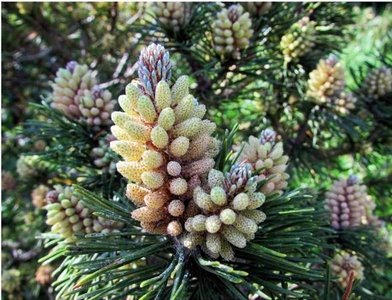
Evolutionary Advantage of Seeds
Seeds provide several evolutionary advantages over spores:
Multicellular structure with protective tissue.
Ability to remain dormant for extended periods.
Supply of stored food for the embryo.
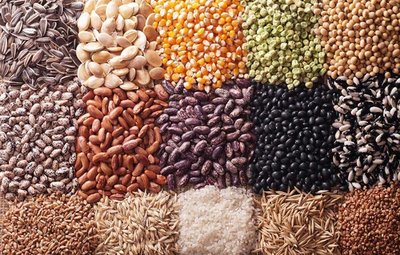
Rise of Gymnosperms
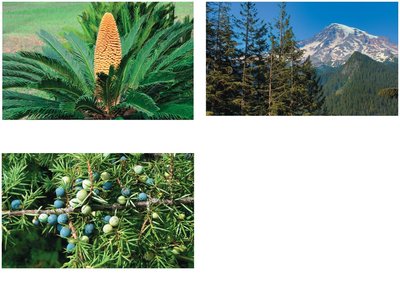
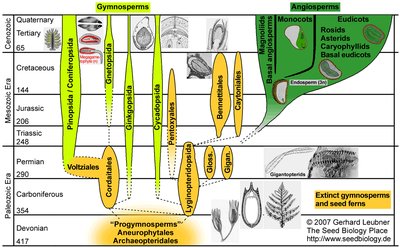
Gymnosperms became dominant during the Permian and Mesozoic eras, replacing seedless vascular plants. Their adaptations allowed them to thrive in drier environments.
Thick cuticles and needle-like leaves reduce water loss.
Four phyla: Coniferophyta, Ginkgophyta, Cycadophyta, Gnetophyta.
Angiosperms: Structure and Life Cycle
Origin and Diversification of Angiosperms
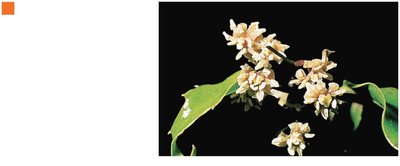
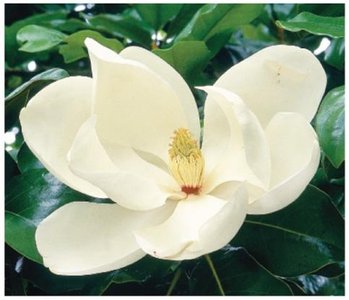
Angiosperms are seed plants with flowers and fruits. They are the most diverse group, with over 250,000 species. Flowers are specialized shoots for sexual reproduction, and fruits aid in seed protection and dispersal.
Flower: Composed of sepals, petals, stamens, and carpels.
Fruit: Mature ovary wall that protects seeds and aids in dispersal.
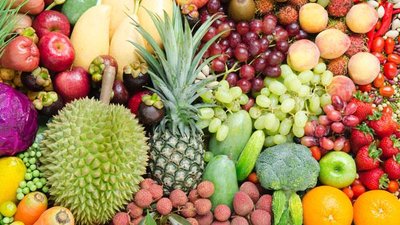
Angiosperm Evolution and Clades
Angiosperms originated at least 140 million years ago and became dominant by the end of the Cretaceous. Their evolutionary success is attributed to flowers, fruits, and efficient vascular systems.
Basal Angiosperms: Amborella, water lilies, star anise.
Magnoliids: Includes magnolias, laurels, avocado.
Monocots: Grasses, palms, orchids.
Eudicots: Sunflowers, roses, cacti, oaks.
Seed Plant Life Cycle and Adaptations
Alternation of Generations
Seed plants exhibit alternation of generations, with a dominant sporophyte stage and a reduced gametophyte stage. All seed plants are heterosporous and possess vascular tissues (xylem and phloem).
Sporophyte: Diploid, dominant generation.
Gametophyte: Haploid, reduced and dependent on sporophyte.
Heterospory: Production of distinct male and female spores.
Floral Structure and Reproduction
Flowers are composed of four whorls: sepals, petals, stamens, and carpels. Stamens produce pollen, and carpels contain ovules. Double fertilization results in the formation of a zygote and endosperm.
Sepals: Protect flower buds.
Petals: Attract pollinators.
Stamens: Produce pollen grains.
Carpels: Contain ovary, style, and stigma.
Seed and Fruit Development
After fertilization, the ovule develops into a seed, and the ovary wall becomes a fruit. Fruits protect seeds and aid in their dispersal.
Evolution of Seed Plants
Fossil Evidence and Phylogeny
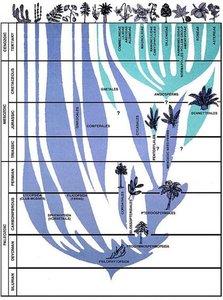
The fossil record shows the progression from progymnosperms to seed ferns, gymnosperms, and angiosperms. Molecular and genetic studies support the close relationship between conifers and flowering plants.
Progymnosperms: Had megaphylls and woody tissue.
Seed Ferns: Intermediate between spore plants and seed plants.
Angiosperms: Descended from gymnosperms, with fossil flowers dating to ~118 million years ago.
Summary Table: Comparison of Major Plant Groups
Group | Vascular Tissue | Seeds | Flowers | Fruit | Examples |
|---|---|---|---|---|---|
Bryophytes | No | No | No | No | Mosses |
Seedless Vascular Plants | Yes | No | No | No | Ferns |
Gymnosperms | Yes | Yes (naked) | No | No | Conifers, cycads |
Angiosperms | Yes | Yes (covered) | Yes | Yes | Flowering plants |
Key Equations and Terms
Alternation of Generations:
Heterospory: ;
Additional info: Fossil evidence and molecular studies continue to refine our understanding of seed plant evolution, especially the origins and diversification of angiosperms.
