 Indietro
bio 2 ch 26 pt 2
Guida di studio - Note intelligenti
 Appunti personalizzati basati sui tuoi materiali, ampliati con definizioni chiave, esempi e contesto.
Colonization of Land: Evolution and Diversity of Early Land Plants
Adaptations for Terrestrial Life
As plants transitioned from aquatic to terrestrial environments, they evolved several adaptations to survive and thrive on land. These adaptations enabled gas exchange while limiting water loss, a critical challenge for land plants.
Waxy Cuticle: A hydrophobic layer covering plant surfaces that prevents desiccation.
Stomata: Pores in the epidermis that regulate gas exchange and water loss.
Vascular Tissue: Specialized tissues (xylem and phloem) for transport of water, minerals, and organic molecules.
Example: The combination of waxy cuticle and stomata is essential for terrestrial plants to balance water retention and gas exchange.
Major Groups of Land Plants
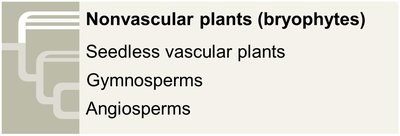
Land plants are classified into four major groups based on their evolutionary history and structural features:
Bryophytes: Nonvascular plants (e.g., mosses, liverworts, hornworts)
Seedless Vascular Plants: Includes lycophytes and monilophytes (ferns and relatives)
Gymnosperms: Seed plants with naked seeds (e.g., conifers)
Angiosperms: Flowering plants with seeds enclosed in fruits
Evolutionary Timeline and Lineages
Early plants radiated into diverse lineages as they adapted to terrestrial environments. The evolutionary timeline highlights key events:
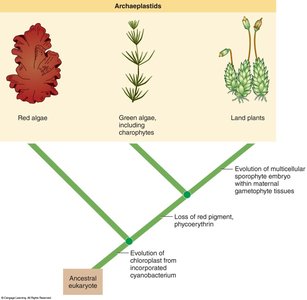
Origin of plants: ~470 million years ago (mya), from ancestral green algae (charophytes)
Origin of vascular plants: ~425 mya
Origin of seed plants: ~360 mya
Example: Bryophytes represent basal lineages, while gymnosperms and angiosperms are more derived.
Bryophytes: Basal Land Plant Lineages
Characteristics of Bryophytes
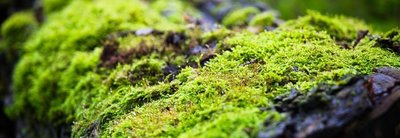
Bryophytes are small, nonvascular plants that dominate moist habitats. They exhibit a dominant gametophyte generation and lack true roots, stems, and leaves.
Rhizoids: Root-like structures for anchorage, not for water/mineral transport
Flagellated Sperm: Require water for fertilization
Limited Size: Due to absence of vascular tissue
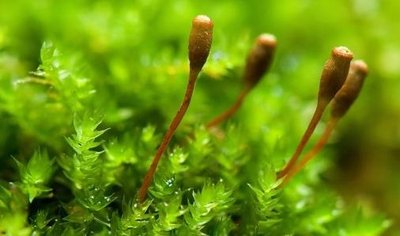
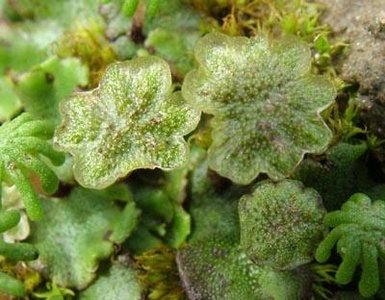
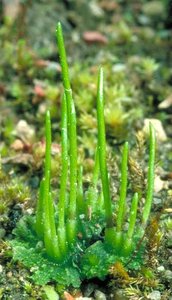
Three Clades of Bryophytes
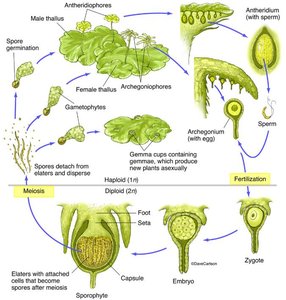
Liverworts (Hepatophyta): Gametophyte shaped like a liver; thallus body form
Mosses (Bryophyta): Sporophyte consists of seta and capsule emerging from gametophyte
Hornworts (Anthocerophyta): Sporophyte is a tapered stalk (horn) from the gametophyte thallus
Life Cycle and Reproduction
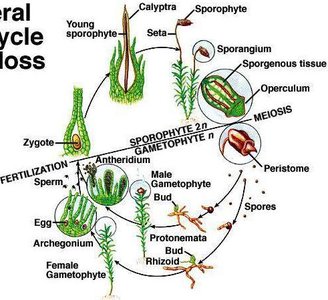
Bryophytes exhibit alternation of generations, with a dominant gametophyte and a reduced, dependent sporophyte. Fertilization requires water for sperm motility.
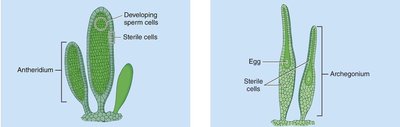
Gametangia: Antheridia (male, produces sperm) and archegonia (female, bears egg)
Multicellular Embryos: Develop within maternal tissues

Transition to Vascular Plants
Adaptations of Vascular Plants
Vascular plants evolved additional adaptations for terrestrial life, including specialized tissues for transport and structural support.
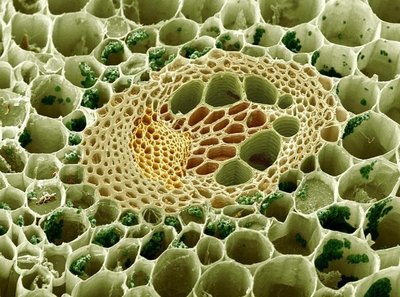
Xylem: Conducts water and minerals through lignified tracheids
Phloem: Conducts dissolved sugars and organic molecules
Lignin: Provides structural support, enabling plants to grow tall
Seedless Vascular Plants
Seedless vascular plants were the first to grow tall, thanks to their vascular tissues. They include two main clades:
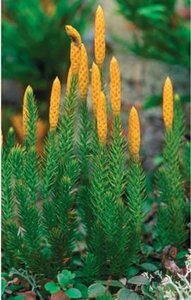
Lycophytes: Club mosses, spikemosses, quillworts
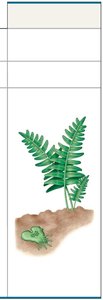
Monilophytes: Ferns, horsetails, whisk ferns
Life Cycle of Seedless Vascular Plants
Seedless vascular plants have a dominant sporophyte generation, with gametophytes that are reduced and often independent.
Flagellated Sperm: Still require water for fertilization
Alternation of Generations: Sporophyte (2n) is larger and more complex than gametophyte (n)
Evolution of Roots and Leaves
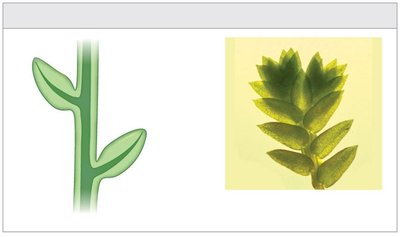
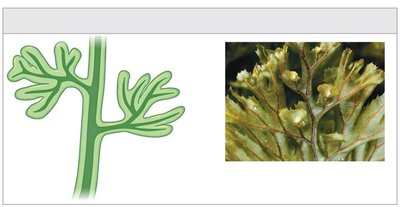
Roots anchor plants and absorb water/nutrients, while leaves are the primary photosynthetic organs. Two types of leaves evolved:
Microphylls: Small leaves with a single vein, characteristic of lycophytes
Megaphylls: Larger leaves with highly branched vascular systems, characteristic of most other vascular plants
Additional Plant Adaptations and Life Cycles
Alternation of Generations
All land plants exhibit alternation of generations, alternating between haploid gametophyte and diploid sporophyte stages.
Antheridia: Male gametangia producing sperm
Archegonia: Female gametangia bearing eggs
Multicellular Embryos: Develop within maternal tissues
Heterospory vs. Homospory
Most bryophytes and pteridophytes are homosporous, producing one type of spore. Some ferns and club mosses are heterosporous, producing two types of spores:
Microspores: Develop into male gametophytes
Megaspores: Develop into female gametophytes
Ecological and Evolutionary Significance
Role of Seedless Vascular Plants in Earth's History
Seedless vascular plants played a major role in the formation of coal deposits during the Carboniferous period (~320 mya). Their remains contributed to the organic material that became coal.
Experimental Studies
Botanists use bryophytes and seedless vascular plants as models to study plant physiology, growth, and development. The moss Physcomitrella patens is important for evolutionary studies.
Summary Table: Major Groups of Land Plants
Group | Vascular Tissue | Dominant Generation | Key Features |
|---|---|---|---|
Bryophytes | No | Gametophyte | Small, moist habitats, rhizoids, flagellated sperm |
Seedless Vascular Plants | Yes | Sporophyte | Roots, leaves, tall growth, xylem & phloem |
Gymnosperms | Yes | Sporophyte | Seeds, cones, no flowers |
Angiosperms | Yes | Sporophyte | Seeds, flowers, fruits |
Key Terms and Definitions
Gametophyte: Haploid stage producing gametes
Sporophyte: Diploid stage producing spores
Rhizoids: Root-like anchoring structures
Stomata: Pores for gas exchange
Cuticle: Waxy layer preventing water loss
Xylem: Vascular tissue for water/mineral transport
Phloem: Vascular tissue for sugar/organic transport
Microphyll: Small leaf with single vein
Megaphyll: Large leaf with branched veins
Important Equations and Life Cycle Steps
Plant life cycle (alternation of generations):
Additional info: These notes expand on the original content with academic context, definitions, and examples to ensure completeness and clarity for General Biology students.
