 Indietro
Community Ecology: Species Interactions and Community Structure
Guida di studio - Note intelligenti
 Appunti personalizzati basati sui tuoi materiali, ampliati con definizioni chiave, esempi e contesto.
Species Interactions in Communities
Introduction to Community Ecology
A biological community consists of populations of different species living close enough to interact. The interactions among these species, known as interspecific interactions, can be beneficial (+), harmful (−), or neutral (0) to the participants. These interactions shape the structure and dynamics of communities.
Types of Interspecific Interactions
Competition (−/−): Both species are harmed by the interaction as they compete for limited resources.
Predation (+/−): One species (predator) benefits by eating the other (prey), which is harmed.
Herbivory (+/−): An organism eats parts of a plant or algae, benefiting while the plant is harmed.
Parasitism (+/−): The parasite benefits by deriving nourishment from its host, which is harmed.
Mutualism (+/+): Both species benefit from the interaction.
Commensalism (+/0): One species benefits while the other is neither helped nor harmed.
Interaction Type | Effect on Species 1 | Effect on Species 2 |
|---|---|---|
Competition | − | − |
Predation | + | − |
Herbivory | + | − |
Parasitism | + | − |
Mutualism | + | + |
Commensalism | + | 0 |
Competition and Niche Differentiation
Interspecific Competition and Competitive Exclusion
Interspecific competition occurs when species compete for a resource that limits their growth or survival. G.F. Gause's classic experiments with Paramecium species demonstrated the competitive exclusion principle: two species competing for the same limiting resource cannot coexist permanently in the same place. The species with a slight reproductive advantage will eventually eliminate the other.
Ecological Niche
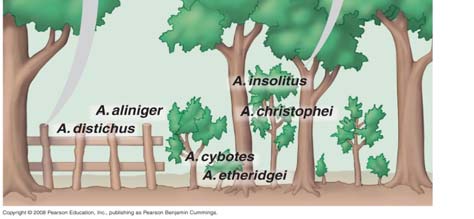
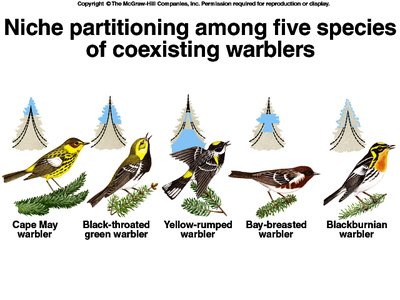
The ecological niche of a species is the sum of its use of biotic and abiotic resources in its environment—its "profession" in the ecosystem. If two species have identical niches, they cannot coexist. Resource partitioning is the differentiation of niches that enables similar species to coexist.
Fundamental vs. Realized Niche
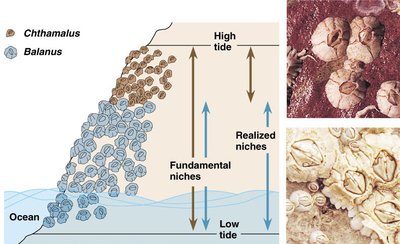
The fundamental niche is the full range of environmental conditions a species could occupy, while the realized niche is the portion it actually occupies due to competition.
Character Displacement
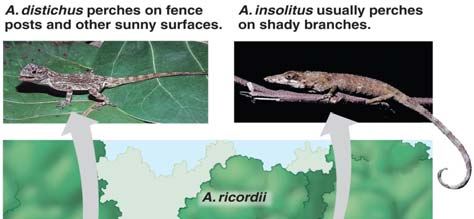
Character displacement is the tendency for characteristics to diverge more in sympatric (overlapping) populations than in allopatric (separate) populations, reducing competition.
Predation and Prey Adaptations
Predator-Prey Interactions
Predation is an interaction where one species (predator) kills and eats another (prey). Prey species have evolved various adaptations to avoid being eaten.
Prey Defenses
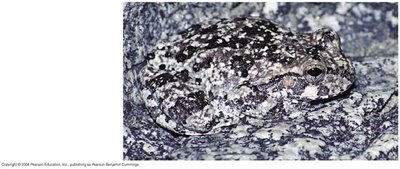
Crypsis (Cryptic Coloration): Camouflage makes prey difficult to detect.
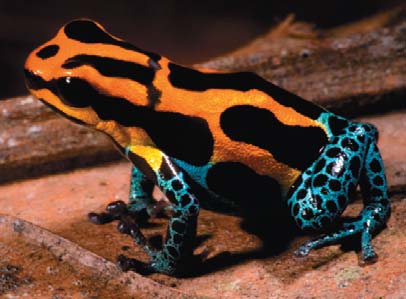
Aposematic Coloration: Warning coloration signals chemical defenses to predators.
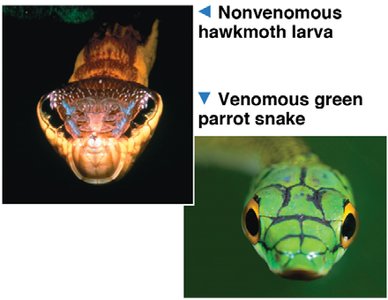
Batesian Mimicry: A harmless species mimics a harmful one.
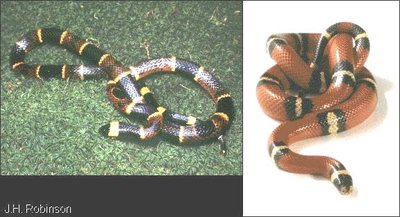
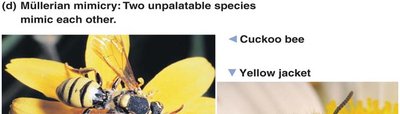
Müllerian Mimicry: Two or more harmful species resemble each other, reinforcing avoidance by predators.
Herbivory
Plant Defenses Against Herbivores
Herbivory is the consumption of plant or algal parts by animals. Plants have evolved defenses such as:
Chemical toxins (e.g., strychnine, nicotine)
Physical defenses (e.g., spines, thorns)
Symbiosis: Living Together
Types of Symbiotic Relationships
Symbiosis is a close and long-term interaction between two or more species. Major types include:
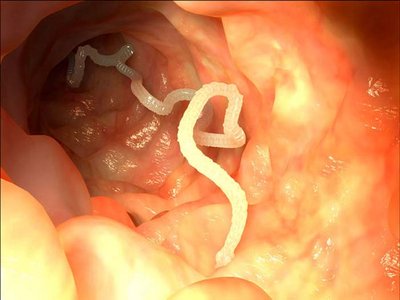
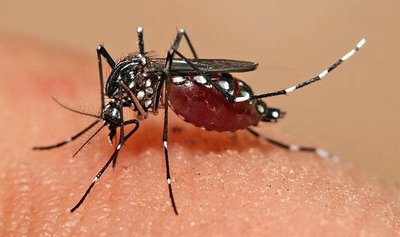
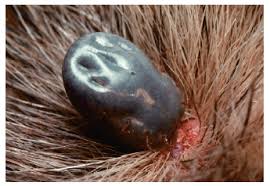
Parasitism (+/−): Parasite derives nourishment from host, harming it. Endoparasites live inside the host (e.g., tapeworms), while ectoparasites live on the host's surface (e.g., ticks, mosquitoes).
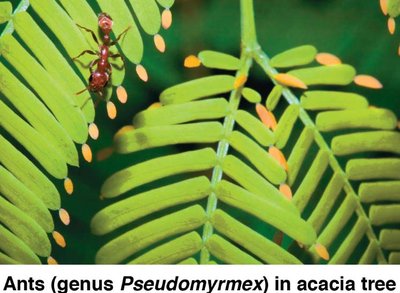
Mutualism (+/+): Both species benefit. Example: Acacia trees and ants.
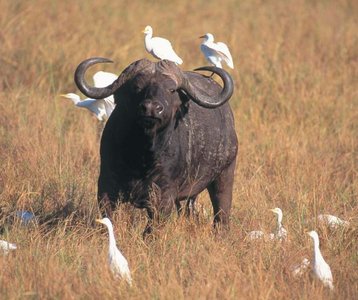
Commensalism (+/0): One species benefits, the other is unaffected. Example: Cattle egrets and water buffalo.
Community Structure: Diversity and Trophic Levels
Species Diversity
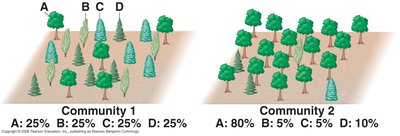
Species diversity is the variety of organisms in a community, measured by:
Species richness: Number of different species
Relative abundance: Proportion each species represents
Trophic Structure and Food Webs
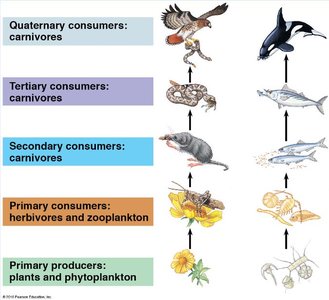
Trophic structure describes the feeding relationships among organisms. Food chains show the linear flow of energy, while food webs illustrate complex feeding relationships.
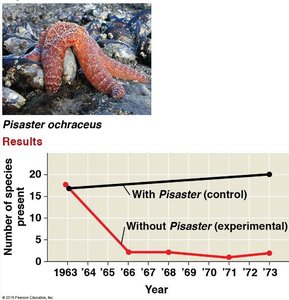
Dominant and Keystone Species
Dominant species: Most abundant or highest biomass in a community.
Keystone species: Exert strong control on community structure due to their ecological roles, not abundance.
Disturbance and Succession
Disturbance and Stability
Disturbance is an event that changes a community by removing organisms or altering resource availability. The intermediate disturbance hypothesis suggests that moderate disturbance fosters greater diversity than high or low disturbance.
Ecological Succession
Primary succession: Occurs in lifeless areas without soil (e.g., new volcanic islands).
Secondary succession: Occurs where a disturbance has cleared a community but left the soil intact (e.g., after fire).
Biogeographic Factors and Community Diversity
Latitude and Area Effects
Latitude: Species diversity is generally higher in the tropics due to stable climate and longer evolutionary time.
Area: Larger areas tend to have more species due to greater habitat diversity.
Island Biogeography
Islands are ideal for studying factors affecting species diversity. The island equilibrium model states that the number of species on an island is determined by immigration and extinction rates, which are influenced by island size and distance from the mainland.
Summary Table: Key Terms and Concepts
Term | Definition |
|---|---|
Community | Populations of different species living together |
Interspecific Interaction | Relationships between species in a community |
Ecological Niche | Sum of a species' use of resources |
Resource Partitioning | Division of resources to reduce competition |
Competitive Exclusion | Elimination of one species by another due to competition |
Predation | One species eats another |
Herbivory | Animal eats plant/algae |
Symbiosis | Close relationship between species |
Mutualism | Both species benefit |
Commensalism | One benefits, other unaffected |
Parasitism | One benefits, other harmed |
Species Diversity | Variety of species in a community |
Trophic Structure | Feeding relationships in a community |
Keystone Species | Species with strong community impact |
Ecological Succession | Sequence of community changes after disturbance |
