 Indietro
Comprehensive Study Guidance for General Biology: Cellular Respiration, Photosynthesis, and DNA/Protein Synthesis
Guida di studio - Note intelligenti
 Appunti personalizzati basati sui tuoi materiali, ampliati con definizioni chiave, esempi e contesto.
Q1. What is the equation for cellular respiration?
Background
Topic: Cellular Respiration
This question tests your understanding of the overall chemical reaction for cellular respiration, which is how cells convert glucose and oxygen into energy, carbon dioxide, and water.
Key Terms and Formulas
Cellular respiration: The process by which cells extract energy from glucose.
General equation:
Step-by-Step Guidance
Recall that glucose () and oxygen () are the main reactants.
Think about the products: carbon dioxide (), water (), and energy (ATP).
Balance the equation so that the number of atoms for each element is equal on both sides.
Write the equation in the standard format used in biology textbooks.
Try solving on your own before revealing the answer!
Final Answer:
This equation shows that glucose and oxygen are converted into carbon dioxide, water, and energy (ATP) during cellular respiration.
Q2. What is the equation for photosynthesis?
Background
Topic: Photosynthesis
This question tests your understanding of the overall chemical reaction for photosynthesis, which is how plants convert carbon dioxide and water into glucose and oxygen using light energy.
Key Terms and Formulas
Photosynthesis: The process by which autotrophs (like plants) make their own food.
General equation:
Step-by-Step Guidance
Identify the reactants: carbon dioxide (), water (), and light energy.
Identify the products: glucose () and oxygen ().
Balance the equation so that the number of atoms for each element is equal on both sides.
Write the equation in the standard format used in biology textbooks.
Try solving on your own before revealing the answer!
Final Answer:
This equation shows that photosynthesis uses carbon dioxide, water, and light energy to produce glucose and oxygen.
Q3. What is the main purpose of cellular respiration?
Background
Topic: Cellular Respiration
This question is about the biological function of cellular respiration in living organisms.
Key Terms
ATP: Adenosine triphosphate, the energy currency of the cell.
Metabolism: The sum of all chemical reactions in the cell.
Step-by-Step Guidance
Think about what cells need to survive and perform their functions.
Consider how glucose is used in the cell and what it is converted into.
Recall the role of ATP in cellular activities.
Try solving on your own before revealing the answer!
Final Answer:
The main purpose of cellular respiration is to produce ATP, which provides energy for cellular processes.
Cells use ATP to power activities such as movement, growth, and repair.
Q4. What is the main purpose of photosynthesis?
Background
Topic: Photosynthesis
This question is about the biological function of photosynthesis in autotrophic organisms.
Key Terms
Autotroph: An organism that makes its own food.
Glucose: A simple sugar produced during photosynthesis.
Step-by-Step Guidance
Think about what plants and other autotrophs need to grow and survive.
Consider the role of sunlight in the process.
Recall what is produced during photosynthesis and how it is used by the organism.
Try solving on your own before revealing the answer!
Final Answer:
The main purpose of photosynthesis is to produce glucose, which serves as food and energy for the organism.
Photosynthesis also releases oxygen as a by-product, which is essential for aerobic life.
Q5. Why are autotrophs considered to be producers?
Background
Topic: Autotrophs and Ecosystem Roles
This question tests your understanding of the ecological role of autotrophs in food webs.
Key Terms
Autotroph: An organism that produces its own food from inorganic substances.
Producer: An organism that forms the base of the food chain.
Step-by-Step Guidance
Recall what autotrophs do during photosynthesis.
Think about how their products are used by other organisms.
Consider the flow of energy in an ecosystem.
Try solving on your own before revealing the answer!
Final Answer:
Autotrophs are considered producers because they make their own food and provide energy for other organisms in the ecosystem.
They convert sunlight into chemical energy, which is then passed up the food chain.
Q6. Why are heterotrophs considered to be consumers?
Background
Topic: Heterotrophs and Ecosystem Roles
This question tests your understanding of the ecological role of heterotrophs in food webs.
Key Terms
Heterotroph: An organism that cannot make its own food and must consume other organisms.
Consumer: An organism that eats producers or other consumers.
Step-by-Step Guidance
Recall how heterotrophs obtain energy.
Think about their position in the food chain.
Consider the difference between producers and consumers.
Try solving on your own before revealing the answer!
Final Answer:
Heterotrophs are considered consumers because they obtain energy by eating other organisms, rather than producing their own food.
They rely on autotrophs or other heterotrophs for their energy needs.
Q7. Do plants perform only photosynthesis, only cellular respiration, or both?
Background
Topic: Plant Metabolism
This question tests your understanding of the metabolic processes in plants.
Key Terms
Photosynthesis: The process of making food using sunlight.
Cellular respiration: The process of breaking down food to release energy.
Step-by-Step Guidance
Recall the main functions of photosynthesis and cellular respiration.
Think about when and why plants need energy.
Consider whether plants need to break down glucose for energy.
Try solving on your own before revealing the answer!
Final Answer:
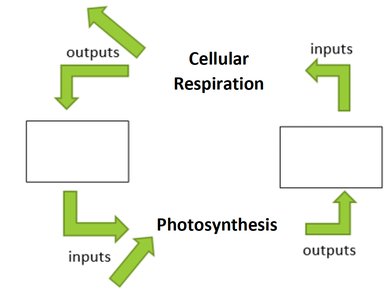
Plants perform both photosynthesis and cellular respiration.
They make glucose during photosynthesis and break it down for energy during cellular respiration.
Q8. Do animals perform only photosynthesis, only cellular respiration, or both?
Background
Topic: Animal Metabolism
This question tests your understanding of the metabolic processes in animals.
Key Terms
Photosynthesis: Making food from sunlight (not performed by animals).
Cellular respiration: Breaking down food for energy (performed by animals).
Step-by-Step Guidance
Recall the main functions of photosynthesis and cellular respiration.
Think about how animals obtain their food.
Consider whether animals have chloroplasts or mitochondria.
Try solving on your own before revealing the answer!
Final Answer:
Animals perform only cellular respiration, not photosynthesis.
They rely on consuming other organisms for food and break it down for energy.
Q9. Label the mitochondrion
Background
Topic: Cell Structure and Function
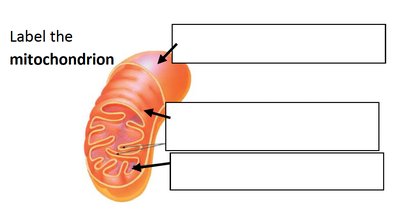
This question tests your ability to identify the main parts of the mitochondrion, the organelle responsible for cellular respiration.
Key Terms
Mitochondrion: The "powerhouse" of the cell.
Parts to label: Outer membrane, inner membrane, matrix, cristae.
Step-by-Step Guidance
Look for the outermost layer of the mitochondrion (outer membrane).
Identify the folded inner membrane (cristae).
Find the space inside the inner membrane (matrix).
Try labeling on your own before revealing the answer!
Final Answer:
Top box: Outer membrane
Middle box: Cristae (folded inner membrane)
Bottom box: Matrix
These are the main structural features of the mitochondrion.
Q10. Label the chloroplast
Background
Topic: Cell Structure and Function
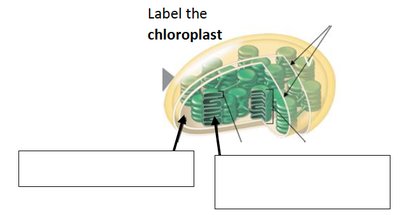
This question tests your ability to identify the main parts of the chloroplast, the organelle responsible for photosynthesis.
Key Terms
Chloroplast: The site of photosynthesis in plant cells.
Parts to label: Thylakoid, stroma, granum.
Step-by-Step Guidance
Look for the stacks of green discs (thylakoids/granum).
Identify the fluid surrounding the stacks (stroma).
Try labeling on your own before revealing the answer!
Final Answer:
Left box: Stroma
Right box: Thylakoid (or granum for the stack)
These are the main structural features of the chloroplast.
Q11. What is the main function of the electron transport chain in cellular respiration?
Background
Topic: Cellular Respiration - Electron Transport Chain
This question tests your understanding of the final stage of cellular respiration, where most ATP is produced.
Key Terms and Formulas
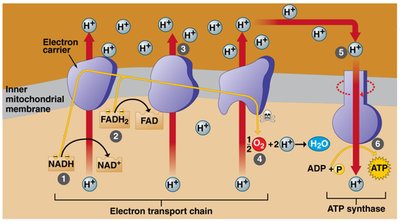
Electron Transport Chain (ETC): A series of proteins in the inner mitochondrial membrane.
ATP synthase: The enzyme that makes ATP.
Key formula:
Step-by-Step Guidance
Recall that NADH and FADH2 donate electrons to the ETC.
Think about how the ETC creates a proton (H+) gradient across the membrane.
Consider how ATP synthase uses this gradient to make ATP.
Try solving on your own before revealing the answer!
Final Answer:
The main function of the electron transport chain is to produce ATP by using the energy from electrons to create a proton gradient, which powers ATP synthase.
This stage produces the most ATP in cellular respiration.
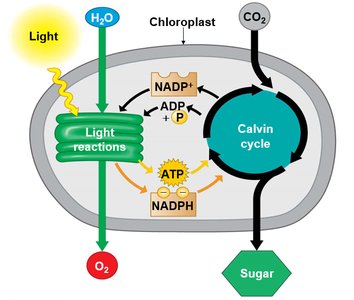
Q12. What is the main function of the light reactions in photosynthesis?
Background
Topic: Photosynthesis - Light Reactions
This question tests your understanding of the first stage of photosynthesis, where light energy is converted to chemical energy.
Key Terms and Formulas
Light reactions: The "photo" part of photosynthesis.
ATP and NADPH: Energy carriers produced in the light reactions.
Step-by-Step Guidance
Recall that light energy is absorbed by chlorophyll in the thylakoid membranes.
Think about how water is split to provide electrons and release oxygen.
Consider how ATP and NADPH are produced and used in the Calvin cycle.
Try solving on your own before revealing the answer!
Final Answer:
The main function of the light reactions is to convert light energy into chemical energy in the form of ATP and NADPH, and to produce oxygen as a by-product.
ATP and NADPH are then used in the Calvin cycle to make glucose.
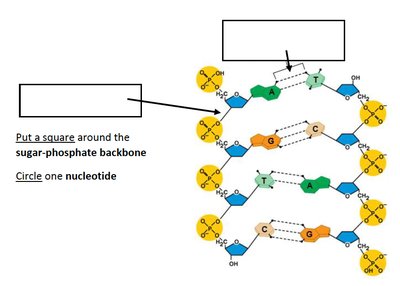
Q13. What is the monomer (building block) of both RNA and DNA?
Background
Topic: Structure of Nucleic Acids
This question tests your understanding of the basic units that make up nucleic acids.
Key Terms
Nucleotide: The monomer of nucleic acids.
Components: Sugar, phosphate, nitrogenous base.
Step-by-Step Guidance
Recall the three parts of a nucleotide.
Think about how nucleotides link together to form DNA and RNA.
Try solving on your own before revealing the answer!
Final Answer:
The monomer of both RNA and DNA is the nucleotide.
Each nucleotide consists of a sugar, a phosphate group, and a nitrogenous base.
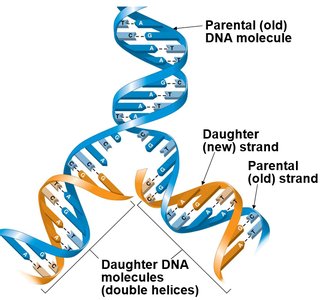
Q14. What is the purpose of DNA replication?
Background
Topic: DNA Replication
This question tests your understanding of why cells need to copy their DNA.
Key Terms
DNA replication: The process of copying DNA before cell division.
Parent strand: The original DNA strand used as a template.
Step-by-Step Guidance
Recall when cells need to divide (mitosis/meiosis).
Think about why each new cell needs a complete set of DNA.
Try solving on your own before revealing the answer!
Final Answer:
The purpose of DNA replication is to ensure that each new cell receives an exact copy of the DNA.
This is essential for growth, repair, and reproduction in organisms.
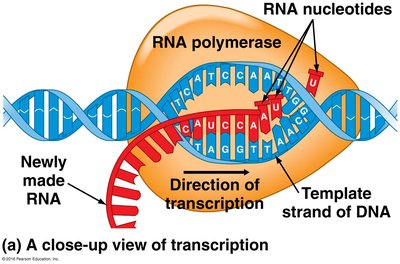
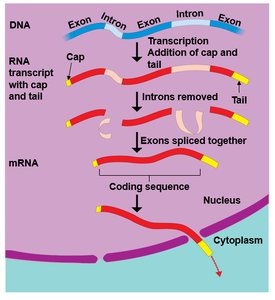
Q15. What is the purpose of transcription?
Background
Topic: Protein Synthesis - Transcription
This question tests your understanding of the first step in protein synthesis, where DNA is used to make RNA.
Key Terms
Transcription: The process of making RNA from DNA.
mRNA: Messenger RNA, carries genetic information from DNA to the ribosome.
Step-by-Step Guidance
Recall the flow of genetic information: DNA → RNA → Protein.
Think about why cells need to make RNA copies of genes.
Consider the role of mRNA in protein synthesis.
Try solving on your own before revealing the answer!
Final Answer:
The purpose of transcription is to create an RNA copy of a gene, which can then be used to make a protein.
mRNA carries the genetic code from the nucleus to the ribosome.
Q16. What is the purpose of translation?
Background
Topic: Protein Synthesis - Translation
This question tests your understanding of the second step in protein synthesis, where mRNA is used to make a protein.
Key Terms
Translation: The process of making a protein from mRNA.
Ribosome: The organelle where translation occurs.
tRNA: Transfer RNA, brings amino acids to the ribosome.
Step-by-Step Guidance
Recall the flow of genetic information: DNA → RNA → Protein.
Think about how the ribosome reads mRNA and assembles amino acids.
Consider the role of tRNA in bringing amino acids to the ribosome.
Try solving on your own before revealing the answer!
Final Answer:
The purpose of translation is to build a protein by reading the mRNA sequence and assembling amino acids in the correct order.
This is how cells make the proteins needed for structure and function.
