 Indietro
Comprehensive Study Guide for General Biology: Genetics, Molecular Biology, Evolution, and Biotechnology
Guida di studio - Note intelligenti
 Appunti personalizzati basati sui tuoi materiali, ampliati con definizioni chiave, esempi e contesto.
Ch 14 - Mendel and the Gene
Simple Mendelian Genetics and Relationship to Meiosis
Mendelian genetics explains how traits are inherited through discrete units called genes, which exist in different forms known as alleles. The process of meiosis is fundamental to understanding how alleles are distributed to offspring, resulting in predictable phenotypic and genotypic ratios.
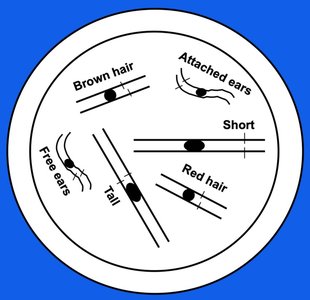
Gene vs. Allele: A gene is a segment of DNA that codes for a trait (e.g., hair color), while an allele is a variant of that gene (e.g., brown or red hair).
Dominant vs. Recessive Alleles: Dominant alleles mask the effect of recessive alleles in heterozygotes. For example, brown hair is dominant over red hair.
Meiosis and Allele Combinations: During meiosis, alleles segregate so each gamete receives one allele per gene. In a dihybrid individual (AaBb), gametes can be AB, Ab, aB, or ab.
Mendel’s Laws:
Law of Segregation: Each individual has two alleles for each gene, which segregate during gamete formation.
Law of Independent Assortment: Alleles of different genes assort independently during meiosis, leading to genetic variation.
Phenomena Beyond Mendelian Genetics: Linked genes, incomplete dominance, co-dominance, multiple alleles, epistasis, quantitative traits, pleiotropy, environmental effects, and epigenetics all influence inheritance patterns.
Ch 18 - Control of Gene Expression in Bacteria
Gene Expression and the lac Operon
Gene expression in bacteria is tightly regulated to ensure that genes are expressed only when needed. The lac operon is a classic example of transcriptional regulation in response to environmental conditions.
lac Operon Structure: The lac operon includes the lacZ, lacY, and lacA genes, which are involved in lactose metabolism. Regulation occurs at the promoter and operator regions.
Levels of Control: Gene expression can be controlled at transcriptional, translational, and post-translational levels.
Regulatory Elements: The repressor protein binds to the operator to block transcription unless lactose is present, allowing RNA polymerase to transcribe the operon.

Ch 20 - The Molecular Revolution: Biotechnology, Genomics, and New Frontiers
Biotechnology Techniques: Gel Electrophoresis, PCR, and DNA Sequencing
Modern biotechnology relies on several key techniques to analyze and manipulate DNA, including gel electrophoresis, polymerase chain reaction (PCR), and DNA sequencing.
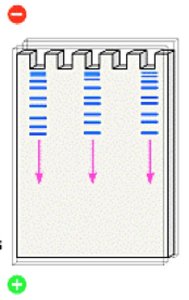
Gel Electrophoresis: Separates DNA fragments by size using an electric field. Smaller fragments move faster through the gel matrix. Each column represents a sample with different DNA fragment sizes.
PCR (Polymerase Chain Reaction): Amplifies specific DNA sequences using cycles of denaturation, annealing, and extension. Taq polymerase is used for its heat stability.
Restriction Enzymes and Plasmids: Restriction enzymes cut DNA at specific sites, and plasmids serve as vectors for gene transfer.
Recombinant DNA Technology: Involves inserting genes into bacteria using plasmids, restriction enzymes, DNA ligase, and reverse transcriptase.
Genetically Modified Crops: Agrobacterium plasmids are used to transfer genes (e.g., Bt toxin) into plants.
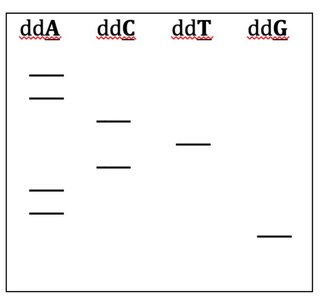
Sanger Sequencing: Uses dideoxy nucleotides to terminate DNA synthesis at specific bases, allowing determination of DNA sequence.
CRISPR-Cas System: Enables precise gene editing by targeting specific DNA sequences.
Ch 22/25 - Evolution by Natural Selection and Phylogenies
Evolution, Natural Selection, and Phylogenetic Trees
Evolution is the change in allele frequencies in populations over time, driven by mechanisms such as natural selection, genetic drift, and gene flow. Phylogenetic trees illustrate evolutionary relationships among species.
Definition of Evolution: Evolution involves changes in genetic composition of populations, not individuals.
Scientific Theory: A scientific theory is a well-supported explanation based on evidence.
Lamarck vs. Darwin: Lamarck proposed inheritance of acquired traits; Darwin proposed evolution by natural selection.
Monophyletic Groups: Groups that include all descendants of a common ancestor.
Homology vs. Analogy: Homologous structures arise from common ancestry; analogous structures arise from convergent evolution.
Evidence for Evolution: Fossils, transitional forms, vestigial traits, and observable changes in species.
Four Postulates of Natural Selection: Variation, heritability, differential survival, and reproduction.
Ch 23 - Evolutionary Processes
Hardy-Weinberg Equilibrium and Modes of Selection
The Hardy-Weinberg model provides a framework for understanding allele and genotype frequencies in populations. Evolutionary processes include natural selection, genetic drift, gene flow, mutation, and nonrandom mating.
Hardy-Weinberg Equations:
$p + q = 1$
$p^2 + 2pq + q^2 = 1$
Modes of Selection: Directional, stabilizing, and disruptive selection affect trait distributions.
Genetic Drift: Random changes in allele frequencies, including founder effect and bottleneck.
Gene Flow: Movement of alleles between populations.
Mutation: Source of new alleles.
Nonrandom Mating: Inbreeding increases homozygosity.
Sexual Selection: Traits that enhance reproductive success may be favored.
Ch 24 - Speciation
Species Concepts and Mechanisms of Speciation
Speciation is the process by which new species arise. Multiple concepts define species, and speciation can occur via physical separation (allopatric) or within the same area (sympatric).
Biological Species Concept: Based on reproductive isolation.
Morphospecies Concept: Based on structural features.
Phylogenetic Concept: Based on smallest distinguishable phylogenetic taxon.
Allopatric vs. Sympatric Speciation: Allopatric involves geographic separation; sympatric occurs without physical separation.
Hybridization: New species can form through hybridization, as seen in some plants.
Ch 33 - Viruses
Virus Structure, Reproductive Cycles, and Disease
Viruses are infectious agents that differ from living organisms in their structure and reproductive strategies. They can cause diseases such as HIV and COVID-19.
Virus vs. Living Organism: Viruses lack many characteristics of life, such as metabolism and cellular structure.
Enveloped vs. Nonenveloped Viruses: Enveloped viruses have a membrane; nonenveloped do not.
Lytic and Lysogenic Cycles: Lytic cycle results in cell rupture; lysogenic cycle incorporates viral genome into host DNA.
Retroviruses: Use reverse transcription to create DNA from RNA.
HIV Cycle: Infects white blood cells, leading to new virus production.
SARS-CoV-2 Structure: Contains spike (S) and nucleocapsid (N) proteins.
Viruses vs. Prions: Prions are infectious proteins, not nucleic acid-based.
Ch 26 - Bacteria and Archaea
Prokaryotic Diversity and Significance
Bacteria and Archaea are prokaryotes, distinguished from eukaryotes by their cellular structure and genetic organization. They play essential roles in nature.
General Features: Prokaryotes lack a nucleus and membrane-bound organelles.
Domains: Bacteria and Archaea.
Symbiotic Relationships: Parasitism, mutualism, commensalism.
Significant Species: E. coli (model organism), B. thuringiensis (pesticide), B. anthracis (anthrax), H. pylori (ulcers), Cyanobacteria (oxygen production).
Extremophiles: Thrive in extreme environments.
Shapes and Arrangements: Cocci, bacilli, spirilli; strep and staph arrangements.
Gram Positive vs. Negative: Differences in cell wall structure.
Motility: Flagella, gliding.
Gene Transfer: Binary fission, transformation, transduction, conjugation, endospores.
Koch’s Postulates: Criteria for identifying disease-causing agents.
Ch 28 - Green Algae and Land Plants
Plant Diversity and Life Cycles
Land plants exhibit diverse life cycles, including alternation of generations. Mosses, ferns, and seed plants differ in their reproductive strategies and dominance of life cycle phases.
Alternation of Generations: Life cycle alternates between haploid gametophyte and diploid sporophyte.
Mosses and Ferns: Mosses are gametophyte-dominant; ferns and seed plants are sporophyte-dominant.
Vascular Tissue: Xylem and phloem allow large plant growth.
Seeds: Used for dispersal in seed plants.
Gymnosperms vs. Angiosperms: Gymnosperms (e.g., pine) have naked seeds; angiosperms (e.g., maple) have seeds enclosed in fruit.
Ch 29 - Fungi
Fungal Structure, Function, and Diversity
Fungi play crucial roles in ecosystems through extracellular digestion and symbiotic relationships. Major groups differ in reproductive structures and life cycles.
Extracellular Digestion: Fungi absorb nutrients from surroundings.
Cell Structure: Cell wall, pores, haustoria.
Haustorium: Facilitates nutrient exchange with plants.
Major Groups: Chytrids, ascomycetes, zygomycetes, basidiomycetes.
Mushroom Life Cycle: Involves spore fusion, dikaryotic hyphae, mushroom formation, spore production.
Specialized Fungi: Lichens, mycorrhizae, Pilobolus, nematode-trapping fungi.
Ch 30-32 - Animals
Animal Diversity and Body Plans
Animals are distinguished by their body plans and developmental patterns. Key concepts include relationships among major groups and defining characteristics.
Choanoflagellates and Sponges: Early animal relatives.
Protostomes vs. Deuterostomes: Mouth vs. anus development.
Coelomates vs. Acoelomates: Presence of body cavity.
Chordates: Notochord, dorsal nerve cord, pharyngeal slits, post-anal tail.
Ch 49 - An Introduction to Ecology
Ecology, Biomes, and Climate
Ecology studies interactions between organisms and their environment. Biomes are defined by climate and characteristic organisms.
Ecology: Study of organism-environment interactions.
Seasons: Caused by Earth's tilt and orbit.
Rain Shadow Effect: Mountains create dry areas on leeward sides.
Abiotic Factors: Temperature, precipitation determine biome distribution.
Biomes: Tropical wet forest, desert, temperate grassland, temperate forest, boreal forest, tundra.
Lake Turnover: Seasonal mixing of water layers.
Tropics: Hot and rainy due to intense sunlight and rising air.
Ch 50 - Behavioral Ecology
Animal Behavior and Communication
Behavioral ecology examines innate and learned behaviors, foraging strategies, mate choice, migration, communication, and altruism.
Fixed Action Patterns: Genetically determined responses.
Proximate vs. Ultimate Causation: Immediate vs. evolutionary causes.
Optimal Foraging: Maximizing food intake, minimizing energy.
Learning: Imprinting, classical conditioning, thinking.
Mate Choice: Features influencing reproductive success.
Migration: Piloting, orientation, navigation.
Communication: Visual, sound, pheromones, dances, deceit.
Altruism: Sacrificing for relatives to pass on genes.
Ch 51 - Population Ecology
Population Dynamics and Growth Models
Population ecology studies population size, growth, and structure. Models include exponential and logistic growth, carrying capacity, and survivorship curves.
Population: Group of individuals of same species in an area.
Growth Models: Exponential (unlimited), logistic (limited by carrying capacity).
Carrying Capacity: Maximum population size environment can support.
Survivorship Curves: Types I, II, III.
Population Characteristics: Dispersion, growth rate, density, range.
Mark-Recapture: Estimating population size.
Density Factors: Density-dependent (disease), density-independent (weather).
Human Population: Growth trends and projections.
Ch 52 - Community Ecology
Species Interactions and Diversity
Community ecology explores interactions among species, niche concepts, competition, defense mechanisms, mimicry, diversity measurement, keystone species, trophic cascades, and island biogeography.
Community: Multiple species in an area.
Niche: Fundamental vs. realized.
Competitive Exclusion: No two species can occupy same niche indefinitely.
Interactions: Competition, defense, mimicry.
Species Diversity: Shannon index.
Keystone Species: Disproportionate impact on community.
Trophic Cascade: Changes in one level affect others.
Island Biogeography: Species number depends on island size, distance, immigration, extinction.
Ch 53 - Ecosystem Ecology
Energy Flow, Nutrient Cycles, and Environmental Issues
Ecosystem ecology focuses on energy transfer, biogeochemical cycles, and environmental challenges such as eutrophication, biological magnification, climate change, and ozone depletion.
Trophic Levels: Primary producers, consumers.
Carbon Cycle: Movement of carbon through atmosphere, biosphere.
Nitrogen Cycle: Role of bacteria in nitrogen transformation.
Phosphorous Cycle: Movement from rocks to organisms.
Eutrophication: Excess nutrients cause dead zones.
Ecological Pyramids: Energy decreases at higher trophic levels.
DDT and Biological Magnification: Toxins accumulate in food webs.
Greenhouse Effect: Greenhouse gases trap heat.
Climate Change: Evidence and implications.
Ozone Depletion: CFCs damage ozone layer.
