 Indietro
Comprehensive Study Guide: Meiosis, Genetic Diversity, and Chromosome Disorders
Guida di studio - Note intelligenti
 Appunti personalizzati basati sui tuoi materiali, ampliati con definizioni chiave, esempi e contesto.
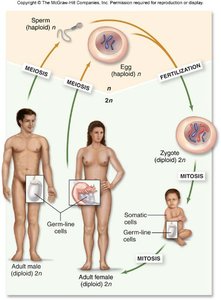
Q1. Describe the stages of the sexual life cycle. What are the roles of meiosis, gamete formation, and fertilization in this process?
Background
Topic: Sexual Life Cycle & Genetic Information Flow
This question tests your understanding of how organisms reproduce sexually, the stages involved, and the importance of meiosis, gamete formation, and fertilization in maintaining chromosome number and genetic diversity.
Key Terms:
Meiosis: Cell division that reduces chromosome number by half, producing haploid gametes.
Gamete: Sex cell (sperm or egg) with a haploid chromosome set.
Fertilization: Fusion of two gametes to form a diploid zygote.
Diploid (2n): Two sets of chromosomes.
Haploid (n): One set of chromosomes.
Step-by-Step Guidance
Start by identifying the main stages: meiosis, gamete formation, and fertilization.
Explain how meiosis occurs in germ cells to produce haploid gametes.
Describe the process of gamete formation (spermatogenesis in males, oogenesis in females).
Discuss how fertilization restores the diploid chromosome number in the zygote.
Consider how mitosis is involved after fertilization for growth and development.
Try solving on your own before revealing the answer!
Final Answer:
The sexual life cycle consists of meiosis (producing haploid gametes), gamete formation, and fertilization (restoring diploid chromosome number). Meiosis ensures genetic diversity and halving of chromosome number, gamete formation produces sex cells, and fertilization combines genetic material from two parents to form a diploid zygote. Mitosis then allows the zygote to grow and develop.
Q2. What are germ cells and how are they involved in the sexual life cycle?
Background
Topic: Germ Cells & Reproduction
This question focuses on the role of specialized cells (germ cells) in sexual reproduction and their function in meiosis and gamete production.
Key Terms:
Germ Cell: Cell that undergoes meiosis to produce gametes.
Somatic Cell: Body cell that does not participate in reproduction.
Step-by-Step Guidance
Define germ cells and distinguish them from somatic cells.
Explain where germ cells are located in the body (testes in males, ovaries in females).
Describe how germ cells undergo meiosis to produce gametes.
Discuss the importance of germ cells in maintaining genetic continuity across generations.
Try solving on your own before revealing the answer!
Final Answer:
Germ cells are specialized cells found in the gonads (testes and ovaries) that undergo meiosis to produce gametes (sperm and eggs). They are essential for sexual reproduction, ensuring genetic information is passed to offspring.
Q3. How are gametes produced in the sexual life cycle?
Background
Topic: Gametogenesis
This question tests your understanding of the process by which gametes (sperm and eggs) are formed from germ cells through meiosis.
Key Terms:
Gametogenesis: Formation of gametes from germ cells.
Spermatogenesis: Formation of sperm in males.
Oogenesis: Formation of eggs in females.
Step-by-Step Guidance
Identify the two types of gametogenesis: spermatogenesis and oogenesis.
Explain how germ cells undergo meiosis to produce haploid gametes.
Describe the differences in gamete production between males and females.
Discuss the importance of gametes being haploid for maintaining chromosome number.
Try solving on your own before revealing the answer!
Final Answer:
Gametes are produced by germ cells undergoing meiosis. In males, spermatogenesis produces sperm; in females, oogenesis produces eggs. Both processes result in haploid cells necessary for fertilization.
Q4. What is the role of mitosis in the sexual life cycle?
Background
Topic: Mitosis & Growth
This question examines how mitosis contributes to the development and maintenance of multicellular organisms after fertilization.
Key Terms:
Mitosis: Cell division that produces genetically identical cells.
Zygote: Fertilized egg cell.
Step-by-Step Guidance
Describe how mitosis occurs after fertilization in the zygote.
Explain the role of mitosis in growth, development, and tissue repair.
Discuss how mitosis maintains the diploid chromosome number in somatic cells.
Try solving on your own before revealing the answer!
Final Answer:
Mitosis allows the zygote to grow and develop into a multicellular organism by producing genetically identical diploid cells. It is essential for growth, development, and maintenance of tissues.
Q5. During fertilization, how is the chromosome number restored?
Background
Topic: Chromosome Number Restoration
This question tests your understanding of how fertilization combines two haploid gametes to restore the diploid chromosome number in the zygote.
Key Terms:
Haploid (n): One set of chromosomes.
Diploid (2n): Two sets of chromosomes.
Fertilization: Fusion of gametes.
Step-by-Step Guidance
Recall that gametes are haploid (n).
Explain how fertilization involves the fusion of two haploid gametes (sperm and egg).
Describe how the resulting zygote is diploid (2n), restoring chromosome number.
Try solving on your own before revealing the answer!
Final Answer:
Fertilization restores chromosome number by combining two haploid gametes (n + n), resulting in a diploid zygote (2n).
Q6. What is the difference between haploid and diploid?
Background
Topic: Chromosome Sets
This question tests your understanding of the basic genetic terminology regarding chromosome number in cells.
Key Terms:
Haploid (n): One set of chromosomes.
Diploid (2n): Two sets of chromosomes.
Step-by-Step Guidance
Define haploid and diploid in terms of chromosome sets.
Explain which cells are haploid (gametes) and which are diploid (somatic cells, zygote).
Discuss the importance of these terms in the context of meiosis and fertilization.
Try solving on your own before revealing the answer!
Final Answer:
Haploid cells have one set of chromosomes (n), while diploid cells have two sets (2n). Gametes are haploid; somatic cells and zygotes are diploid.
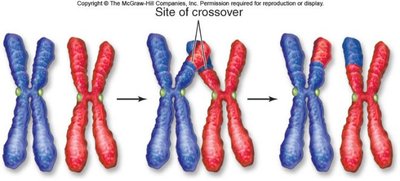
Q7a. Describe how crossing over occurs, and during which phase does it occur?
Background
Topic: Genetic Diversity via Crossing Over
This question tests your understanding of the mechanism of crossing over and its role in increasing genetic variation during meiosis.
Key Terms:
Crossing Over: Exchange of genetic material between homologous chromosomes.
Prophase I: First phase of meiosis I where crossing over occurs.
Homologous Chromosomes: Chromosomes with the same genes but possibly different alleles.
Step-by-Step Guidance
Identify the phase of meiosis where crossing over occurs (Prophase I).
Describe the process: homologous chromosomes pair up and exchange segments.
Explain how this exchange creates new combinations of alleles.
Discuss the importance of crossing over for genetic diversity.
Try solving on your own before revealing the answer!
Final Answer:
Crossing over occurs during Prophase I of meiosis, where homologous chromosomes exchange genetic material, resulting in new allele combinations and increased genetic diversity.
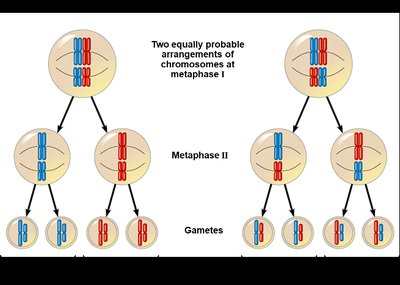
Q8c. Describe independent assortment and during which phase it occurs.
Background
Topic: Genetic Variation via Independent Assortment
This question tests your understanding of how chromosomes are randomly distributed to gametes during meiosis, increasing genetic variation.
Key Terms:
Independent Assortment: Random distribution of homologous chromosomes.
Metaphase I: Phase of meiosis I where independent assortment occurs.
Step-by-Step Guidance
Identify the phase: Metaphase I of meiosis.
Explain how homologous chromosome pairs align randomly at the metaphase plate.
Describe how this random alignment leads to different combinations of chromosomes in gametes.
Discuss the impact on genetic variation.
Try solving on your own before revealing the answer!
Final Answer:
Independent assortment occurs during Metaphase I of meiosis, where homologous chromosomes align randomly, resulting in diverse combinations of chromosomes in gametes.
Q9e. Define random fertilization and explain its role in diversity.
Background
Topic: Genetic Diversity via Random Fertilization
This question tests your understanding of how the random combination of gametes from two parents further increases genetic diversity.
Key Terms:
Random Fertilization: The unpredictable combination of any sperm with any egg.
Genetic Diversity: Variation in genetic makeup among individuals.
Step-by-Step Guidance
Define random fertilization and its unpredictability.
Explain how each gamete is genetically unique due to crossing over and independent assortment.
Discuss how the combination of two unique gametes multiplies genetic diversity in offspring.
Try solving on your own before revealing the answer!
Final Answer:
Random fertilization refers to the unpredictable pairing of any sperm with any egg, greatly increasing genetic diversity by combining unique gametes from each parent.
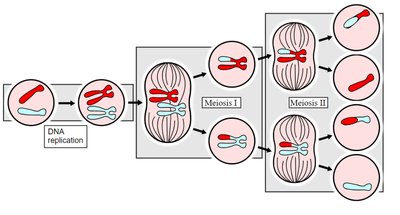
Q10. What happens to chromosome number after Meiosis I?
Background
Topic: Chromosome Reduction in Meiosis
This question tests your understanding of how meiosis reduces chromosome number and prepares cells for gamete formation.
Key Terms:
Meiosis I: First division in meiosis.
Homologous Chromosomes: Chromosome pairs separated during Meiosis I.
Step-by-Step Guidance
Recall that Meiosis I separates homologous chromosomes.
Explain how the resulting cells have half the original chromosome number.
Discuss the difference between chromosome number and chromatid number at this stage.
Try solving on your own before revealing the answer!
Final Answer:
After Meiosis I, cells have half the original chromosome number (haploid), but each chromosome still consists of two sister chromatids.
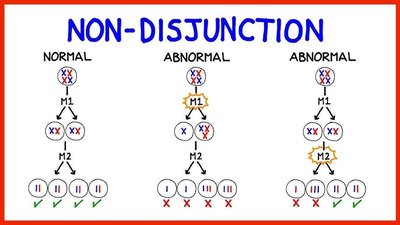
Q13. If homologous chromosomes fail to separate in anaphase I, what is the evaluative consequence for the resulting gametes?
Background
Topic: Nondisjunction & Chromosome Disorders
This question tests your understanding of nondisjunction, a meiotic error that can lead to genetic disorders such as Down Syndrome.
Key Terms:
Nondisjunction: Failure of chromosome pairs to separate properly.
Anaphase I: Stage where homologous chromosomes should separate.
Aneuploidy: Abnormal chromosome number in gametes.
Step-by-Step Guidance
Define nondisjunction and identify the stage (Anaphase I).
Explain how failure to separate leads to gametes with abnormal chromosome numbers.
Discuss the possible outcomes: some gametes with an extra chromosome, some missing one.
Try solving on your own before revealing the answer!
Final Answer:
If homologous chromosomes fail to separate in Anaphase I, half the gametes will have an extra chromosome, and half will lack one, leading to genetic disorders if fertilization occurs.
Q14. A student claims meiosis and mitosis are identical except meiosis produces half the chromosomes. Evaluate the statement.
Background
Topic: Comparing Mitosis and Meiosis
This question tests your ability to critically compare the processes of mitosis and meiosis, focusing on their differences in division, genetic diversity, and chromosome number.
Key Terms:
Mitosis: Produces identical diploid cells.
Meiosis: Produces genetically diverse haploid cells.
Genetic Diversity: Increased by meiosis, not mitosis.
Step-by-Step Guidance
Compare the number of divisions in mitosis (one) and meiosis (two).
Discuss the genetic outcomes: mitosis produces identical cells, meiosis produces diverse cells.
Explain the role of crossing over and independent assortment in meiosis.
Evaluate the claim based on these differences.
Try solving on your own before revealing the answer!
Final Answer:
The statement is incorrect because meiosis involves two divisions and promotes genetic diversity, unlike mitosis, which produces identical cells in a single division.
Q15. If each human gamete can produce ~8 million combinations of chromosomes (due to independent assortment), how does random fertilization affect total possible zygotic combinations?
Background
Topic: Genetic Variation in Offspring
This question tests your understanding of how independent assortment and random fertilization together contribute to the vast genetic diversity seen in humans.
Key Terms:
Independent Assortment: Random distribution of chromosomes during meiosis.
Random Fertilization: Unpredictable pairing of gametes.
Zygotic Combinations: Total possible genetic combinations in offspring.
Step-by-Step Guidance
Recall that each gamete has ~8 million possible chromosome combinations.
Explain how random fertilization multiplies the combinations from both parents.
Set up the calculation: multiply the number of combinations from each parent.
Try solving on your own before revealing the answer!
Final Answer:
Random fertilization multiplies the possible combinations from both parents, resulting in over 64 trillion possible zygotic combinations (8 million × 8 million).
Q1 (Case Study). Define nondisjunction. What stage(s) of meiosis can nondisjunction occur, and what is the result?
Background
Topic: Chromosome Disorders & Nondisjunction
This question tests your understanding of nondisjunction, a meiotic error that can lead to conditions like Down Syndrome.
Key Terms:
Nondisjunction: Failure of chromosomes to separate properly during meiosis.
Meiosis I & II: Stages where nondisjunction can occur.
Aneuploidy: Abnormal chromosome number.
Step-by-Step Guidance
Define nondisjunction and its significance.
Identify the stages of meiosis where nondisjunction can occur (Anaphase I or II).
Explain the consequences: gametes with abnormal chromosome numbers.
Try solving on your own before revealing the answer!
Final Answer:
Nondisjunction is the failure of chromosomes to separate properly during meiosis I or II, resulting in gametes with extra or missing chromosomes, which can cause disorders like Down Syndrome.
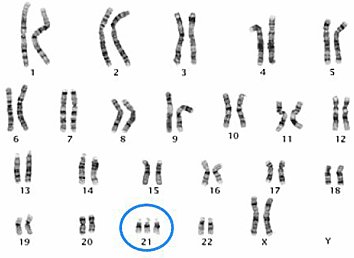
Q6 (Case Study). Suppose a nondisjunction occurs during meiosis forming an egg with 24 chromosomes and it is fertilized by a normal sperm. What will be the chromosome number in the resulting zygote?
Background
Topic: Aneuploidy & Fertilization
This question tests your ability to apply knowledge of nondisjunction and chromosome number to predict the outcome of fertilization.
Key Terms:
Nondisjunction: Error in chromosome separation.
Egg: Female gamete.
Sperm: Male gamete.
Zygote: Fertilized cell.
Step-by-Step Guidance
Recall the normal chromosome number in human gametes (23).
Identify the abnormal egg with 24 chromosomes due to nondisjunction.
Set up the calculation: add the chromosomes from the egg and sperm.
Try solving on your own before revealing the answer!
Final Answer:
The resulting zygote will have 47 chromosomes (24 from the egg + 23 from the sperm), which can lead to trisomy conditions such as Down Syndrome.
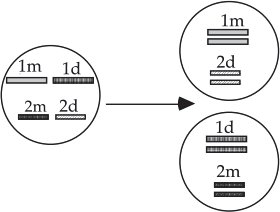
Q11. You want to do genetic screening to gene mutation in your chromosomes. The diagram below shows your diploid cells with 2 chromosomes #1 and #2. The chromosome derived from the mother is denoted "m" and the chromosome from your father is denoted "d". If you saw the picture below you would know that your cells are:
Background
Topic: Chromosome Arrangement & Cell Division
This question tests your ability to interpret diagrams of chromosome arrangement and identify the stage of cell division.
Key Terms:
Diploid: Two sets of chromosomes.
Meiosis I & II: Stages of cell division.
Mitosis: Cell division producing identical cells.
Step-by-Step Guidance
Analyze the diagram for chromosome arrangement (mother vs. father).
Compare the arrangement to known stages of mitosis and meiosis.
Determine which stage matches the diagram based on chromosome separation.
Try solving on your own before revealing the answer!
Final Answer:
The diagram shows cells at the end of meiosis II, where chromosomes from each parent are separated into different cells.
