 Indietro
Part 2: Bio Notes Week 1 Exam 2
Guida di studio - Note intelligenti
 Appunti personalizzati basati sui tuoi materiali, ampliati con definizioni chiave, esempi e contesto.
Descent with Modification: The Darwinian View of Life
Introduction to Evolutionary Theory
Evolution is the process by which species of organisms change over time through the inheritance of traits. Charles Darwin's theory of descent with modification explains how all species are related through common ancestry and have diverged over time due to natural selection and other mechanisms.
Evidence for Evolution
1. The Tree of Life and Common Ancestry
Darwin's first sketch of an evolutionary tree illustrates the concept of common descent, where all species are connected through a branching pattern of evolution. This tree-like diagram represents how species diverge from common ancestors over time.
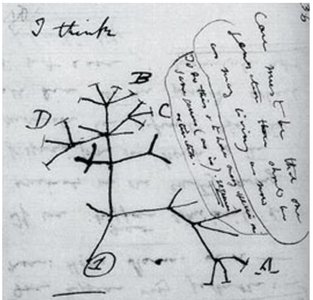
Common ancestry: All living organisms share a common ancestor at some point in evolutionary history.
Branching evolution: Species diverge from common ancestors, leading to the diversity of life observed today.
2. Phylogenetic Trees and Descent with Modification
Phylogenetic trees are diagrams that depict evolutionary relationships among species. They show how modern species have descended from ancient ancestors, with each branch point representing a common ancestor.
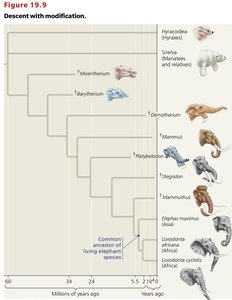
Branch points: Indicate common ancestors shared by descendant species.
Descent with modification: Over time, species accumulate differences, leading to the formation of new species.
Example: The evolution of elephants from a common ancestor, with various extinct and extant species shown.
3. Artificial Selection
Artificial selection is the process by which humans selectively breed organisms for desired traits. This demonstrates how selection can drive significant changes in organisms over relatively short periods.
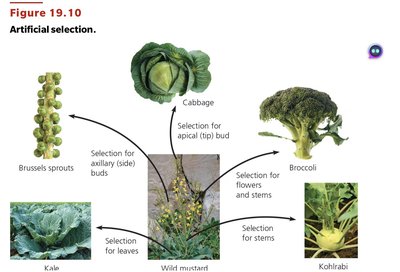
Wild mustard (Brassica oleracea): Selective breeding has produced diverse vegetables such as cabbage, broccoli, Brussels sprouts, kale, and kohlrabi.
Key concept: Artificial selection provides a model for understanding natural selection.
4. Variation in Populations
Natural populations exhibit variation in inherited traits. This variation is essential for natural selection to act upon, as it provides the raw material for evolutionary change.
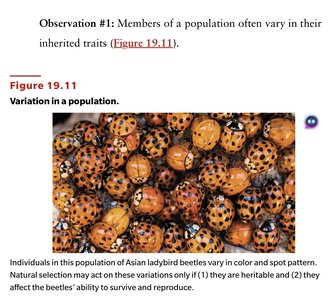
Heritable variation: Differences in traits must be passed from parents to offspring for evolution to occur.
Example: Asian ladybird beetles show variation in color and spot pattern.
5. Overproduction of Offspring
All species have the capacity to produce more offspring than the environment can support. This leads to competition for limited resources, with only some individuals surviving and reproducing.
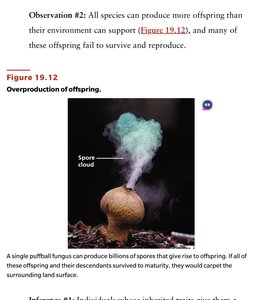
Overproduction: Organisms produce more offspring than can survive, leading to a struggle for existence.
Example: Puffball fungi release billions of spores, but only a few survive to maturity.
6. Evolutionary Adaptation
Adaptations are inherited traits that enhance an organism's ability to survive and reproduce in a particular environment. Camouflage is a common example of evolutionary adaptation.
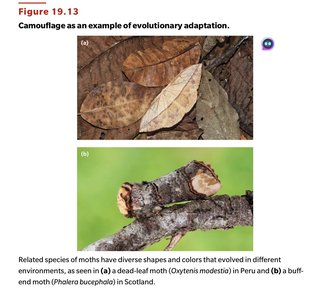
Camouflage: Allows organisms to avoid predation by blending into their environment.
Example: Moths with wing patterns that resemble leaves or twigs.
7. Natural Selection in Action: Soapberry Bug Study
Changes in a population's food source can drive evolutionary changes through natural selection. The soapberry bug study demonstrates how beak length evolved in response to changes in available food plants.
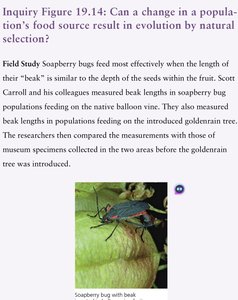
Field study: Soapberry bugs feeding on different plants evolved different beak lengths to match the depth of seeds in the fruit.
8. Data Analysis: Evolution of Beak Lengths
Comparisons of historical and contemporary data show that beak lengths in soapberry bugs changed in response to the introduction of a new food source, supporting the role of natural selection in evolution.
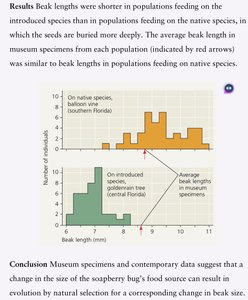
Data interpretation: Populations feeding on introduced species evolved shorter beaks compared to those feeding on native species.
Conclusion: Natural selection can cause rapid evolutionary changes in response to environmental shifts.
9. Molecular Evidence: Antibiotic Resistance in Bacteria
Genomic studies reveal how bacteria evolve resistance to antibiotics. The circular chromosome map of MRSA (methicillin-resistant Staphylococcus aureus) highlights genetic adaptations that confer resistance and virulence.
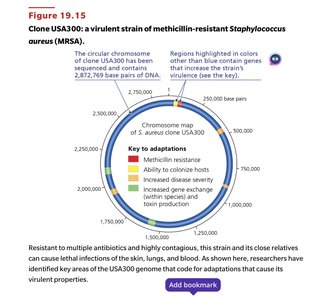
Key adaptations: Genes for antibiotic resistance, toxin production, and other virulence factors.
Application: Understanding bacterial evolution helps in developing strategies to combat antibiotic resistance.
10. Homologous Structures
Homologous structures are anatomical features in different species that are similar due to shared ancestry. The forelimbs of mammals, for example, have the same basic skeletal elements but are adapted for different functions.
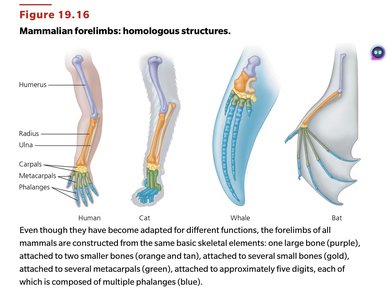
Homology: Similarity in structure due to common ancestry, despite differences in function.
Example: Human, cat, whale, and bat forelimbs all share the same bone arrangement.
Summary Table: Key Concepts in Evolution
Concept | Description | Example |
|---|---|---|
Descent with Modification | Species change over time, giving rise to new species | Evolution of elephants from a common ancestor |
Artificial Selection | Humans select for desirable traits in organisms | Wild mustard bred into cabbage, broccoli, etc. |
Natural Selection | Individuals with advantageous traits survive and reproduce | Soapberry bug beak length adaptation |
Homologous Structures | Similar anatomical features due to shared ancestry | Mammalian forelimbs |
Evolutionary Adaptation | Inherited traits that enhance survival and reproduction | Camouflage in moths |
