 Indietro
Descent with Modification and Evidence for Evolution: Chapter 19 Study Notes
Guida di studio - Note intelligenti
 Appunti personalizzati basati sui tuoi materiali, ampliati con definizioni chiave, esempi e contesto.
Descent with Modification and Evolution
Introduction to Evolutionary Theory
Evolution is a central concept in biology, explaining both the unity and diversity of life. The theory of evolution describes how species change over time through descent with modification, a process first articulated by Charles Darwin.
Evolution: The process by which species undergo genetic change over generations, leading to adaptation and diversity.
Descent with Modification: Darwin's phrase summarizing the idea that current species are descendants of ancestral species, modified by evolutionary processes.
Adaptation: Traits that enhance survival and reproduction in a specific environment.
Historical Perspectives on Evolution
The development of evolutionary theory was influenced by various historical figures and scientific discoveries.
Aristotle: Viewed species as fixed and arranged them on a scale of increasing complexity (scala naturae).
Carolus Linnaeus: Developed the binomial nomenclature and a nested classification system, grouping species by shared characteristics.
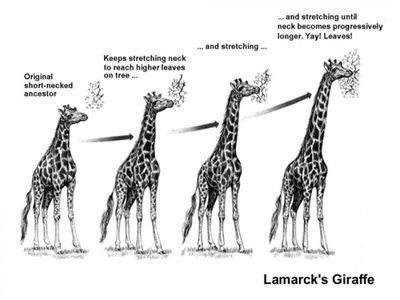
Jean-Baptiste de Lamarck: Proposed that organisms evolve through use and disuse of body parts and inheritance of acquired traits, a mechanism not supported by evidence.
Georges Cuvier: Developed paleontology, noted extinctions, and believed in catastrophism rather than evolution.
James Hutton and Charles Lyell: Suggested gradual geological processes shape Earth, influencing Darwin's thinking about gradual biological change.
Darwin’s Contributions and the Voyage of the Beagle
Darwin’s Observations and Inferences
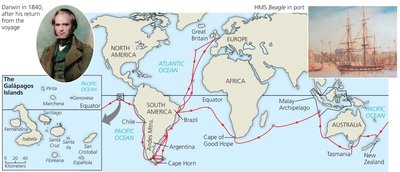
Darwin’s voyage on HMS Beagle provided critical observations that led to his theory of natural selection.
He observed unique species on the Galápagos Islands and inferred that they had diverged from mainland ancestors.
He concluded that the Earth was much older than previously thought, based on geological evidence.
Natural Selection: Mechanism of Evolution
Natural selection is the process by which individuals with favorable traits are more likely to survive and reproduce, leading to the accumulation of adaptations.
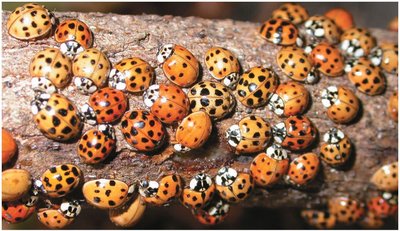
Observation 1: Members of a population vary in their inherited traits.
Observation 2: All species can produce more offspring than the environment can support.
Inference 1: Individuals with advantageous traits leave more offspring.
Inference 2: Favorable traits accumulate in the population over generations.
Key Features and Evidence for Evolution
Adaptation and Camouflage
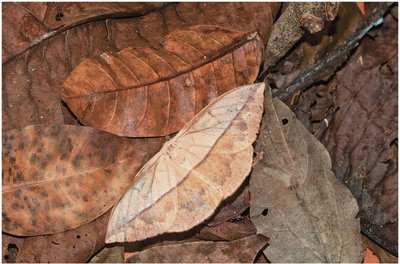
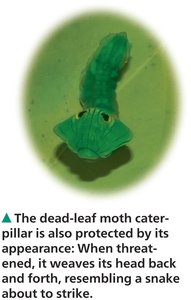
Adaptations such as camouflage help organisms survive in their environments.
Camouflage is an evolutionary adaptation that allows organisms to avoid predation.
Example: The dead-leaf moth and its caterpillar are protected by their resemblance to leaves and snakes, respectively.
Artificial Selection vs. Natural Selection
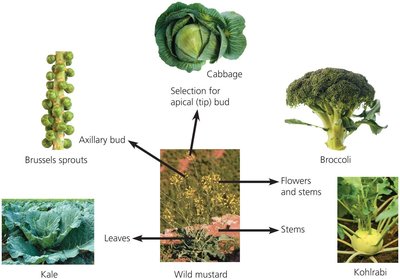
Artificial selection is the process by which humans breed organisms for desired traits, while natural selection occurs in nature.
Artificial selection demonstrates the power of selective breeding to shape traits.
Example: Wild mustard has been bred to produce cabbage, broccoli, kale, and other vegetables.
Direct Observations: Evolution of Drug-Resistant Bacteria
Evolution can be observed directly, such as in the development of antibiotic resistance in bacteria.
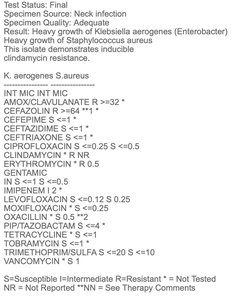
Staphylococcus aureus evolved resistance to penicillin and methicillin within years of their introduction.
MRSA strains use different proteins for cell wall synthesis, surviving antibiotic treatment.
Natural selection acts on existing traits, not creating new ones.

Homology and Convergent Evolution
Homology: Similarity in traits due to shared ancestry, seen in anatomical structures and genes.
Vestigial structures: Remnants of ancestral features with no current function.
Convergent evolution: Independent evolution of similar traits in distantly related groups, resulting in analogous structures.
The Fossil Record
The fossil record provides evidence for the pattern and process of evolution.
Fossils document transitions and origins of new groups, such as cetaceans evolving from land mammals.
Fossil evidence shows gradual change and extinction.
Biogeography
Biogeography studies the geographic distribution of species and supports evolutionary theory.
Continental drift explains the distribution of species and predicts evolutionary relationships.
Island endemics often evolve from mainland colonists adapting to new environments.
The Scientific Theory of Evolution
Nature of Scientific Theories
A scientific theory explains and integrates a wide range of observations and phenomena.
The theory of evolution is supported by extensive evidence and ongoing research.
Summary Table: Types of Evidence for Evolution
Type of Evidence | Description | Example |
|---|---|---|
Direct Observation | Evolutionary change observed in real time | Drug-resistant bacteria |
Homology | Similarity due to shared ancestry | Mammalian forelimbs |
Fossil Record | Documentation of extinct and transitional forms | Whale evolution |
Biogeography | Distribution of species across continents and islands | Galápagos finches |
Key Terms and Concepts
Natural Selection: Differential survival and reproduction of individuals due to differences in phenotype.
Artificial Selection: Human-directed breeding for desired traits.
Homologous Structures: Anatomical features inherited from a common ancestor.
Analogous Structures: Features with similar function but different evolutionary origins.
Vestigial Structures: Features that have lost their original function.
Biogeography: Study of the geographic distribution of species.
Fossil Record: Chronological collection of life's remains in sedimentary rock layers.
Conclusion
The theory of evolution by natural selection is a foundational concept in biology, explaining the unity and diversity of life. It is supported by multiple lines of evidence, including direct observation, homology, the fossil record, and biogeography. Ongoing research continues to expand our understanding of evolutionary processes.
