 Indietro
Descent with Modification: Evolution and the Diversity of Life
Guida di studio - Note intelligenti
 Appunti personalizzati basati sui tuoi materiali, ampliati con definizioni chiave, esempi e contesto.
Descent with Modification
Overview: Endless Forms Most Beautiful
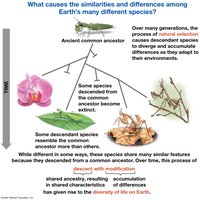
Evolution is the central theory that explains both the similarities and differences among Earth's many species. Over generations, natural selection causes descendant species to diverge and accumulate adaptations, resulting in the diversity of life observed today. The process is tree-like, with branches representing different lineages that share a common ancestor.
Evolution in Real Time: Antimicrobial Resistance
Evolution can be observed in real time, such as the development of antimicrobial resistance in bacteria. This rapid change occurs because bacteria reproduce quickly and mutations that confer resistance are selected for in the presence of antibiotics. The tree-like pattern of change is not unique to bacteria; it is a fundamental process in all living organisms.
Development of Evolutionary Thought
History of Evolutionary Thought
The theory of evolution has developed through contributions from many scientists. Key figures include Aristotle, Linnaeus, Cuvier, Hutton, Lyell, Lamarck, Darwin, and Wallace. Darwin's theory of natural selection describes evolution as adaptation to the environment, explaining the unity and diversity of life.
Scala Naturae and Classification of Species
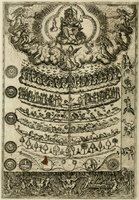
Aristotle viewed species as fixed and arranged them on a scala naturae (Great Chain of Being). Linnaeus founded taxonomy and developed the binomial naming system for species, such as Homo sapiens.
Ideas About Change Over Time
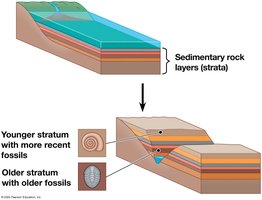
The study of fossils in sedimentary strata provided evidence for change over time. Fossils are remains or traces of organisms found in layers of rock, with older fossils in deeper strata.
Catastrophism, Gradualism, and Uniformitarianism
Catastrophism (Cuvier): Each boundary between strata represents a catastrophe that destroyed many species.
Gradualism (Hutton) and Uniformitarianism (Lyell): Changes in Earth's surface result from slow, continuous actions still operating today.
Lamarck’s Hypothesis of Evolution
Lamarck proposed that species evolve through use and disuse of body parts and the inheritance of acquired characteristics. However, these mechanisms are unsupported by evidence.
The Darwinian Revolution
Descent with Modification by Natural Selection
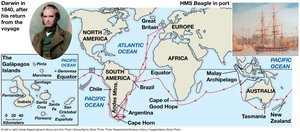
Darwin and Wallace independently developed the theory of evolution by natural selection. Darwin's voyage on the HMS Beagle provided key observations that led to his theory.
Darwin’s Focus on Adaptation
Darwin observed that adaptation to the environment and the origin of new species are closely related. He explained three broad observations: the unity of life, the diversity of life, and the match between organisms and their environment.
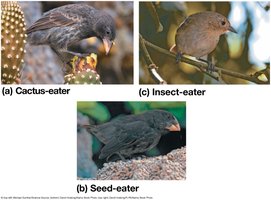
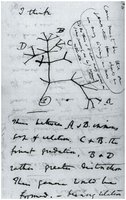
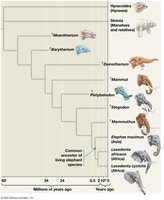
Descent with Modification and Phylogeny
Descent with modification describes the branching pattern of evolution, where all species are related through common ancestry. Phylogenetic trees illustrate these relationships.
Artificial Selection
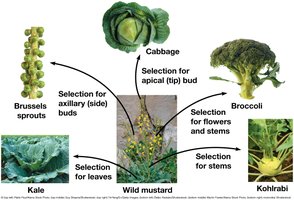
Humans have modified other species by selecting and breeding individuals with desired traits, a process called artificial selection. This demonstrates the power of selection to shape organisms.
Darwin’s Observations and Inferences
Observation 1: Members of a population often vary in their inherited traits.

Observation 2: All species can produce more offspring than the environment can support; many fail to survive and reproduce.
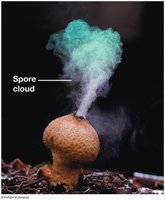
Inference: Individuals well suited to their environment tend to leave more offspring. Over time, favorable traits accumulate in the population.
Scientific Evidence for Evolution
Types of Evidence
Four main types of data document the pattern of evolution:
Direct observations
Homology
The fossil record
Biogeography
Direct Observations of Evolutionary Change
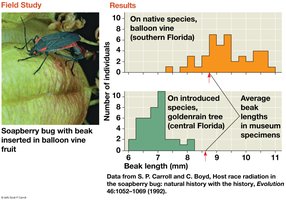
Evolution can be observed directly, such as changes in beak size in soapberry bugs over a few decades.
Homology
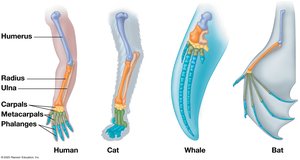
Homology refers to similarity resulting from common ancestry. Related species may have characteristics with underlying similarity that function differently.
Anatomical Similarities in Vertebrate Embryos
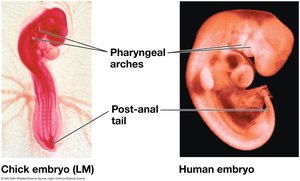
Embryos of vertebrates show anatomical similarities, such as pharyngeal arches and post-anal tails, indicating common ancestry.
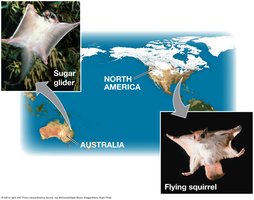
Convergent Evolution
Convergent evolution is the evolution of similar, or analogous, features in distantly related groups. Analogous traits arise when groups independently adapt to similar environments in similar ways. Convergent evolution does not provide information about ancestry.
The Fossil Record
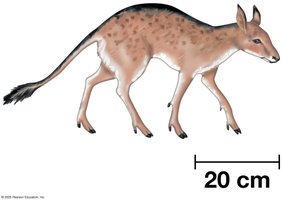
The fossil record provides evidence of the extinction of species, the origin of new groups, and changes within groups over time.
Ankle Bones: Clue to the Evolution of Whales
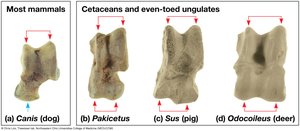
Comparisons of ankle bones among mammals, cetaceans, and even-toed ungulates provide clues to the evolutionary transition of whales.
The Transition to Life in the Sea
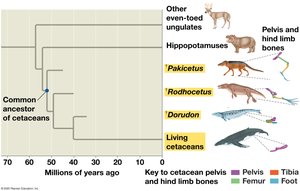
Fossil evidence documents the transition of cetaceans from land to sea, showing intermediate forms with both terrestrial and aquatic adaptations.
Biogeography
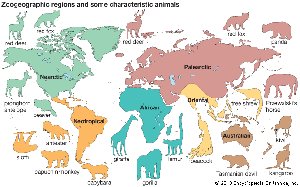
Biogeography is the study of the geographic distribution of species. Patterns of distribution provide evidence for evolution, such as the effects of continental drift and the formation of Pangea.
Scientific Theory and Ongoing Research
What Is Theoretical About Darwin’s View of Life?
In science, a theory accounts for many observations and explains a variety of phenomena. Darwin’s theory of evolution by natural selection integrates diverse areas of biological study and continues to stimulate new research questions. Ongoing research adds to our understanding of evolution.
Summary Table: Types of Evidence for Evolution
Type of Evidence | Description | Example |
|---|---|---|
Direct Observation | Evolutionary changes observed in real time | Antimicrobial resistance, beak size in soapberry bugs |
Homology | Similarity due to common ancestry | Forelimb structure in vertebrates |
Fossil Record | Evidence from extinct and transitional species | Whale evolution, Diacodexis |
Biogeography | Geographic distribution of species | Continental drift, zoogeographic regions |
Key Terms: descent with modification, natural selection, adaptation, homology, convergent evolution, fossil record, biogeography, artificial selection, phylogeny
