 Indietro
Descent with Modification: Evolution and the Diversity of Life
Guida di studio - Note intelligenti
 Appunti personalizzati basati sui tuoi materiali, ampliati con definizioni chiave, esempi e contesto.
Descent with Modification
Overview: Endless Forms Most Beautiful
Evolution is the central theory in biology that explains both the similarities and differences among Earth's many species. Over generations, natural selection causes descendant species to diverge and accumulate adaptations, resulting in the diversity of life observed today.

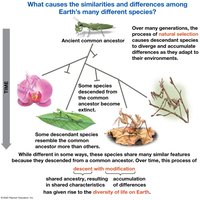
What Causes the Similarities and Differences among Earth’s Many Different Species?
Descent with modification describes how species share common ancestry but accumulate differences over time.
Natural selection acts on heritable variation, favoring traits that enhance survival and reproduction.
Species that descend from a common ancestor may retain similar features (homology) or develop unique adaptations.
Development of Evolutionary Thought
History of Evolutionary Thought
The concept of evolution has developed through contributions from many scientists. Early views considered species as fixed, but later evidence from fossils and comparative anatomy challenged this idea.
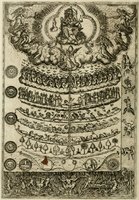
Aristotle: Proposed the scala naturae, a hierarchy of life forms.
Carolus Linnaeus: Developed taxonomy and binomial nomenclature for classifying organisms.
Georges Cuvier: Introduced catastrophism, suggesting that extinctions were caused by catastrophic events.
James Hutton and Charles Lyell: Proposed gradualism and uniformitarianism, emphasizing slow, continuous geological processes.
Jean-Baptiste Lamarck: Suggested evolution through use and disuse and inheritance of acquired traits (unsupported by evidence).

The Darwinian Revolution
Darwin’s Theory of Natural Selection
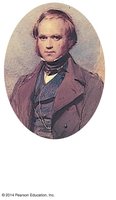
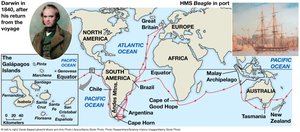
Charles Darwin, through his voyage on the HMS Beagle and subsequent research, formulated the theory of natural selection. This theory explains how adaptation leads to evolution and the diversity of life.
Darwin published On the Origin of Species in 1859.
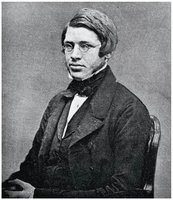
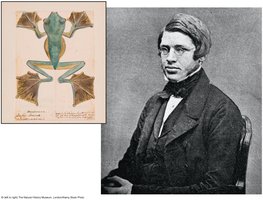
Alfred Russel Wallace independently conceived a similar theory.
Darwin observed that adaptation to the environment and the origin of new species are closely related.
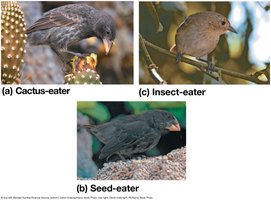
Key Observations and Inferences
Observation 1: Members of a population vary in their inherited traits.
Observation 2: All species can produce more offspring than the environment can support; many fail to survive and reproduce.
Inference 1: Individuals well suited to their environment leave more offspring.
Inference 2: Favorable traits accumulate in the population over generations.
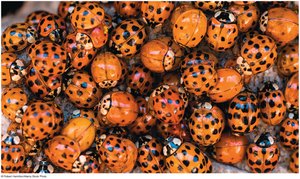
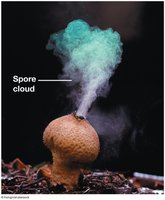
Descent with Modification and Phylogeny
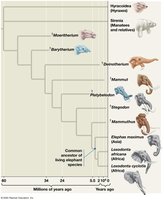
Tree of Life and Common Ancestry
Darwin visualized the history of life as a branching tree, with each branch representing a lineage. This concept is central to understanding phylogeny and evolutionary relationships.
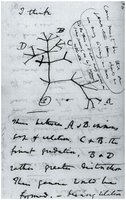

Artificial Selection, Natural Selection, and Adaptation
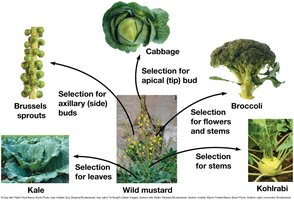
Artificial Selection
Humans have modified species by selecting and breeding individuals with desired traits, a process known as artificial selection. This demonstrates the power of selection in shaping organisms.
Scientific Evidence for Evolution
Types of Evidence
Evolution is supported by multiple lines of evidence:
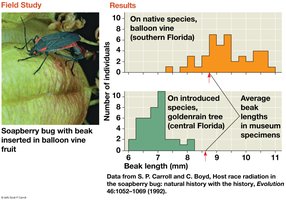
Direct observations (e.g., changes in beak size in soapberry bugs)
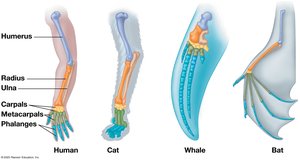
Homology (similarity due to common ancestry)
The fossil record (extinction, origin of new groups, changes over time)
Biogeography (geographic distribution of species)
Homology
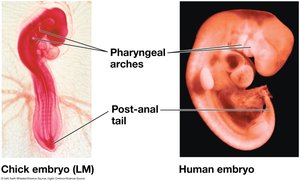
Homologous structures are anatomical features shared by related species due to common ancestry, even if they serve different functions.
Convergent Evolution
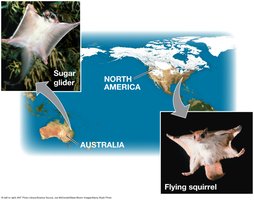
Convergent evolution occurs when distantly related groups independently evolve similar traits due to similar environmental pressures. These traits are called analogous and do not indicate common ancestry.
The Fossil Record
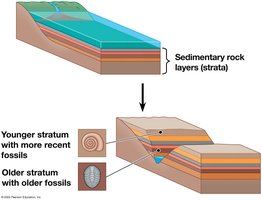
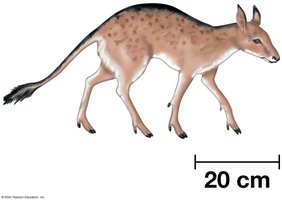
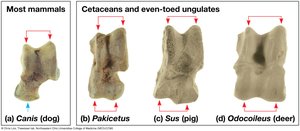
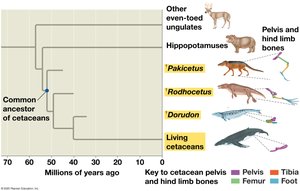
The fossil record documents the extinction of species, the origin of new groups, and changes within groups over time. Fossils are found in sedimentary strata, with older fossils in deeper layers.
Biogeography
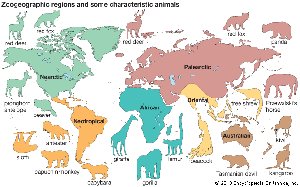
Biogeography is the study of the geographic distribution of species. Patterns of distribution provide evidence for evolution, such as the effects of continental drift and the formation of Pangea.
Scientific Theory and Ongoing Research
What Is Theoretical About Darwin’s View of Life?
In science, a theory is a comprehensive explanation that integrates many observations and predicts new findings. Darwin’s theory of evolution by natural selection continues to be tested and refined, stimulating ongoing research in biology.
Evolutionary theory integrates genetics, paleontology, ecology, and molecular biology.
New discoveries continue to fill gaps and expand our understanding of evolutionary processes.
Additional info: The notes above expand on brief lecture points, providing definitions, examples, and context for each concept. All images included directly reinforce the explanations and are essential for visualizing key ideas in evolution.
