 Indietro
Descent with Modification: The Darwinian Revolution and Evidence for Evolution
Guida di studio - Note intelligenti
 Appunti personalizzati basati sui tuoi materiali, ampliati con definizioni chiave, esempi e contesto.
Chapter 19: Descent with Modification
Introduction to Evolution and Its Historical Context
Evolution is a central theme in biology, explaining both the unity and diversity of life. The concept of descent with modification, first articulated by Charles Darwin, describes how species change over time and share common ancestry. This chapter explores the development of evolutionary theory, the evidence supporting it, and the mechanisms by which evolution occurs.
Key Observations Leading to Evolutionary Theory
Fit between organisms and their environment: Organisms are well-adapted to their ecological niches.
Unity of life: Many organisms share fundamental characteristics.
Diversity of life: There is a vast variety of living forms on Earth.
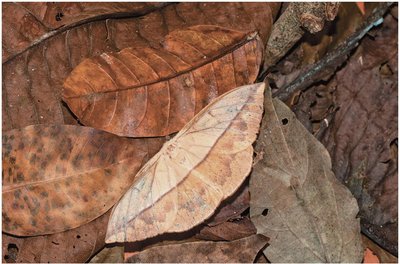
Example: The dead-leaf moth's resemblance to a fallen leaf is an adaptation that helps it avoid predation.
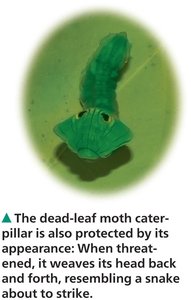
Example: The dead-leaf moth caterpillar mimics a snake when threatened, providing additional protection from predators.
Historical Perspectives on Species and Change
Scala Naturae and Early Classification
Aristotle: Viewed species as fixed and arranged them on a scale of increasing complexity (scala naturae).
Carolus Linnaeus: Developed a nested classification system and binomial nomenclature (e.g., Homo sapiens).
The Role of Fossils and Geology
Fossils: Remains or traces of organisms found in sedimentary rock layers (strata) provide evidence for change over time.
Paleontology: Founded by Georges Cuvier, who noted that fossils in older strata were more dissimilar to modern forms and believed in catastrophism (extinctions due to catastrophic events).
Gradualism: James Hutton and Charles Lyell proposed that geological changes occur gradually and continuously, influencing Darwin's thinking about slow biological change.
Lamarck’s Hypothesis of Evolution
Jean-Baptiste de Lamarck: Proposed that species evolve through use and disuse of body parts and inheritance of acquired characteristics. This mechanism was later disproven.
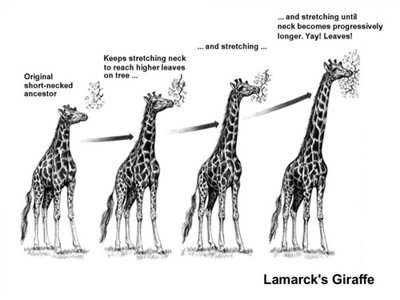
Example: Lamarck suggested that giraffes' necks became longer as they stretched to reach higher leaves, and this trait was inherited by offspring.
The Darwinian Revolution
The Voyage of the Beagle
Darwin’s observations during his voyage on the HMS Beagle, especially in the Galápagos Islands, led him to propose that species change over time and adapt to their environments. He was influenced by Lyell’s geological theories and the distribution of species he observed.
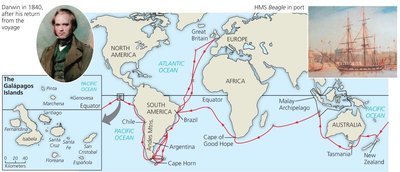
Descent with Modification and Natural Selection
Descent with modification: All organisms are related through descent from a common ancestor, with accumulated modifications over time.
Natural selection: The process by which individuals with favorable inherited traits are more likely to survive and reproduce, leading to adaptation.
Key Points from Darwin’s Theory
Populations vary in inherited traits.
All species can produce more offspring than the environment can support.
Individuals with advantageous traits leave more offspring.
Favorable traits accumulate in the population over generations.
Artificial Selection and Evidence for Evolution
Artificial Selection
Humans have modified species through selective breeding, demonstrating the power of selection to shape traits.
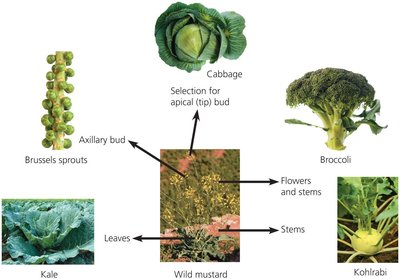
Example: Cabbage, broccoli, kale, and other vegetables were derived from wild mustard through artificial selection for different traits.
Variation and Overproduction
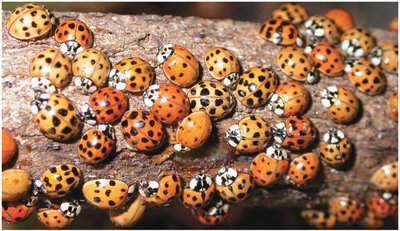
Example: Variation in color and pattern among ladybugs illustrates genetic diversity within a population.
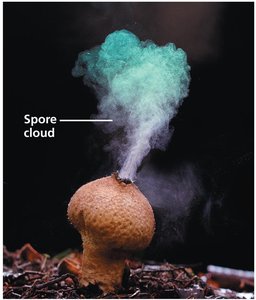
Example: Many organisms, such as fungi, produce far more offspring (spores) than can survive, leading to competition.
Natural Selection in Action
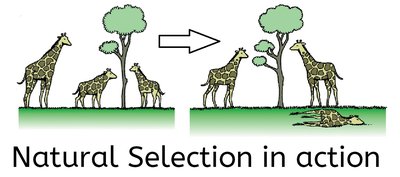
Example: Giraffes with longer necks may survive better in environments where food is high in trees, leading to an increase in this trait over generations.
Key Features of Natural Selection
Natural selection acts on heritable variation within populations.
Populations, not individuals, evolve over time.
Adaptations are specific to the environment and may change if the environment changes.
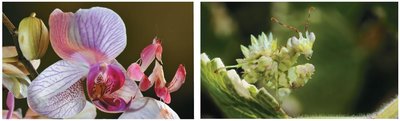
Example: Camouflage helps organisms avoid predation, increasing their chances of survival and reproduction.
Evidence for Evolution
Direct Observations
Evolutionary changes have been documented in thousands of scientific studies, such as the evolution of drug-resistant bacteria.

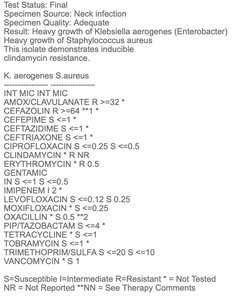
Example: Methicillin-resistant Staphylococcus aureus (MRSA) evolved resistance to antibiotics through natural selection acting on existing genetic variation.
Homology
Homologous structures: Anatomical similarities among species due to shared ancestry (e.g., mammalian forelimbs).
Comparative embryology: Reveals similarities in early development among vertebrates.
Vestigial structures: Remnants of features that served important functions in ancestors (e.g., pelvic bones in snakes).
Molecular homologies: Shared genes and genetic sequences among diverse organisms.
Convergent Evolution
Analogous traits arise when unrelated groups adapt to similar environments in similar ways (e.g., sugar gliders and flying squirrels).
The Fossil Record
Fossils document the pattern of evolution, showing changes in species over time and the origins of new groups.
Transitional fossils illustrate steps in major evolutionary transitions (e.g., land to sea in cetaceans).
Biogeography
Study of the geographic distribution of species provides evidence for evolution.
Continental drift explains the distribution of related species on different continents.
Islands often have unique species closely related to those on the nearest mainland, supporting the idea of adaptive radiation.
Theoretical Foundations of Evolution
A scientific theory explains a wide range of observations and is supported by extensive evidence.
The theory of evolution by natural selection integrates diverse biological fields and continues to be refined by new research.
