 Indietro
Chap 19
Guida di studio - Note intelligenti
 Appunti personalizzati basati sui tuoi materiali, ampliati con definizioni chiave, esempi e contesto.
Descent with Modification and the Darwinian Revolution
Introduction to Evolutionary Thought
Evolution is the central unifying concept of biology, explaining both the diversity and unity of life. The modern understanding of evolution began with Charles Darwin, whose observations and synthesis of evidence led to the theory of descent with modification by natural selection. This chapter explores the historical context, mechanisms, and evidence supporting evolution.
Historical Perspectives on Evolution
Pre-Darwinian Views
Scala Naturae: Aristotle proposed a fixed hierarchy of life forms, with each species seen as unchanging and perfectly created.
Linnaean Classification: Carolus Linnaeus developed a nested classification system and binomial nomenclature (e.g., Homo sapiens), grouping organisms by shared characteristics but attributing similarities to creation, not evolution.
Fossils and the Study of Change
Fossils: Preserved remains or traces of organisms, typically found in sedimentary rock layers (strata), provided evidence that life on Earth has changed over time.
Paleontology: Georges Cuvier established that extinctions were common and that different strata contained different fossil assemblages, but he attributed changes to catastrophic events, not evolution.
Gradualism: James Hutton and Charles Lyell argued that geological features resulted from slow, continuous processes, influencing Darwin’s thinking about gradual biological change.
Lamarck’s Hypothesis of Evolution
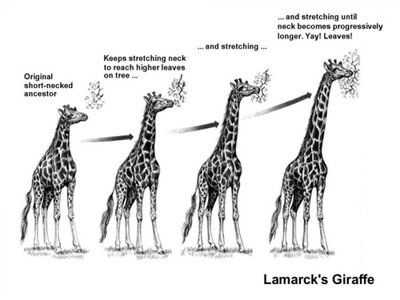
Jean-Baptiste de Lamarck proposed that organisms evolve through use and disuse of body parts and the inheritance of acquired characteristics. This mechanism was later disproven, but Lamarck was the first to suggest a process for evolutionary change.
Darwin’s Theory of Evolution
The Voyage of the Beagle
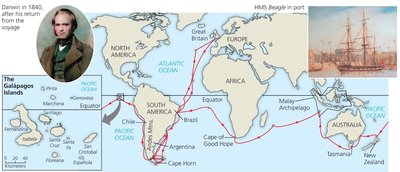
Darwin’s observations during his voyage on HMS Beagle, especially in the Galápagos Islands, led him to propose that species change over time and adapt to their environments. He noted similarities between island and mainland species, suggesting common ancestry and divergence.
Descent with Modification
Darwin described evolution as "descent with modification," where all organisms are related through descent from a common ancestor, with accumulated adaptations leading to diversity.
He visualized the history of life as a branching tree, with each fork representing the most recent common ancestor of descendant lineages.
Natural Selection as the Mechanism
Natural Selection: The process by which individuals with advantageous heritable traits survive and reproduce more successfully, leading to the accumulation of favorable traits in a population over generations.
Darwin was influenced by Thomas Malthus’s ideas on population growth and resource limitation.
Key Observations and Inferences
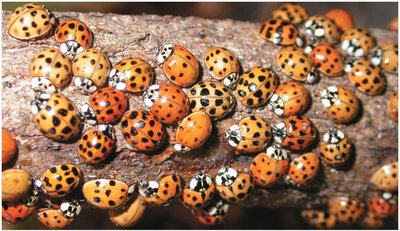
Observation 1: Members of a population vary in their inherited traits.
Observation 2: All species can produce more offspring than the environment can support; many offspring fail to survive and reproduce.
Inference 1: Individuals with traits that increase survival and reproduction leave more offspring.
Inference 2: Over generations, favorable traits become more common in the population.
Artificial Selection
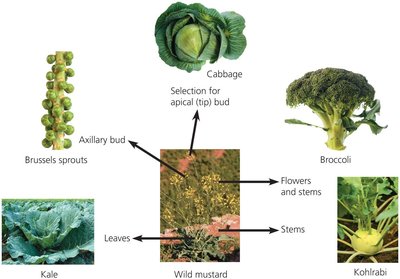
Humans have modified species through selective breeding for desired traits, demonstrating the power of selection to shape organisms.
Key Features of Natural Selection
Natural selection acts on heritable variation within populations.
Populations, not individuals, evolve over time.
Natural selection can only act on existing traits; it does not create new traits.
The adaptive value of traits depends on the environment, which can change over time.

Evidence for Evolution
Direct Observations
Evolutionary change has been documented in thousands of scientific studies, such as the evolution of drug-resistant bacteria.
The Evolution of Drug-Resistant Bacteria
Staphylococcus aureus (including MRSA) evolved resistance to antibiotics like penicillin and methicillin within a few years of their introduction.
Natural selection favored bacteria with resistance genes, leading to the rapid spread of these traits in populations.
Natural selection does not create new traits but selects for traits already present in the population.
Homology
Homology: Similarity in characteristics resulting from common ancestry.
Anatomical homologies: Structures like the forelimbs of mammals have similar bone arrangements but different functions.
Comparative embryology: Reveals similarities in early development among vertebrates, such as pharyngeal arches and tails.
Vestigial structures: Remnants of features that served important functions in ancestors (e.g., pelvic bones in snakes).
Molecular homologies: Shared genes and genetic sequences among diverse organisms.
Convergent Evolution
Convergent evolution produces analogous structures—similar adaptations in unrelated groups due to similar environmental pressures, not common ancestry.
The Fossil Record
The fossil record documents the pattern of evolution, showing changes in species over time and the origins of new groups.
Fossils reveal transitional forms, such as the evolution of cetaceans (whales, dolphins) from land-dwelling ancestors.
Biogeography
Biogeography is the study of the geographic distribution of species.
Continental drift and the breakup of Pangaea explain similarities and differences among species on different continents.
Islands often have unique endemic species closely related to mainland relatives, supporting the idea of adaptive radiation.
Theoretical Foundations and Ongoing Research
The Nature of Scientific Theories
A scientific theory is a comprehensive explanation supported by a large body of evidence and capable of generating new hypotheses.
The theory of evolution by natural selection is supported by direct and indirect evidence from multiple fields of biology and continues to be refined by ongoing research.
