 Indietro
Descent with Modification: The Foundations of Evolutionary Biology
Guida di studio - Note intelligenti
 Appunti personalizzati basati sui tuoi materiali, ampliati con definizioni chiave, esempi e contesto.
Descent with Modification
Historical Perspectives on Evolution
The concept of evolution has developed over centuries, with contributions from various scientists shaping our understanding of how species change over time.
Aristotle: Believed species were fixed, perfect, and permanent.
Linnaeus: Classified species into groups based on similarities, attributing these to a pattern of creation.
Cuvier: Developed paleontology; observed that fossils in older strata were less similar to current species, suggesting species appeared and disappeared due to catastrophic events.
Hutton & Lyell: Proposed that Earth's features result from gradual changes over time, with geological processes occurring at consistent rates.
Fossils and Strata
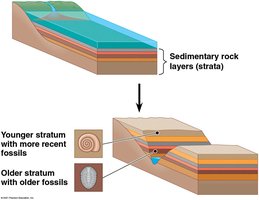
Fossils are the preserved remains or traces of organisms from the past, often found in layers of sedimentary rock called strata. New layers of sediment cover older ones, compressing them into distinct layers.
Strata: Superimposed layers of rock, with younger strata containing more recent fossils and older strata containing older fossils.
Charles Darwin and the Voyage of the Beagle
Charles Darwin's observations during his voyage to South America and the Galapagos Islands provided key evidence for evolution.
Species in temperate regions of South America resembled those in the tropics more than those in temperate Europe.
Fossils found were different from living species but resembled local living species.
Galapagos species were unique to the islands but similar to South American species.
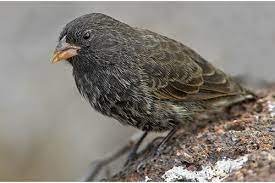
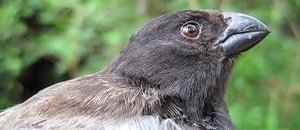
Mockingbirds and finches showed variation between islands, suggesting adaptation to local environments.
Key Contributors to Evolutionary Theory
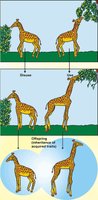
Jean-Baptiste de Lamarck: Proposed that traits acquired during an organism's lifetime could be inherited (e.g., giraffe necks), though this mechanism was later disproven.
Alfred Wallace: Independently developed ideas similar to Darwin's, but acknowledged Darwin's extensive research.
Descent with Modification
Darwin concluded that species accumulate differences from their ancestors as they adapt to different environments over time. This process leads to both unity and diversity in life:
Unity: Similar characteristics among species due to common ancestry.
Diversity: Differences arise from adaptations to specific environments.
Natural Selection: Mechanism of Evolution
Natural selection is the process by which individuals with advantageous traits survive and reproduce more successfully, leading to the accumulation of favorable traits in populations over generations.
Observation 1: Members of a population vary in their inherited traits.
Observation 2: All species can produce more offspring than the environment can support.
Inference 1: Individuals with traits that enhance survival and reproduction leave more offspring.
Inference 2: Favorable traits accumulate in the population over time.
Adaptations
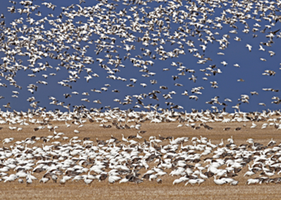
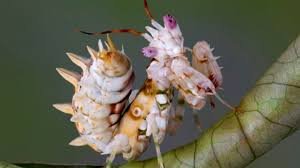
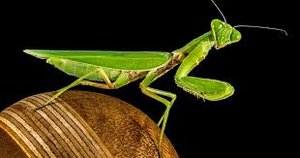
Adaptations are inherited characteristics that enhance an organism's survival and reproduction in specific environments. Examples include camouflage, predator escape, specialized beak types, and tolerance to physical conditions.

Artificial Selection
Artificial selection is the process by which humans modify species by selecting and breeding individuals with desired traits, resulting in crops, livestock, and pets that differ significantly from their wild ancestors.
Peppered Moths: A Case Study in Natural Selection
The peppered moth provides a classic example of natural selection. Before the industrial revolution, lighter moths were more common. Pollution darkened trees, favoring dark moths, which were less visible to predators.
Trait: Moth coloration (dark vs. light).
Selection: Dark moths survived and reproduced more in polluted environments.
Predation: Birds more easily detected light moths on dark trees.
Clarifications on Evolution
Individuals do not evolve; populations evolve.
Adaptations are inherited traits present at birth.
Natural selection acts only on heritable traits that differ among individuals.
Environmental factors determine which traits are favored.
Evidence for Evolution
Multiple lines of evidence support the theory of evolution:
Direct Observation: Evolutionary changes observed in soapberry bugs and drug-resistant bacteria.
Homology: Similarities due to common ancestry, including anatomical, embryological, and molecular homologies.
Fossil Record: Provides evidence of extinction, origin of new groups, and changes within groups.
Biogeography: Study of species distribution across geographic regions.
Homology
Homology refers to similarity resulting from common ancestry. It can be observed at anatomical and molecular levels.
Anatomical Homology: Homologous structures are variations on a structural theme present in a common ancestor (e.g., mammalian forelimbs).
Comparative Embryology: Embryos of related species show similarities not visible in adults (e.g., post-anal tail and pharyngeal arches in vertebrates).
Vestigial Structures: Remnants of features that served functions in ancestors (e.g., pelvis in snakes).
Molecular Homology: Shared genetic code and genes among all life forms.
Evolutionary Trees
Evolutionary trees are diagrams that reflect hypotheses about relationships among groups based on shared characteristics. Branch points represent common ancestors, and the proximity of groups indicates relatedness.
Convergent Evolution
Convergent evolution occurs when distantly related groups develop similar (analogous) features due to adaptation to similar environments, not common ancestry.
Analogous Traits: Traits that arise independently in different lineages.
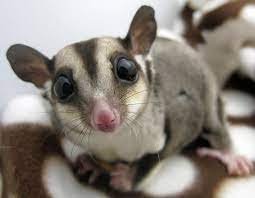
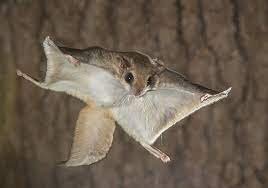
Example: The sugar glider (Australian marsupial) and the flying squirrel (North American eutherian) both evolved gliding adaptations.
The Fossil Record
The fossil record documents the extinction of species, the origin of new groups, and changes within groups over time. It supports hypotheses about evolutionary relationships, such as the close relationship between cetaceans and even-toed ungulates.
Biogeography
Biogeography is the scientific study of the geographic distribution of species. Continental drift and the movement of landmasses have influenced species distributions and evolutionary history.
Species distributions can be explained by historical events, such as the breakup of Pangea.
Example: Galaxiidae fish in South America and Australia share a common ancestor from when the continents were joined.

Scientific Theory
In science, a theory is a comprehensive explanation that accounts for many observations and data, integrating a variety of phenomena. Ongoing research continues to expand our understanding of evolution.
Key Terms to Remember
Alleles: Different forms of a gene.
Phenotype: Observable traits of an organism.
Genotype: Genetic makeup of an organism.
Homozygous: Having two identical alleles for a gene.
Heterozygous: Having two different alleles for a gene.
Summary Table: Types of Evidence for Evolution
Type of Evidence | Description | Example |
|---|---|---|
Direct Observation | Evolutionary changes observed in real time | Soapberry bugs, drug-resistant bacteria |
Homology | Similarity due to common ancestry | Mammalian forelimbs, vestigial structures |
Fossil Record | Extinction, origin, and change of species over time | Cetacean fossils |
Biogeography | Distribution of species across continents | Galaxiidae fish |
Additional info:
Some images (e.g., image_1, image_2, image_9) illustrate adaptations such as camouflage and mimicry, which are key examples of traits favored by natural selection.
Images of finches and mockingbirds (image_4, image_6) are directly relevant to Darwin's observations in the Galapagos, which were foundational to his theory of evolution.
Images of sugar glider and flying squirrel (image_5, image_8) are used to illustrate convergent evolution and analogous traits.
World map (image_3) is relevant to biogeography and continental drift.
