 Indietro
Deuterostomes and Echinoderm Diversity: Structure, Function, and Classification
Guida di studio - Note intelligenti
 Appunti personalizzati basati sui tuoi materiali, ampliati con definizioni chiave, esempi e contesto.
Deuterostomes: Overview and Traits
Introduction to Deuterostomes
Deuterostomes are a major lineage of animals distinguished by their embryonic development and unique anatomical features. They include phyla such as Echinodermata and Chordata, and are contrasted with protostomes.
Radial cleavage: Early cell divisions are symmetrical around the embryo's axis.
Indeterminate development: Cells retain the ability to develop into a complete organism if separated early.
Blastopore becomes the anus: The first opening formed during gastrulation becomes the anus, not the mouth.
Comparison: Protostomes vs. Deuterostomes
Protostomes: Spiral cleavage, determinate development, blastopore forms mouth.
Deuterostomes: Radial cleavage, indeterminate development, blastopore forms anus.
Phylum Echinodermata: Structure and Synapomorphies
General Features of Echinoderms
Echinoderms are exclusively marine animals with unique anatomical and physiological traits.
Pentaradial symmetry: Adults exhibit five-part symmetry, while larvae are bilaterally symmetrical.
Endoskeleton of calcium carbonate: Composed of ossicles derived from the mesoderm.
Water vascular system: A hydraulic system used for movement, feeding, and gas exchange.
Tube feet: Extensions of the water vascular system involved in locomotion and sensory functions.
Not cephalized: No distinct head region.
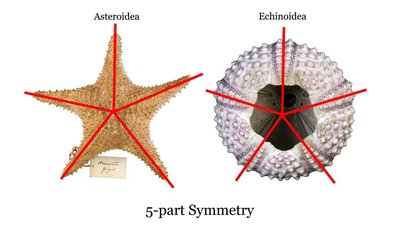
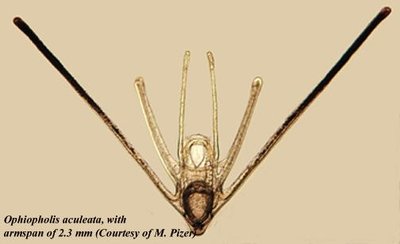
Water Vascular System
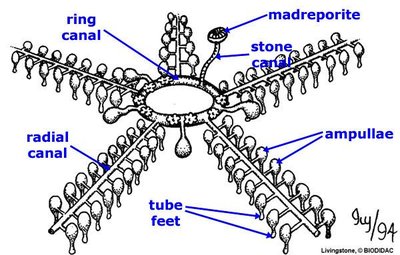
The water vascular system is a defining feature of echinoderms, facilitating movement and other functions.
Water enters through the madreporite.
Travels down the stone canal to the ring canal (surrounds the esophagus).
Water enters radial canals extending into each arm, lined with ampullae.
Each ampulla is attached to a tube foot.
Contraction of ampulla sends water into tube foot, extending it via hydrostatic pressure.
Tube foot contracts to send water back into ampulla; valve prevents backflow.
Classification: Five Extant Classes of Echinoderms
Class Crinoidea (Sea Lilies and Feather Stars)
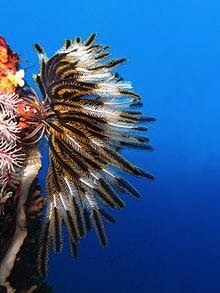
Crinoids are ancient echinoderms with two major forms: stalked sea lilies and free-swimming feather stars.
Sea lilies: Possess a stalk for substrate attachment.
Feather stars: Lack a stalk as adults, are free-swimming.
Both types are suspension feeders.
Class Ophiuroidea (Brittle Stars)
Brittle stars have flexible arms with jointed ossicles, used for locomotion.
Blind gut: No pass-through digestive tract.
Madreporite: Located on oral surface.
No ampullae: Unlike other echinoderms.
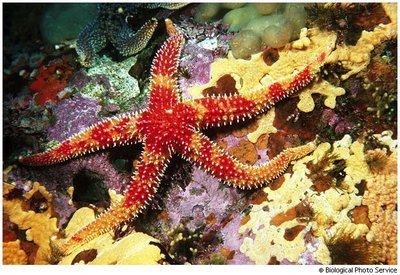
Class Asteroidea (Sea Stars)
Sea stars are generalist predators with tube feet responsible for locomotion.
Tube feet: Located in open ambulacral grooves.
Regeneration: Arms and sometimes entire individuals can regenerate.
Digestive system: Gonads and digestive tracts extend into arms; stomach can be everted for external digestion.
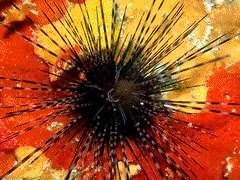
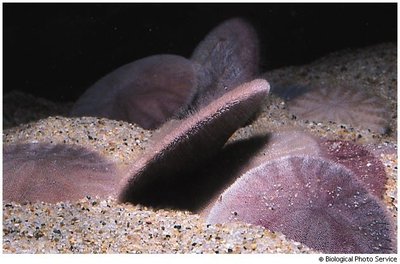
Class Echinoidea (Sea Urchins and Sand Dollars)
Echinoids have ossicles fused into a rigid structure called a test.
Tube feet: Pass through pores in the test.
Spines: Attach via ball-and-socket joints; some contain toxins.
Aristotle's Lantern: Unique feeding structure composed of fused ossicles and muscles.
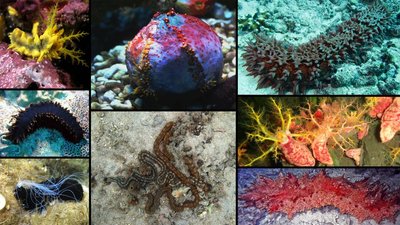
Class Holothuroidea (Sea Cucumbers)
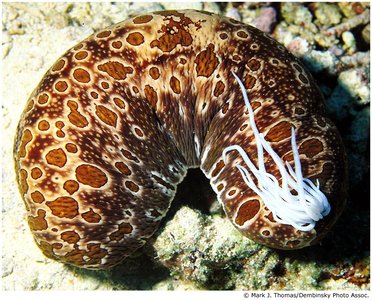
Sea cucumbers are elongated echinoderms with reduced ossicles and pentaradial symmetry.
Five rows of tube feet: Ambulacral strips along the body.
Oral tube feet: Elongate and feathery, used for feeding.
Respiratory tree: Attaches to cloaca for gas exchange.
Anti-predator behavior: Evisceration (expelling intestines), regrown later.
Cuverian tubules: Sticky structures expelled to entangle predators.
Phylum Chordata: Key Characteristics
Chordate Synapomorphies
All chordates share four key features at some stage of development:
Hollow dorsal nerve cord
Pharyngeal pouches
Notochord
Postanal tail
Class Urochordata (Tunicates)
Tunicates are marine chordates with both solitary and colonial forms.
Larvae: Possess all chordate features.
Adults: Often sessile, suspension feeders.
Class Cephalochordata (Lancelets)
Lancelets are marine chordates that filter feed using pharyngeal slits and respire through the skin.
Water intake: Through mouth surrounded by tentacles.
Filter feeding: Pharyngeal slits used to filter food from water.
Summary Table: Echinoderm Classes and Key Features
Class | Common Name | Key Features |
|---|---|---|
Crinoidea | Sea lilies, feather stars | Stalked or free-swimming, suspension feeders |
Ophiuroidea | Brittle stars | Flexible arms, blind gut, no ampullae |
Asteroidea | Sea stars | Tube feet for locomotion, regeneration, external digestion |
Echinoidea | Sea urchins, sand dollars | Rigid test, tube feet, spines, Aristotle's Lantern |
Holothuroidea | Sea cucumbers | Elongated body, reduced ossicles, respiratory tree, evisceration |
Additional info:
Protostome and deuterostome traits are fundamental for understanding animal evolution and development.
Echinoderm diversity illustrates evolutionary adaptations to marine environments, including unique feeding and defense mechanisms.
Chordate features are critical for vertebrate evolution, including humans.
