 Indietro
Digestive System and Nutrition: Structured Study Notes
Guida di studio - Note intelligenti
 Appunti personalizzati basati sui tuoi materiali, ampliati con definizioni chiave, esempi e contesto.
The Digestive System
Overview of the Gastrointestinal Tract
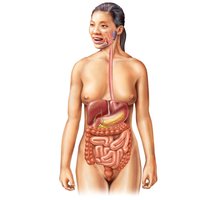
The digestive system is responsible for breaking down complex organic molecules into smaller subunits that can be absorbed into the bloodstream and delivered to cells. It consists of the gastrointestinal (GI) tract and accessory glands, forming a long, hollow tube through which food travels.
GI Tract: Includes the mouth, pharynx, esophagus, stomach, small intestine, and large intestine.
Accessory Organs: Salivary glands, liver, pancreas, and gallbladder add secretions to aid digestion.
Structure of the GI Tract Wall
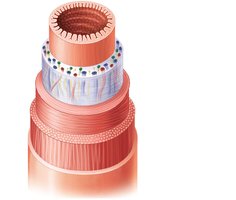
The walls of the GI tract are composed of four distinct layers, each with specialized functions:
Mucosa: Innermost, moist, mucus-secreting membrane that lubricates and protects the GI tract.
Submucosa: Connective tissue containing blood vessels, lymph vessels, and nerves.
Muscularis: Double layer of smooth muscle (three layers in the stomach) responsible for peristalsis and churning.
Serosa: Outermost epithelial tissue supported by connective tissue, secreting fluid to lubricate the outside of the GI tract.
Digestive System Functions: Mechanical and Chemical Digestion
Food processing involves both mechanical and chemical digestion. Mechanical digestion physically breaks down food, while chemical digestion breaks chemical bonds to convert complex molecules into absorbable subunits.
Structure | Description/Function | Mechanical Digestion | Chemical Digestion |
|---|---|---|---|
Mouth | Receives food, contains teeth and tongue | Teeth tear and crush food | Digestion of carbohydrates begins |
Pharynx | Passageway for both food and air | None | None |
Esophagus | Transports food to stomach | None | None |
Stomach | Stores and mixes food with gastric juice | Churning of stomach mixes food | Protein digestion begins |
Small Intestine | Long tube where digestion and absorption occur | Segmentation mixes food with enzymes | Carbohydrates, proteins, and lipids digestion |
Large Intestine | Absorbs water, forms feces | None | None |
Anus | Terminal outlet of digestive tract | None | None |
Specialized Compartments for Food Processing
Mouth and Teeth
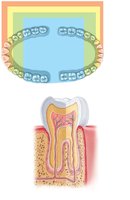
The mouth initiates both mechanical and chemical digestion. Teeth are specialized for different functions: incisors clip and slice, canines puncture and tear, and molars/premolars crush food. The structure of a tooth includes the crown (above gum), root (below gum), pulp (innermost, with blood vessels and nerves), dentin (hard, bonelike), and enamel (nonliving, covers crown).
Tooth Decay: Caused by bacteria producing acid that erodes enamel.
Gingivitis: Inflammation of gums, can progress to periodontitis.
Salivary Glands
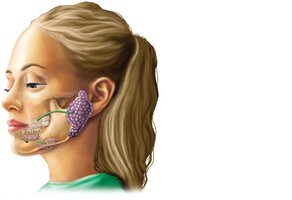
Three pairs of salivary glands (sublingual, submandibular, parotid) release saliva into the mouth. Saliva moistens food, binds it, and contains the enzyme salivary amylase which begins starch digestion.
Pharynx and Swallowing
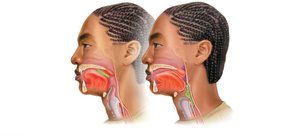
The pharynx is a passageway shared by the respiratory and digestive systems. Swallowing involves a voluntary phase (tongue pushes bolus into pharynx) and an involuntary phase (soft palate prevents food from entering nasal cavity, epiglottis covers glottis to prevent food from entering airways).
Esophagus and Peristalsis
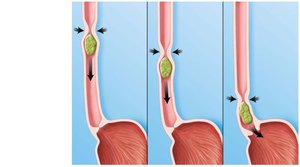
The esophagus is a muscular tube that transports food from the pharynx to the stomach via peristalsis, rhythmic waves of smooth muscle contraction. No digestion occurs here.
Stomach
The stomach is a J-shaped expandable sac with three layers of smooth muscle. It stores food, liquefies it to form chyme, regulates chyme release to the small intestine, and begins chemical digestion of proteins. Gastric glands secrete hydrochloric acid (HCl), pepsinogen (activated to pepsin), intrinsic factor, and mucus for protection.
Small Intestine
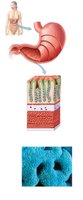
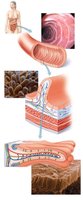
The small intestine is divided into three regions: duodenum, jejunum, and ileum. It is the primary site for chemical digestion and absorption. Surface area is increased by circular folds, villi, and microvilli. Each villus contains capillaries (for protein and carbohydrate absorption) and a lacteal (for fat absorption).
Digestive Enzymes
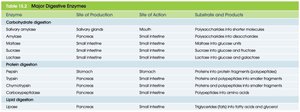
Digestive enzymes are produced by various organs and act on specific substrates to facilitate chemical digestion.
Enzyme | Site of Production | Site of Action | Substrate and Products |
|---|---|---|---|
Salivary amylase | Salivary glands | Mouth | Polysaccharides to disaccharides |
Pepsin | Stomach | Stomach | Proteins to peptide fragments |
Trypsin | Pancreas | Small intestine | Proteins to peptide fragments |
Lipase | Pancreas | Small intestine | Triglycerides to fatty acids and monoglycerides |
Absorption in the Small Intestine
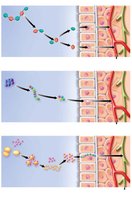
Absorption occurs primarily in the small intestine. Carbohydrates and proteins are absorbed into capillaries, while fats are absorbed into lacteals as chylomicrons.
Accessory Organs: Pancreas, Liver, Gallbladder
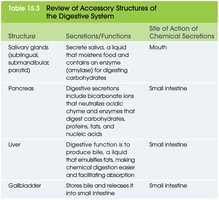
Accessory organs play crucial roles in digestion:
Pancreas: Secretes digestive enzymes and bicarbonate ions to neutralize stomach acid.
Liver: Produces bile, regulates blood glucose, detoxifies substances, and packages lipids.
Gallbladder: Stores and concentrates bile, releases it into the small intestine.
Structure | Secretions/Functions | Site of Action |
|---|---|---|
Salivary glands | Secrete saliva, contains amylase | Mouth |
Pancreas | Digestive enzymes, bicarbonate ions | Small intestine |
Liver | Produces bile | Small intestine |
Gallbladder | Stores bile | Small intestine |
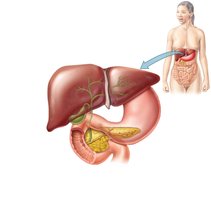
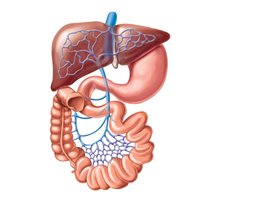
Liver and Hepatic Portal System
The hepatic portal vein links capillary beds of the villi in the small intestine with capillary beds in the liver, allowing nutrient-laden blood to be processed and detoxified before entering general circulation.
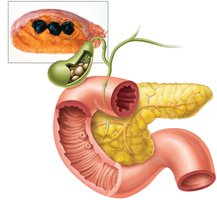
Gallbladder Disorders
Gallstones are formed when cholesterol and other substances build up around a particle in the gallbladder. They can be surgically removed and may affect fat digestion.
Large Intestine
The large intestine absorbs water and vitamins, stores and eliminates feces, and consists of four regions: cecum, colon, rectum, and anal canal. The appendix extends from the cecum and may have immune function.
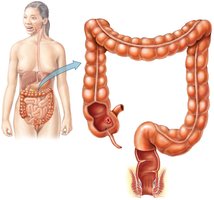
Appendix Disorders
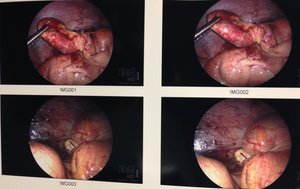
Appendicitis is inflammation of the appendix, often caused by blockage and bacterial multiplication. Treatment includes antibiotics or surgical removal.
Colon Disorders
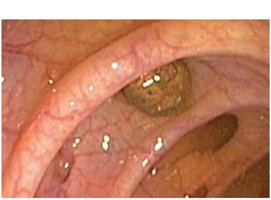
Diverticulosis involves pouches (diverticula) in the intestinal wall, which can become infected and inflamed (diverticulitis). Colorectal cancer begins with a polyp that turns cancerous.
Nerves and Hormones in Digestion
Neural Control
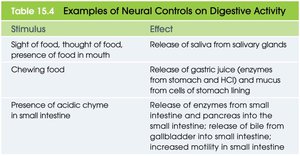
The nervous system controls quick or anticipatory processes in digestion, such as salivation and the release of gastric juice.
Stimulus | Effect |
|---|---|
Sight/thought of food | Release of saliva from salivary glands |
Chewing food | Release of gastric juice and mucus |
Presence of acidic chyme | Release of enzymes and bile, increased motility |
Hormonal Control
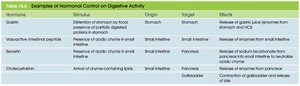
Hormones orchestrate the release of digestive secretions, controlling processes that take more time. Examples include gastrin, secretin, and cholecystokinin.
Hormone | Stimulus | Origin | Target | Effect |
|---|---|---|---|---|
Gastrin | Distention of stomach | Stomach | Stomach | Release of gastric juice |
Secretin | Presence of acidic chyme | Small intestine | Pancreas | Release of bicarbonate ions |
Cholecystokinin | Arrival of chyme containing fats | Small intestine | Gallbladder | Release of bile |
Nutrition and Energy Balance
Planning a Healthy Diet
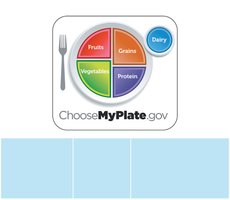
MyPlate is a tool for planning a healthy diet, emphasizing fruits, vegetables, grains, proteins, and dairy. Dietary guidelines recommend eating less red meat and processed foods, more seafood and plant-based proteins, and controlling portion sizes.
Nutrients
Food provides fuel, building blocks, and molecules needed for chemical reactions. Some nutrients are essential and must be included in the diet.
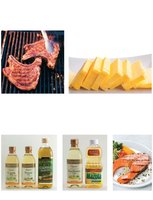
Lipids: Provide 9 calories/gram; include fats, oils, cholesterol. Unsaturated fats are healthiest; trans fats should be minimized.
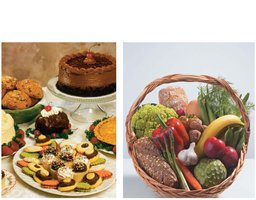
Carbohydrates: Provide 4 calories/gram; complex carbohydrates are healthier and moderate insulin release.
Fiber: A type of carbohydrate that cannot be broken down, provides bulk and reduces LDL cholesterol.
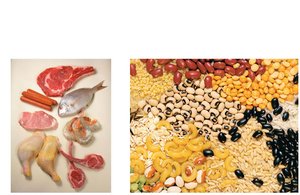
Proteins: Chains of amino acids; 9 essential amino acids must be obtained from diet. Complete proteins contain all essential amino acids (mostly animal sources), incomplete proteins lack one or more (mostly plant sources).
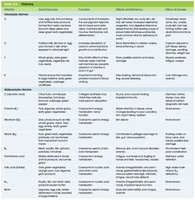
Vitamins: Needed in small amounts; water-soluble (C, B) and lipid-soluble (A, D, E, K).
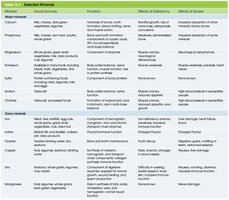
Minerals: Inorganic substances needed for various life processes.
Water: Essential for transport, lubrication, temperature regulation, and chemical reactions.
Food Labels
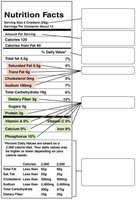
Food labels help consumers choose foods that increase important nutrients and limit harmful substances. Serving size, calories per serving, and percent daily values are reported, usually based on a 2000 calorie diet.
Energy Balance
Basal metabolic rate (BMR) is the minimal energy needed to keep an awake, resting person alive, representing 60% to 75% of the body's energy needs. BMR depends on sex, muscle mass, and age. Exercise is important for maintaining energy balance and reducing risk of chronic diseases.
Eating Disorders
Obesity, anorexia nervosa, and bulimia nervosa are serious health risks. Anorexia involves self-starvation and low body weight, while bulimia involves binge eating and purging. Both have negative effects on health and require treatment.
