 Indietro
DNA, Genes, Cell Cycle Regulation, and Cancer: Synthesis, Repair, and Experimental Evidence
Guida di studio - Note intelligenti
 Appunti personalizzati basati sui tuoi materiali, ampliati con definizioni chiave, esempi e contesto.
DNA and the Gene: Synthesis and Repair
Introduction to DNA and Genes
Genes are segments of DNA that encode instructions for the synthesis of proteins, which carry out essential cellular functions. Understanding the structure and function of DNA is fundamental to grasping how genetic information is stored, transmitted, and expressed in living organisms.
DNA (Deoxyribonucleic Acid): The hereditary material in almost all organisms, composed of four nucleotide bases (adenine, thymine, cytosine, guanine).
Gene: A sequence of DNA that codes for a specific protein or functional RNA.
Mutation: Any change in the DNA sequence of a gene, which can affect protein function and lead to diseases such as cancer.
Chromosomes: Structures within cells that contain DNA wound around proteins (histones).
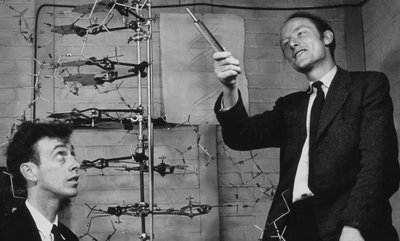
Experimental Evidence for DNA as the Genetic Material
Early experiments by scientists such as Griffith, Avery, MacLeod, and McCarty established DNA as the molecule responsible for heredity. These experiments used bacteria to demonstrate that DNA, not protein or RNA, carries genetic information.
Griffith's Experiment: Showed that dead pathogenic bacteria could transform harmless bacteria into pathogenic forms, indicating the transfer of genetic information.
Avery, MacLeod, and McCarty: Demonstrated that only DNA, not protein or RNA, was required for transformation, confirming DNA as the information molecule.
Transformation: The process by which genetic material is transferred from one organism to another.
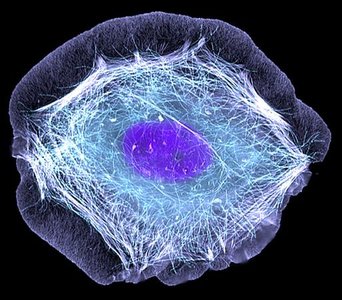
Conclusion: DNA is the molecule responsible for carrying genetic information and enabling transformation in bacteria.
The Cell Cycle and Regulation
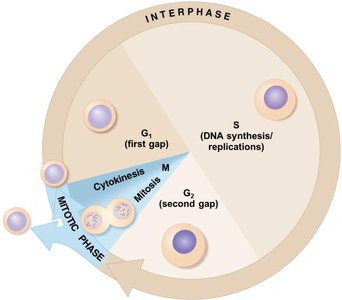
Overview of the Cell Cycle
The cell cycle is a highly regulated process that ensures proper cell division and replication. It consists of several phases, each controlled by specific proteins and checkpoints.
Interphase: Includes G1 (first gap), S (DNA synthesis/replication), and G2 (second gap) phases.
Mitotic Phase (M): Includes mitosis (nuclear division) and cytokinesis (cytoplasmic division).
Regulation: Cyclins and cyclin-dependent kinases (Cdks) regulate progression through the cell cycle.
Cell Cycle Regulation and Cancer
Cell division is controlled by proteins encoded by specific genes. Disruptions in cell cycle regulation, often due to mutations, can lead to uncontrolled cell division and cancer.
Tumor Suppressor Genes: Encode proteins that halt cell division ("brakes").
Proto-Oncogenes: Encode proteins that promote cell division ("gas pedal"). When mutated, they become oncogenes and drive nonstop cell growth.
DNA Repair Genes: Encode proteins that repair DNA damage, maintaining genomic integrity.
Cancer: Results from mutations in multiple genes, including oncogenes, tumor suppressor genes, and DNA repair genes.

Mechanisms Preventing Uncontrolled Cell Growth
Multiple mechanisms work together in cells to prevent uncontrolled growth. Cancer arises only after mutations accumulate in several genes important for controlling cell division.
Checkpoint Proteins: Ensure cells do not proceed to the next phase unless conditions are favorable.
DNA Repair Mechanisms: Fix errors that occur during DNA replication.
Apoptosis: Programmed cell death eliminates damaged or abnormal cells.
Experimental Controls and Scientific Process
Importance of Controls in Experiments
Controls are essential in scientific experiments to validate results and ensure that observed effects are due to the variable being tested.
Positive Control: Confirms that the experimental setup can produce the expected result.
Negative Control: Ensures that no effect occurs in the absence of the variable.
Experimental Group: Receives the treatment or variable being tested.

Application: Griffith and Avery-MacLeod-McCarty Experiments
These experiments used control groups to demonstrate the role of DNA in transformation:
Live Harmless Bacteria: Tests that the bacteria are actually harmless.
Live Pathogenic Bacteria: Tests that the bacteria can cause disease.
Heat-Killed Pathogenic Bacteria: Tests that boiled bacteria cannot cause disease.
Heat-Killed Pathogenic + Live Harmless: Tests for transformation.
Group | Purpose |
|---|---|
Live Harmless | Test harmlessness |
Live Pathogenic | Test pathogenicity |
Heat-Killed Pathogenic | Test effect of heat |
Heat-Killed Pathogenic + Live Harmless | Test for transformation |
Summary Table: Key Biomolecules and Their Functions
Biomolecule | Function |
|---|---|
DNA | Stores genetic information |
RNA | Transfers and translates genetic information |
Protein | Catalyzes reactions, structural support |
Lipid | Membrane structure, energy storage |
Carbohydrate | Energy storage, cell structure |
Conclusion
Understanding the molecular basis of heredity, cell cycle regulation, and cancer is essential for modern biology. DNA is the primary information molecule, and its integrity is maintained by repair mechanisms and regulated by cell cycle proteins. Disruptions in these processes can lead to diseases such as cancer, highlighting the importance of experimental evidence and scientific controls in advancing biological knowledge.
