 Indietro
DNA Replication and Telomere Maintenance: Study Notes for General Biology
Guida di studio - Note intelligenti
 Appunti personalizzati basati sui tuoi materiali, ampliati con definizioni chiave, esempi e contesto.
DNA Replication
Overview of DNA Replication
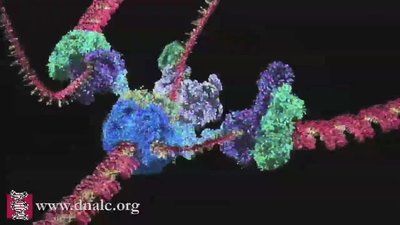
DNA replication is a fundamental process in all living organisms, ensuring the accurate duplication of genetic material prior to cell division. The process involves the unwinding of the double helix, synthesis of new strands, and the joining of fragments. - Key Point 1: DNA replication is semi-conservative, meaning each new DNA molecule contains one original strand and one newly synthesized strand. - Key Point 2: Enzymes such as DNA polymerase, primase, and ligase play essential roles in the replication process. 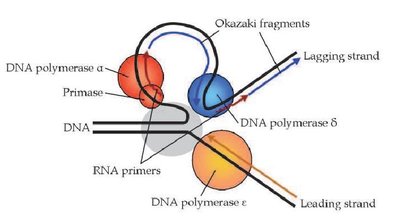
Biochemistry of Nucleotide Addition
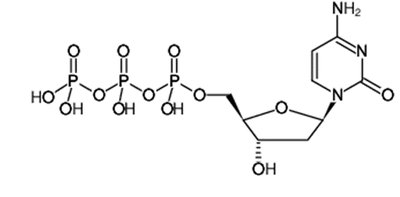
Nucleotides are added to the growing DNA strand through a dehydration reaction, forming a phosphodiester bond. - Key Point 1: dNTPs (deoxyribonucleotide triphosphates) are the substrates for DNA synthesis. - Key Point 2: The loss of two phosphates and one water molecule accompanies the formation of a phosphodiester bond. - Example: The chemical structure of dNTPs and the reaction mechanism. 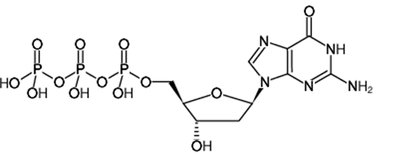
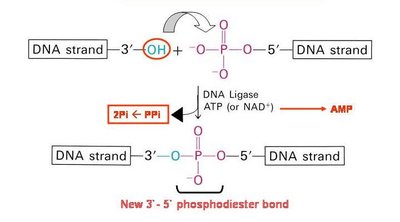
Role of DNA Ligase
DNA ligase is an enzyme that connects DNA fragments by forming phosphodiester bonds, especially important in joining Okazaki fragments on the lagging strand. - Key Point 1: DNA ligase does not require dNTPs for its activity. - Key Point 2: It uses ATP or NAD+ as an energy source to catalyze the bond formation.
Initiation and Termination of DNA Replication
Initiation in Eukaryotes
The initiation of DNA replication in eukaryotes involves the formation of a complex that synthesizes a short RNA primer, which is then extended by DNA polymerase. - Key Point 1: Primase synthesizes the RNA primer. - Key Point 2: DNA polymerase extends the primer with DNA nucleotides.
Termination in Prokaryotes
In prokaryotes, DNA replication terminates at specific sequences called TER, where the TUS protein binds and halts the replication machinery. - Key Point 1: Prokaryotic chromosomes are circular, allowing replication to finish at a defined site. - Key Point 2: The TUS protein ensures proper termination by binding to the TER sequence. 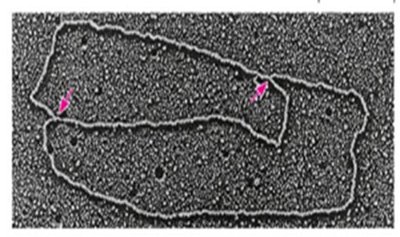
Termination in Eukaryotes: The Telomere Problem
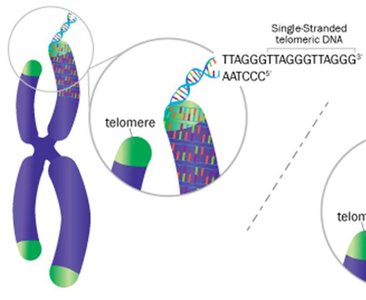
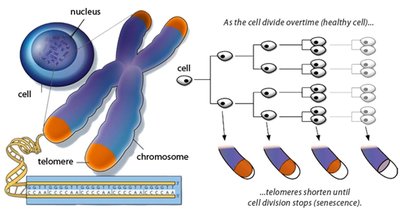
Eukaryotic chromosomes are linear, leading to the telomere problem during replication. The ends of chromosomes cannot be fully replicated, resulting in progressive shortening. - Key Point 1: RNA primers at the ends are removed, leaving a 3'-OH overhang. - Key Point 2: Over successive cell divisions, telomeres become shorter, eventually leading to cell senescence or death. 


Telomeres and Telomerase
Structure and Function of Telomeres
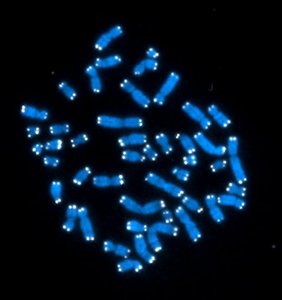
Telomeres are repetitive, non-coding DNA sequences at the ends of eukaryotic chromosomes that protect genetic information from loss during replication. - Key Point 1: Telomeric sequences in humans are (TTAGGG)n. - Key Point 2: Telomeres act as a buffer zone, preventing the loss of essential genes. 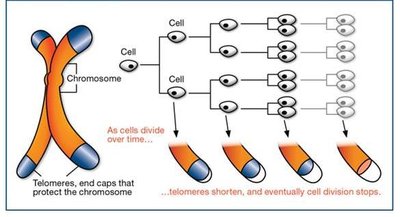
Telomerase Enzyme
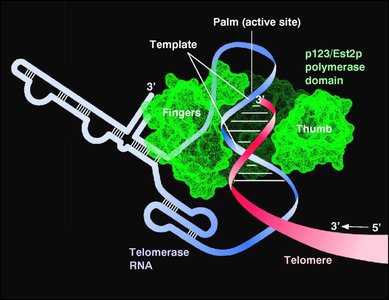
Telomerase is a ribonucleoprotein enzyme that extends telomeres by adding repetitive sequences to the ends of chromosomes. - Key Point 1: Telomerase contains an RNA template and has reverse transcriptase activity. - Key Point 2: It is co-localized with primase and DNA polymerase to complete telomere extension. - Example: Telomerase activity is high in germ cells and cancer cells, but low in most somatic cells. 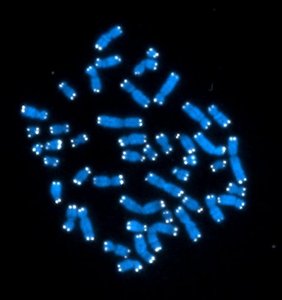




Biochemical Mechanism of Telomerase
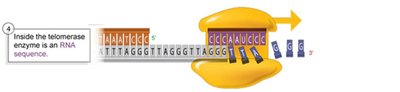
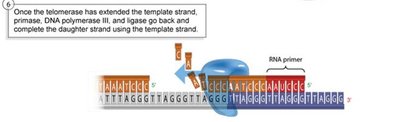
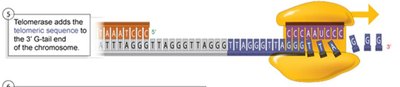
Telomerase extends the 3'-OH overhang by synthesizing DNA using its internal RNA template, functioning as a reverse transcriptase. - Key Point 1: Telomerase adds telomeric repeats to the chromosome ends. - Key Point 2: After extension, primase, DNA polymerase, and ligase complete the daughter strand. 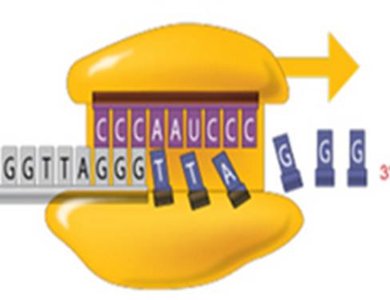
Functional Importance of Telomerase
Telomere Maintenance and Cellular Aging
Telomerase activity is crucial for maintaining telomere length and ensuring continued cell division. Its absence leads to telomere shortening, cellular aging, and eventual cell death. - Key Point 1: Telomerase prevents loss of genetic information in rapidly dividing cells. - Key Point 2: Telomere shortening is associated with aging and age-related diseases.
Historical Discoveries and Nobel Prize
Key Discoveries in Telomere Biology
The discovery of telomerase and its role in chromosome protection was a major milestone in molecular biology. - Key Point 1: Elizabeth H. Blackburn, Carol W. Greider, and Jack W. Szostak were awarded the Nobel Prize in 2009 for their work on telomeres and telomerase. - Key Point 2: Their research has implications for aging, cancer, and regenerative medicine. 
Summary Table: DNA Replication and Telomere Maintenance
Process | Key Enzymes | Chromosome Type | Outcome |
|---|---|---|---|
DNA Replication | DNA polymerase, primase, ligase | Circular (prokaryotes), Linear (eukaryotes) | Accurate duplication of DNA |
Termination (Prokaryotes) | TUS protein | Circular | Replication stops at TER sequence |
Termination (Eukaryotes) | Telomerase, primase, DNA polymerase, ligase | Linear | Telomere extension, prevention of genetic loss |
Telomere Maintenance | Telomerase | Linear | Maintains chromosome integrity |
Key Equations
Phosphodiester Bond Formation
Telomerase Reverse Transcriptase Activity
Additional info:
- Telomerase is a specialized reverse transcriptase that uses its own RNA template to synthesize DNA. - Telomere length is a biomarker for cellular aging and health. - Telomerase activity is tightly regulated and is a target for cancer therapy. ----------------------------------------
