 Indietro
DNA Replication: Mechanisms, Enzymes, and Differences Between Prokaryotes and Eukaryotes
Guida di studio - Note intelligenti
 Appunti personalizzati basati sui tuoi materiali, ampliati con definizioni chiave, esempi e contesto.
DNA Replication
Overview of DNA Replication
DNA replication is a fundamental process in all living organisms, ensuring the accurate transmission of genetic information from one generation to the next. It occurs during the cell cycle and involves a series of coordinated steps and specialized enzymes.
Key Point 1: DNA replication begins in the S phase of the cell cycle.
Key Point 2: DNA replication is primed and ready in the G1 phase but does not start until S phase.
Key Point 3: Error correction occurs during and after DNA replication, primarily in the S and G2 phases.
Key Point 4: The cell cycle is important for growth, repair, and genetic continuity.
Key Point 5: DNA replication occurs in the nucleus of eukaryotic cells and in the cytoplasm of prokaryotes.
Initiation of DNA Replication
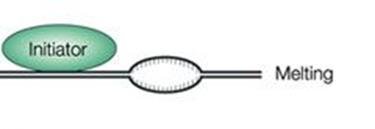
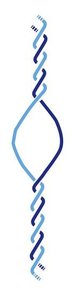
The initiation of DNA replication requires recognition of specific origin sites and the formation of a replication bubble.
Prokaryotes: Initiator proteins bind to the OriC site, breaking hydrogen bonds to create a replication bubble.
Eukaryotes: Multiple ARS (Autonomously Replicating Sequence) sites are recognized by the Origin Recognition Complex (ORC), which recruits helicase in G1 phase and activates it in S phase.
Unwinding and Stabilization of DNA
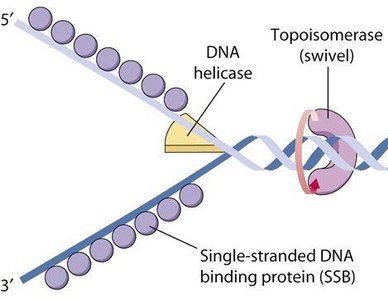
DNA must be unwound and stabilized for replication to proceed.
Helicase: Breaks hydrogen bonds between paired nitrogenous bases, separating the DNA strands.
Topoisomerase (Gyrase): Releases tension by making cuts in one or both DNA strands, relieving torque and re-ligating the DNA.
Single-Strand Binding Proteins (SSB): Stabilize single-stranded DNA, preventing degradation and re-annealing.
Synthesis of Primers
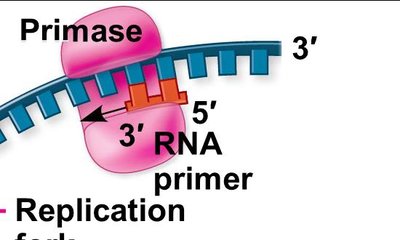
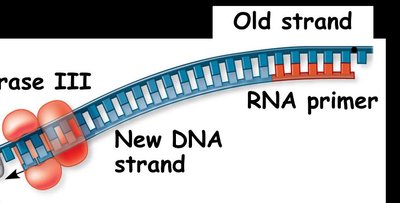
DNA polymerase requires a free 3’-OH end to begin synthesis. This is provided by RNA primers synthesized by primase.
Primase: An RNA polymerase that creates a short RNA primer (18-20 nucleotides) to initiate DNA synthesis.
DNA Polymerase: Can only add nucleotides to a free 3’-OH end.
Elongation: DNA Synthesis
DNA polymerase III extends the RNA primer by adding deoxyribonucleotides to the 3’-OH end.
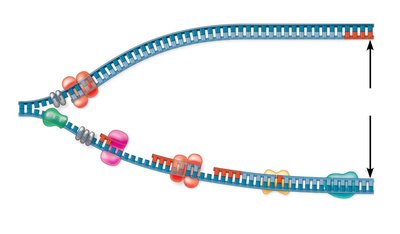
Leading Strand: Synthesized continuously in the 5’ to 3’ direction.
Lagging Strand: Synthesized discontinuously in short segments called Okazaki fragments, each initiated by a new RNA primer.
Lagging Strand Synthesis
The lagging strand requires repeated priming and synthesis of Okazaki fragments.
Primase: Synthesizes new RNA primers for each fragment.
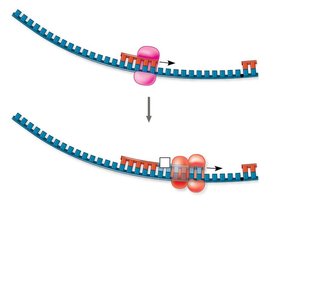
DNA Polymerase III: Elongates each fragment until it encounters the next primer.
Primer Removal and Gap Filling
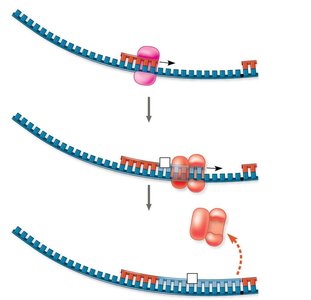
RNA primers must be removed and replaced with DNA.
DNA Polymerase I: Has both polymerase and 5’→3’ exonuclease activity, removes RNA primers, and fills gaps with DNA.
Exonucleases: Break phosphodiester bonds at the 5’ or 3’ end.

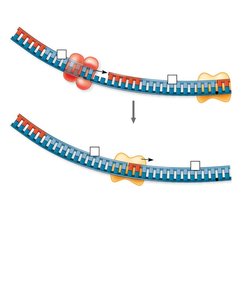
Joining DNA Fragments
DNA ligase seals the nicks between Okazaki fragments, forming a continuous DNA strand.
DNA Ligase: Creates phosphodiester bonds between adjacent DNA fragments without dNTPs, using ATP or NAD+ as energy source.
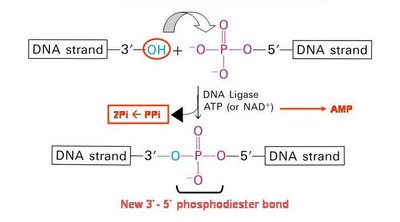
Differences Between Prokaryotic and Eukaryotic DNA Replication
DNA replication differs in speed, genome size, and complexity between prokaryotes and eukaryotes.
Feature | Prokaryotes | Eukaryotes |
|---|---|---|
Speed | 1000 nucleotides/sec | 50 nucleotides/sec |
Genome Size | ~130,000 nucleotides | ~3,200,000,000 nucleotides |
Origin Sites | Single OriC | Multiple ARS sites |
Enzymes | DNA pol I, III | DNA pol α, δ, ε |
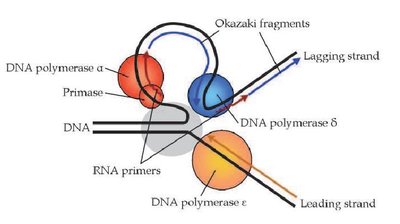
Termination of Replication
Replication ends at specific termination sequences.
Bacteria: Termination involves TER sequences and TUS proteins.
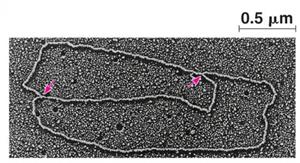
Circular DNA: Replication around the circle provides a 3’-OH group for primer replacement.
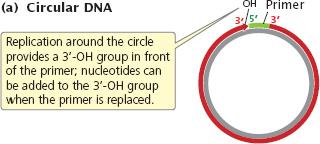
Summary Table: Key Enzymes in DNA Replication
Enzyme | Function |
|---|---|
Helicase | Unwinds DNA by breaking hydrogen bonds |
Topoisomerase (Gyrase) | Relieves supercoiling and tension |
Single-Strand Binding Protein | Stabilizes single-stranded DNA |
Primase | Synthesizes RNA primers |
DNA Polymerase III | Main DNA synthesizing enzyme |
DNA Polymerase I | Removes RNA primers and fills gaps |
DNA Ligase | Joins DNA fragments |
Additional info:
DNA replication is semi-conservative, meaning each new DNA molecule contains one old and one new strand.
Replication is highly regulated to ensure fidelity and prevent mutations.
Multiple checkpoints exist in the cell cycle to monitor and repair errors.
