 Indietro
DNA Replication: Structure, Mechanism, and Biological Significance
Guida di studio - Note intelligenti
 Appunti personalizzati basati sui tuoi materiali, ampliati con definizioni chiave, esempi e contesto.
DNA Replication and the Central Dogma
Overview of the Central Dogma
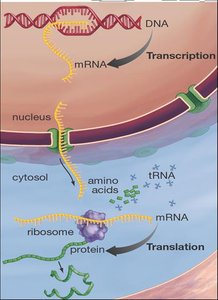
The central dogma of molecular biology describes the flow of genetic information within a biological system. It states that DNA is transcribed into RNA, which is then translated into protein. This process is fundamental to all living organisms and underlies the properties of life: self-replication, information storage, and evolution.
Transcription: The process by which DNA is used as a template to synthesize RNA.
Translation: The process by which RNA is used to synthesize proteins.
Replication: The process by which DNA makes an identical copy of itself before cell division.
Mutation: Changes in DNA sequence that provide genetic variation and drive evolution.
Properties and Structure of DNA
DNA Structure and Organization
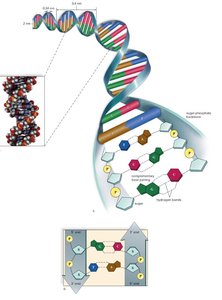
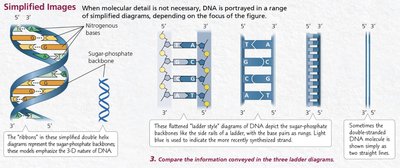
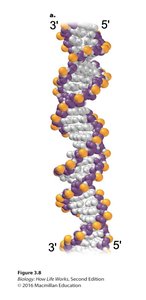
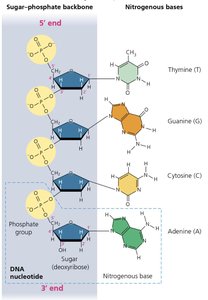
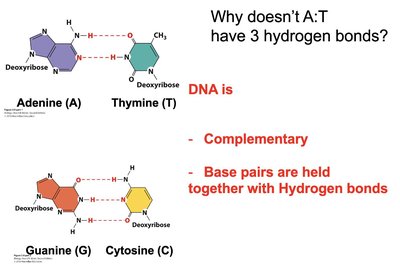
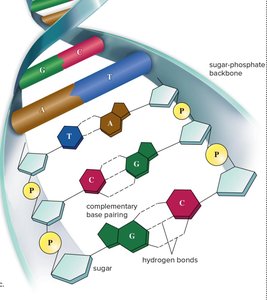
DNA is a double helix composed of two antiparallel strands of nucleotide polymers. Each nucleotide consists of a deoxyribose sugar, a phosphate group, and one of four nitrogenous bases (adenine, thymine, guanine, cytosine). The strands are held together by complementary base pairing and hydrogen bonds.
Double Helix: Two intertwined strands forming a helical structure.
Antiparallel Orientation: One strand runs 5' to 3', the other 3' to 5'.
Complementary Base Pairing: Adenine pairs with thymine (A-T), guanine pairs with cytosine (G-C).
Sugar-Phosphate Backbone: Provides structural support for the DNA molecule.
Nucleotide Structure and Polarity
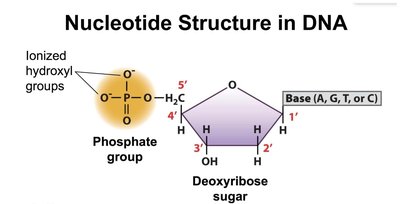
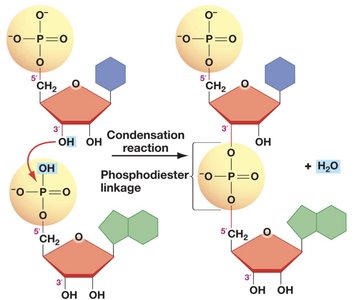
Nucleotides are the monomers of DNA. Each nucleotide has a polarity due to the orientation of the sugar and phosphate groups, which gives rise to the directionality of the DNA strand (5' to 3').
Phosphate Group: Attached to the 5' carbon of the sugar.
Deoxyribose Sugar: Five-carbon sugar with specific attachment points for phosphate and base.
Nitrogenous Base: Attached to the 1' carbon of the sugar.
Polarity: DNA strands have a 5' end (phosphate) and a 3' end (hydroxyl group).
DNA Replication: Mechanism and Enzymes
Initiation of DNA Replication
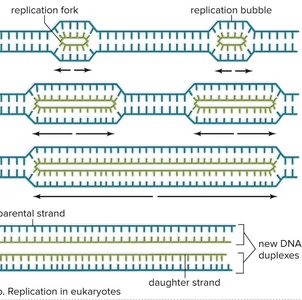
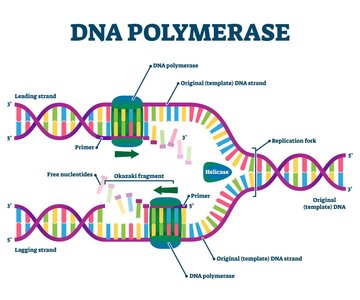
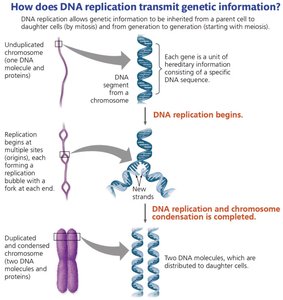
DNA replication begins at specific locations called origins of replication. Initiator proteins bind to the origin, recruit DNA helicase, and unwind the DNA to form a replication fork. Replication bubbles form as two forks move in opposite directions.
Origin of Replication: Specific sequence where replication starts.
Replication Fork: The Y-shaped region where DNA is actively unwound and replicated.
Replication Bubble: Region containing two replication forks moving away from the origin.
Enzymes Involved in DNA Replication
Several enzymes coordinate the process of DNA replication:
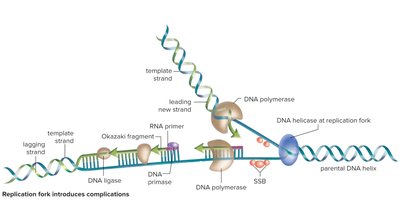
DNA Helicase: Unwinds the DNA double helix by breaking hydrogen bonds.
RNA Primase: Synthesizes short RNA primers to provide a 3' OH group for DNA polymerase.
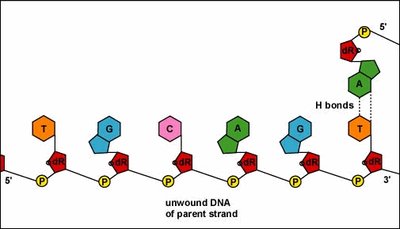
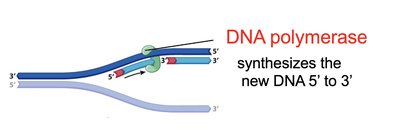
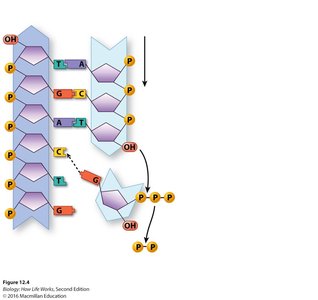
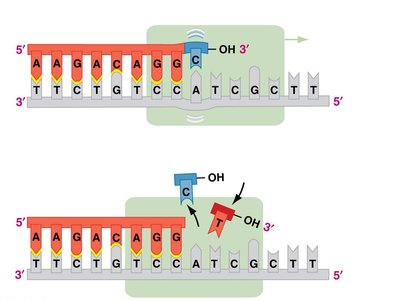
DNA Polymerase: Adds nucleotides to the growing DNA strand in the 5' to 3' direction, using the parent strand as a template.
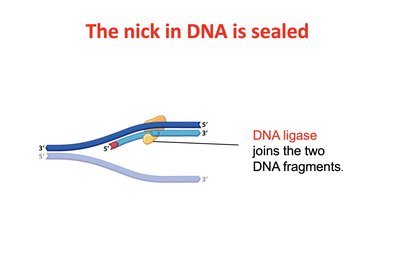
DNA Ligase: Seals nicks in the DNA backbone by forming the final phosphodiester bond.
Mechanism of DNA Synthesis
DNA synthesis occurs in the 5' to 3' direction. The 3' OH group of the growing strand attacks the first phosphate of the incoming nucleotide, forming a phosphodiester bond and releasing pyrophosphate.
Dehydration Synthesis: Formation of phosphodiester bonds between nucleotides.
Template-Directed Synthesis: DNA polymerase uses the parent strand as a template for complementary base pairing.
Proofreading: DNA polymerase checks for mismatched bases and corrects errors to prevent mutations.
Leading and Lagging Strands
During replication, the two DNA strands are synthesized differently:
Leading Strand: Synthesized continuously in the direction of the replication fork.
Lagging Strand: Synthesized discontinuously as Okazaki fragments, which are later joined by DNA ligase.
Removal of RNA Primers and DNA Ligase Action
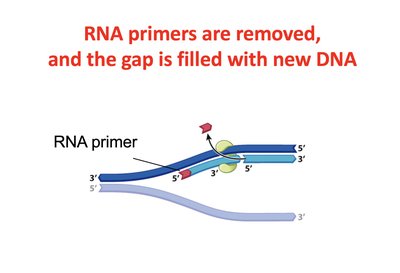
After DNA synthesis, RNA primers are removed and replaced with DNA. DNA ligase seals the nicks between fragments, completing the DNA strand.
RNA Primer Removal: DNA polymerase replaces RNA primers with DNA nucleotides.
DNA Ligase: Joins DNA fragments by forming covalent bonds.
Biological Significance of DNA Replication
Transmission of Genetic Information
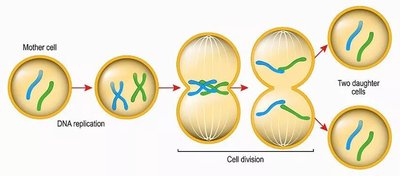
DNA replication ensures that genetic information is faithfully transmitted from parent to daughter cells during cell division. Each new cell receives an identical copy of the genome, allowing for continuity of hereditary information.
Cell Division: DNA replication precedes mitosis and meiosis, ensuring genetic inheritance.
Mutation: Errors not corrected during replication can lead to mutations, which are sources of genetic variation.
Summary Table: Key Features of DNA Replication
Feature | Description |
|---|---|
Directionality | DNA is synthesized 5' to 3' |
Enzymes | Helicase, Primase, DNA Polymerase, Ligase |
Replication Origin | Specific sequence where replication begins |
Proofreading | DNA polymerase corrects errors |
Leading Strand | Continuous synthesis |
Lagging Strand | Discontinuous synthesis (Okazaki fragments) |
Mutation | Source of genetic variation |
Additional info:
DNA replication is semi-conservative: each new DNA molecule contains one parent strand and one newly synthesized strand.
Replication bubbles allow for rapid and efficient DNA synthesis in eukaryotic cells.
Hydrogen bonding between complementary bases ensures fidelity in base pairing.
