 Indietro
DNA Replication: Structure, Mechanism, and Enzymatic Processes
Guida di studio - Note intelligenti
 Appunti personalizzati basati sui tuoi materiali, ampliati con definizioni chiave, esempi e contesto.
DNA Replication
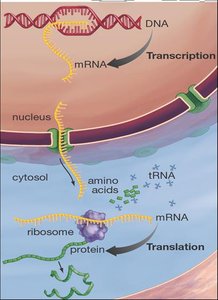
Central Dogma of Molecular Biology
The central dogma describes the flow of genetic information within a biological system. It explains how DNA is transcribed into RNA, which is then translated into protein. This process is fundamental to all living organisms and underlies the properties of life, including replication, information storage, and evolution.
Replication: The process by which DNA makes an identical copy of itself before cell division.
Transcription: The synthesis of RNA from a DNA template.
Translation: The synthesis of proteins using mRNA as a template.
Mutation: Changes in DNA sequence that introduce genetic variation.
DNA Structure
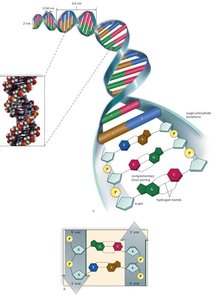
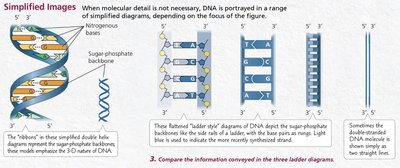
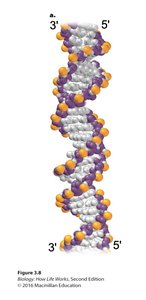
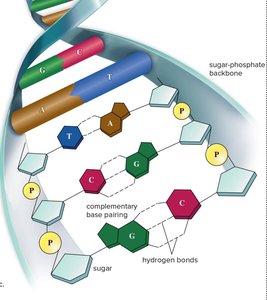
DNA is a double helix composed of two antiparallel strands of nucleotides. Each nucleotide consists of a deoxyribose sugar, a phosphate group, and a nitrogenous base. The strands are held together by complementary base pairing via hydrogen bonds.
Double Helix: Two strands twisted around each other.
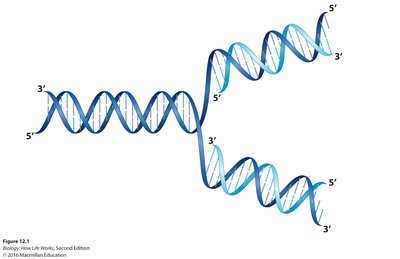
Antiparallel Orientation: One strand runs 5' to 3', the other 3' to 5'.
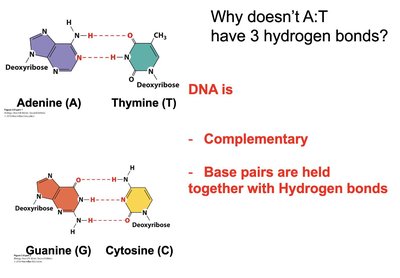
Complementary Base Pairing: Adenine (A) pairs with Thymine (T), Guanine (G) pairs with Cytosine (C).
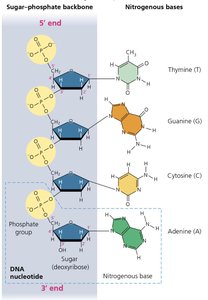
Sugar-Phosphate Backbone: Provides structural support.
Nucleotide Structure
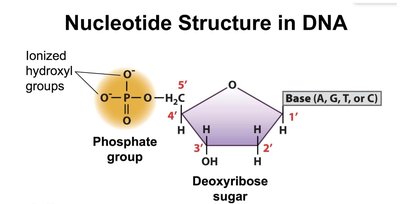
Each nucleotide in DNA consists of three components: a phosphate group, a deoxyribose sugar, and a nitrogenous base. The sequence of these bases encodes genetic information.
Phosphate Group: Attached to the 5' carbon of the sugar.
Deoxyribose Sugar: A five-carbon sugar lacking an oxygen atom at the 2' position.
Nitrogenous Bases: Adenine (A), Thymine (T), Guanine (G), Cytosine (C).
Polarity: DNA strands have directionality, designated as 5' to 3'.
Base Pairing and Hydrogen Bonds
Base pairs are stabilized by hydrogen bonds: A-T pairs have two hydrogen bonds, while G-C pairs have three. This specificity ensures accurate replication and transcription.
Complementarity: Ensures that each strand can serve as a template for the other.
Hydrogen Bonds: Provide stability but allow the strands to separate during replication.
DNA Replication: Overview and Mechanism
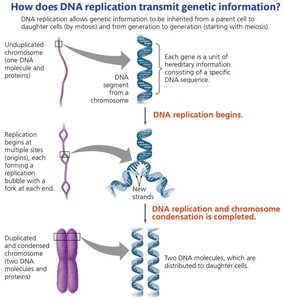
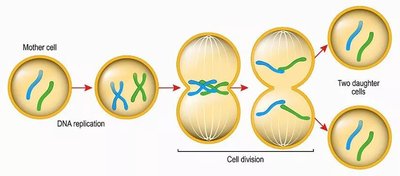
DNA replication is the process by which a cell duplicates its DNA before cell division. It is semi-conservative, meaning each new DNA molecule consists of one parental and one newly synthesized strand.
Initiation: Replication begins at specific locations called origins of replication.
Replication Fork: The Y-shaped region where the DNA is split into two strands and copied.
Replication Bubble: Formed as DNA unwinds at multiple origins in eukaryotes.
Semi-Conservative Model: Each daughter DNA molecule contains one old and one new strand.
Enzymes and Proteins in DNA Replication
Several enzymes coordinate the accurate and efficient replication of DNA:
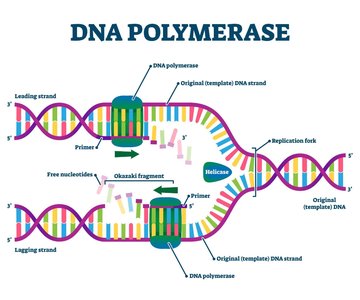
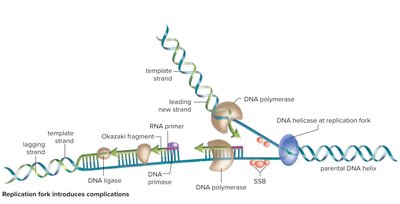
Helicase: Unwinds the DNA double helix by breaking hydrogen bonds.
Single-Strand Binding Proteins (SSB): Stabilize unwound DNA strands.
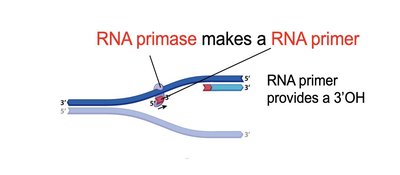
Primase: Synthesizes short RNA primers to provide a starting point for DNA synthesis.
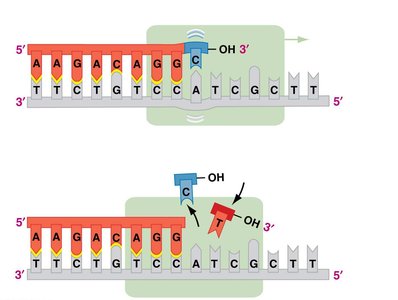
DNA Polymerase: Adds nucleotides to the 3' end of the primer, synthesizing new DNA in the 5' to 3' direction. Also proofreads and corrects errors.
Ligase: Seals nicks in the sugar-phosphate backbone, joining Okazaki fragments on the lagging strand.
Leading and Lagging Strands
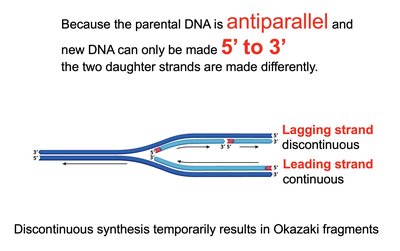
Because DNA polymerase can only synthesize DNA in the 5' to 3' direction, replication is continuous on the leading strand and discontinuous on the lagging strand, forming Okazaki fragments.
Leading Strand: Synthesized continuously toward the replication fork.
Lagging Strand: Synthesized discontinuously away from the fork in short segments (Okazaki fragments).
Okazaki Fragments: Short DNA fragments synthesized on the lagging strand, later joined by DNA ligase.
Proofreading and DNA Repair
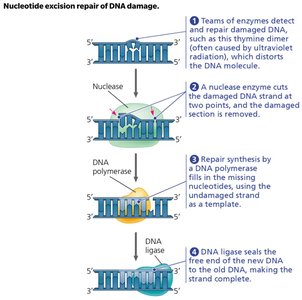
DNA polymerase has proofreading activity to correct mismatched nucleotides during replication. Additional repair mechanisms, such as nucleotide excision repair, correct DNA damage caused by environmental factors.
Proofreading: DNA polymerase removes incorrectly paired nucleotides and replaces them with the correct ones.
Nucleotide Excision Repair: Damaged DNA is recognized, excised, and resynthesized using the undamaged strand as a template.
Mutation: If errors are not corrected, they become permanent changes in the DNA sequence.
Summary Table: Key Enzymes in DNA Replication
Enzyme | Function |
|---|---|
Helicase | Unwinds the DNA double helix |
Primase | Synthesizes RNA primers |
DNA Polymerase | Adds nucleotides, proofreads, and replaces RNA primers with DNA |
Ligase | Seals nicks in the DNA backbone |
SSB Proteins | Stabilize single-stranded DNA |
Key Equations and Concepts
Phosphodiester Bond Formation: DNA polymerization involves the formation of phosphodiester bonds between the 3' hydroxyl group of the growing strand and the 5' phosphate of the incoming nucleotide.
Directionality: DNA is always synthesized in the 5' to 3' direction.
Summary
DNA replication is a highly regulated, accurate process essential for cell division and inheritance. It involves a coordinated effort of multiple enzymes and proteins to ensure the faithful transmission of genetic information from one generation to the next.
