 Indietro
DNA Replication: Structure, Mechanism, and Enzymatic Processes
Guida di studio - Note intelligenti
 Appunti personalizzati basati sui tuoi materiali, ampliati con definizioni chiave, esempi e contesto.
DNA Structure and the Central Dogma
Overview of DNA and Its Role
DNA is the hereditary material in cells, encoding instructions for life. The Central Dogma describes the flow of genetic information: DNA is transcribed into RNA, which is then translated into protein. - Replication: DNA copies itself before cell division. - Transcription: DNA is used as a template to synthesize RNA. - Translation: RNA is used to build proteins. - Properties of Life: Life is self-replicating, stores and follows instructions, and evolves through mutation. 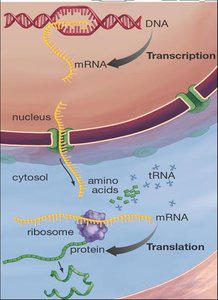
DNA Structure
Double Helix and Nucleotide Composition
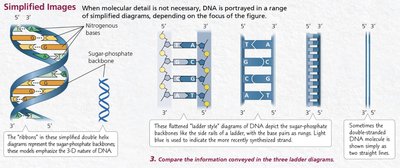
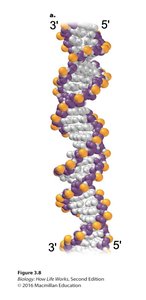
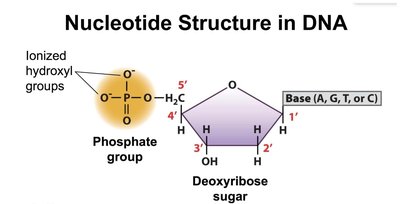
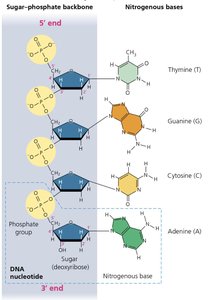
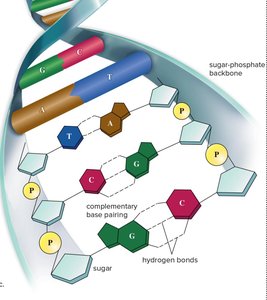
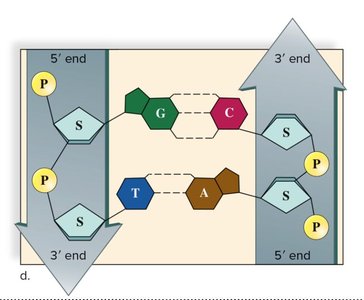
DNA consists of two antiparallel strands forming a double helix. Each strand is a polymer of nucleotides, which have directionality (5' to 3'). - Nucleotide: Composed of a phosphate group, deoxyribose sugar, and one of four nitrogenous bases (A, T, G, C). - Backbone: Sugar-phosphate groups form the backbone; bases are the rungs. - Antiparallel: Strands run in opposite directions (5' to 3' and 3' to 5'). 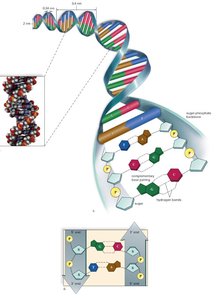
Complementary Base Pairing
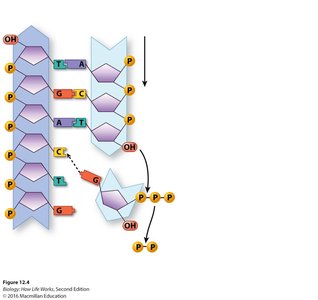
Nitrogenous bases pair specifically: Adenine (A) with Thymine (T), and Guanine (G) with Cytosine (C). - Hydrogen Bonds: A-T pairs have 2 hydrogen bonds; G-C pairs have 3. - Complementarity: Ensures accurate replication and transmission of genetic information. 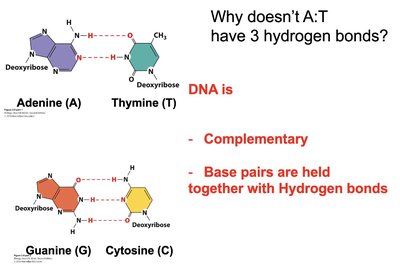
DNA Replication Mechanism
Initiation and Replication Fork Formation
DNA replication begins at specific sites called origins of replication. Initiator proteins bind to the origin, recruit helicase, and unwind the DNA to form a replication fork. - Replication Bubble: Two forks move in opposite directions, expanding the bubble. - Helicase: Unwinds DNA by breaking hydrogen bonds. 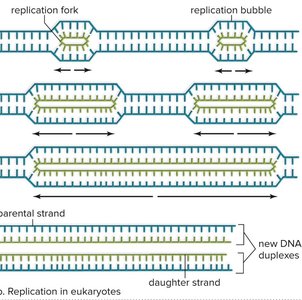
Primer Synthesis and Elongation
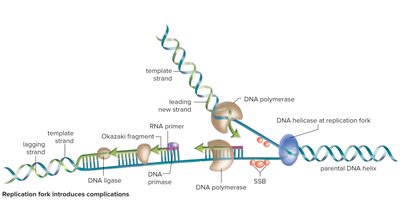
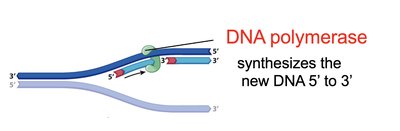
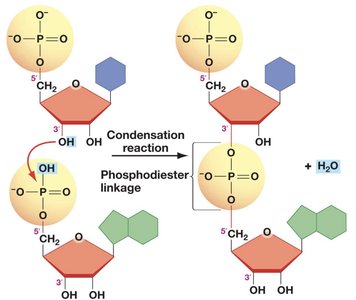
DNA polymerase cannot start synthesis de novo; it requires a primer. - RNA Primase: Synthesizes a short RNA primer to provide a 3' OH group. - DNA Polymerase: Adds nucleotides to the 3' end, synthesizing new DNA in the 5' to 3' direction. - Dehydration Synthesis: Formation of phosphodiester bonds between nucleotides releases pyrophosphate. 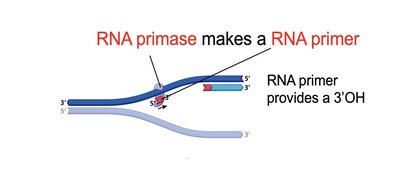
Leading and Lagging Strands
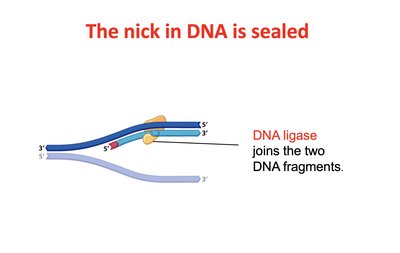
- Leading Strand: Synthesized continuously toward the replication fork. - Lagging Strand: Synthesized discontinuously as Okazaki fragments, away from the fork. - DNA Ligase: Seals nicks between fragments, completing the strand. 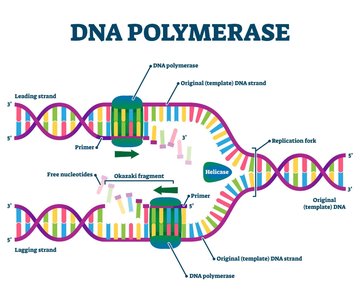
Proofreading and Error Correction
DNA polymerase proofreads newly synthesized DNA, correcting mismatches. If errors are not corrected, mutations may occur. - Mutation: Permanent change in nucleotide sequence. - Proofreading: Reduces error rate, ensuring genetic fidelity. 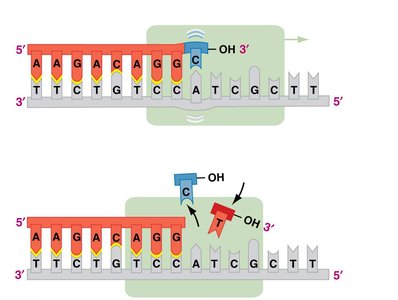
Semiconservative Replication
Mechanism and Outcome
DNA replication is semiconservative: each new DNA molecule consists of one parental and one newly synthesized strand. - Parental Strands: Serve as templates for new synthesis. - Result: Two identical DNA molecules, each with one old and one new strand. 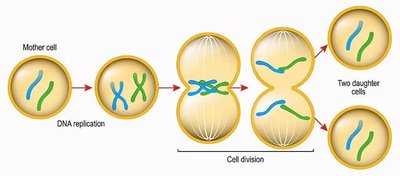
Summary Table: Key Enzymes in DNA Replication
Enzyme | Function |
|---|---|
Helicase | Unwinds DNA strands at the replication fork |
RNA Primase | Synthesizes RNA primers for DNA polymerase |
DNA Polymerase | Synthesizes new DNA, proofreads, replaces RNA primers |
DNA Ligase | Seals nicks between DNA fragments |
Additional info:
- DNA replication is essential for cell division and inheritance. - Errors in replication can lead to genetic diseases or evolution through mutation. - The process is highly regulated and involves multiple proteins and enzymes.
