 Indietro
DNA Replication, Transcription, and Translation: The Central Dogma of Molecular Biology
Guida di studio - Note intelligenti
 Appunti personalizzati basati sui tuoi materiali, ampliati con definizioni chiave, esempi e contesto.
The Central Dogma of Molecular Biology
Overview of the Central Dogma
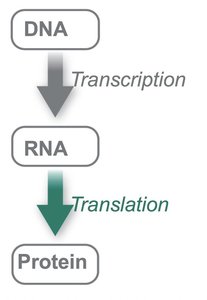
The central dogma of molecular biology describes the flow of genetic information within a biological system. It explains how DNA is used as a template to synthesize RNA, which is then used to produce proteins. This process is fundamental to all living organisms and underlies gene expression and regulation.
DNA stores genetic information.
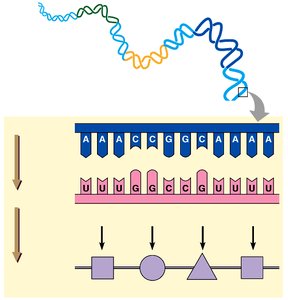
Transcription is the process by which DNA is copied into RNA.
Translation is the process by which RNA is used to synthesize proteins.
Steps of the Central Dogma
Replication: DNA is copied to produce identical DNA molecules.
Transcription: DNA is transcribed into messenger RNA (mRNA).
Translation: mRNA is translated into a polypeptide (protein).
DNA Replication
Mechanism of DNA Replication
DNA replication is the process by which a cell duplicates its DNA before cell division. It ensures that each daughter cell receives an exact copy of the genetic material.
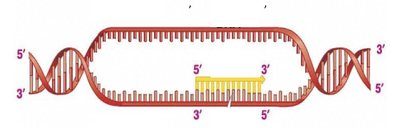
Replication begins at specific sequences called origins of replication.
New nucleotides are added to the 3' OH end of the growing DNA strand.
DNA synthesis occurs in the 5' to 3' direction.
The two strands of DNA are antiparallel, so one strand (leading) is synthesized continuously, while the other (lagging) is synthesized discontinuously in short fragments (Okazaki fragments).
Directionality and Polarity of DNA
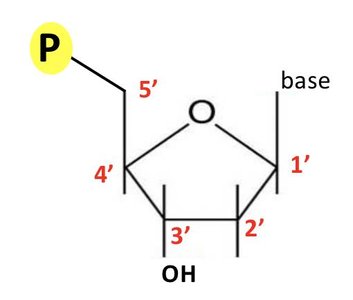
Nucleic acids have directionality, defined by the 5' and 3' carbons of the sugar in their backbone. This polarity is crucial for replication and transcription.
New nucleotides are always added to the 3' OH group.
DNA strands are synthesized in the 5' to 3' direction.
The template strand is read in the 3' to 5' direction.
Transcription: DNA to RNA
Process of Transcription
Transcription is the synthesis of RNA from a DNA template. It is the first step in gene expression.
Initiation: RNA polymerase binds to the promoter region of the gene.
Elongation: RNA polymerase synthesizes the RNA strand by adding nucleotides complementary to the DNA template strand.
Termination: Transcription ends when RNA polymerase reaches a terminator sequence.
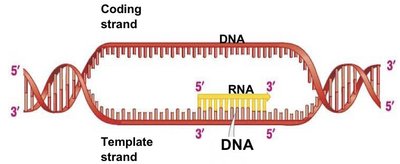
Coding vs. Template Strand
During transcription, only one strand of DNA is used as a template.
Template strand: The DNA strand that is read by RNA polymerase to synthesize RNA.
Coding (sense) strand: The DNA strand with the same sequence as the RNA (except T is replaced by U in RNA).
Translation: RNA to Protein
Mechanism of Translation
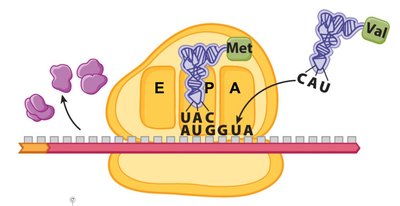
Translation is the process by which the sequence of an mRNA is decoded to produce a specific polypeptide (protein). This occurs in the ribosome and involves tRNA molecules that bring amino acids to the growing polypeptide chain.
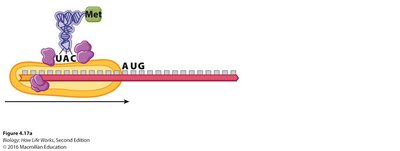
Initiation: The small ribosomal subunit binds to the mRNA at the start codon (AUG).
Elongation: tRNAs bring amino acids to the ribosome, matching their anticodon to the codon on the mRNA. Peptide bonds form between amino acids.
Termination: When a stop codon is reached, the polypeptide is released.
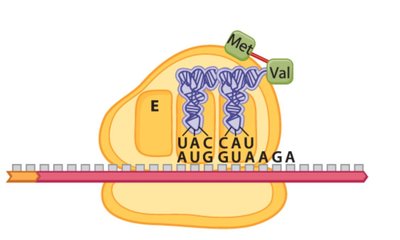
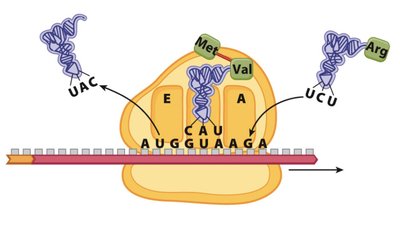
Codons and the Genetic Code
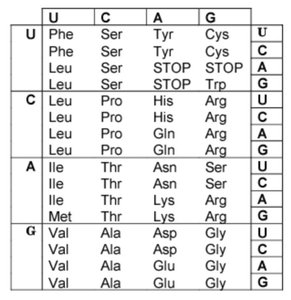
The genetic code is read in sets of three nucleotides called codons. Each codon specifies a particular amino acid or a stop signal.
Start codon: AUG (methionine)
Stop codons: UAA, UAG, UGA
The code is universal and degenerate (multiple codons can code for the same amino acid).
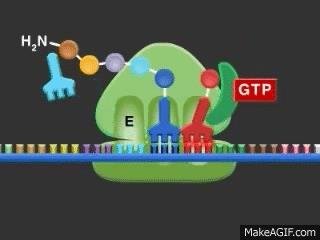
Polyribosomes and Protein Synthesis Efficiency
Multiple ribosomes can translate a single mRNA simultaneously, forming a structure called a polyribosome or polysome. This increases the efficiency of protein synthesis.
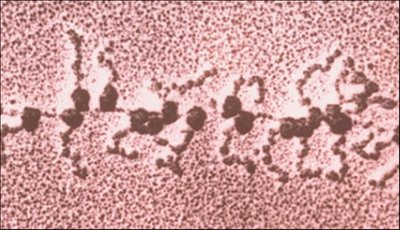
Mutations and Their Effects on Proteins
Types and Consequences of Mutations
A mutation is a change in the DNA sequence. Mutations can have various effects on the resulting protein, depending on their nature and location.
Silent mutation: No change in amino acid sequence.
Missense mutation: Changes one amino acid to another.
Nonsense mutation: Introduces a premature stop codon, truncating the protein.
Frameshift mutation: Insertion or deletion of nucleotides alters the reading frame.
Some mutations are harmless, while others can cause diseases (e.g., sickle cell anemia, cystic fibrosis).
Example: Sickle Cell Anemia
Sickle cell anemia is caused by a single nucleotide substitution in the beta-globin gene, resulting in the replacement of glutamic acid (polar, acidic) with valine (nonpolar). This change alters the properties of hemoglobin, causing red blood cells to assume a sickle shape.
Practice and Application
Using the Codon Table
To determine which amino acid is encoded by a specific mRNA codon, use the codon table. For example, the codon 5' GUC 3' codes for valine (Val).
Summary Table: Central Dogma Processes
The following table summarizes the key features of replication, transcription, and translation:
Process | Template | Product | Direction Synthesized | Key Enzyme | Initiation Sequence |
|---|---|---|---|---|---|
Replication | DNA | DNA | 5' → 3' | DNA polymerase | Origin |
Transcription | DNA | RNA | 5' → 3' | RNA polymerase | Promoter |
Translation | mRNA | Polypeptide | N → C terminus | Ribosome | Start codon (AUG) |
Additional info: Table structure inferred and completed for clarity.
