 Indietro
DNA Replication, Transcription, and Translation: The Central Dogma
Guida di studio - Note intelligenti
 Appunti personalizzati basati sui tuoi materiali, ampliati con definizioni chiave, esempi e contesto.
Central Dogma of Molecular Biology
Overview
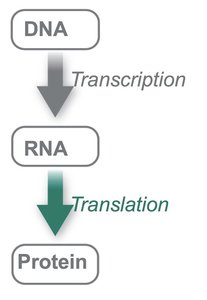
The central dogma describes the flow of genetic information in cells: DNA is transcribed into RNA, which is then translated into protein. This process is fundamental to all living organisms and explains how genes direct the synthesis of proteins.
DNA stores genetic information.
Transcription is the process of copying DNA into RNA.
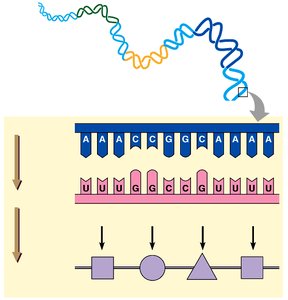
Translation is the process of converting RNA into a polypeptide (protein).
Key Steps
Replication: DNA is copied to produce identical DNA molecules.
Transcription: DNA is used as a template to synthesize messenger RNA (mRNA).
Translation: mRNA is decoded by ribosomes to build a polypeptide chain.
Summary Table
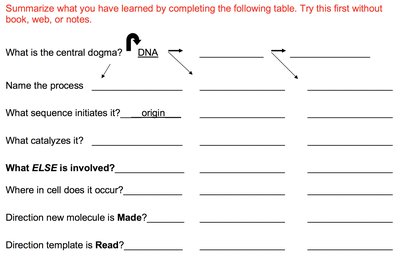
This table summarizes the main features of the central dogma processes:
Process | Initiating Sequence | Catalyst | Location | Direction New Molecule is Made | Direction Template is Read |
|---|---|---|---|---|---|
Replication | Origin | DNA Polymerase | Nucleus | 5' → 3' | 3' → 5' |
Transcription | Promoter | RNA Polymerase | Nucleus | 5' → 3' | 3' → 5' |
Translation | Start Codon (AUG) | Ribosome | Cytoplasm | N → C (amino to carboxyl) | 5' → 3' |
DNA Replication
Mechanism and Directionality
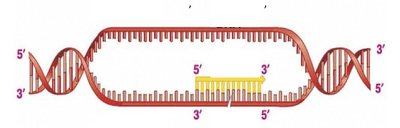
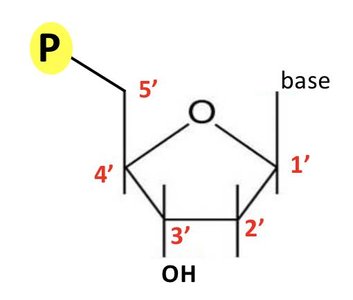
DNA replication is the process by which a cell copies its DNA before cell division. The two strands of DNA are antiparallel, and new nucleotides are added to the 3' OH group of the sugar, resulting in synthesis in the 5' to 3' direction.
Polarity: DNA strands have directionality, labeled 5' and 3'.
Antiparallel: The two strands run in opposite directions.
Leading Strand: Synthesized continuously toward the replication fork.
Lagging Strand: Synthesized discontinuously away from the fork in Okazaki fragments.
Nucleotide Structure
3' OH group: New nucleotides are added here during synthesis.
5' phosphate group: The start of the nucleotide chain.
Transcription
Process and Strand Selection
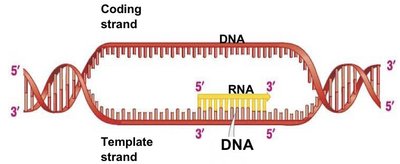
Transcription is the synthesis of RNA from a DNA template. Only one strand of DNA (the template strand) is used to make RNA, which is complementary to the template and nearly identical to the coding strand (except U replaces T).
Promoter: DNA sequence where RNA polymerase binds to start transcription.
Template Strand: The DNA strand used to synthesize RNA.
Coding Strand: The DNA strand with the same sequence as the RNA (except T/U).
Direction: RNA is synthesized 5' to 3', reading the template 3' to 5'.
Initiation and Promoter
Promoter: Specific DNA sequence that signals the start of transcription.
Translation
Mechanism and Steps
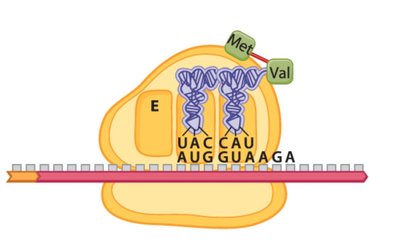
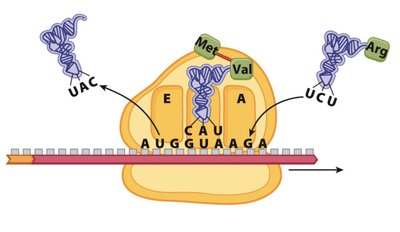
Translation is the process by which ribosomes synthesize proteins using mRNA as a template. The process occurs in the cytoplasm and involves several steps:
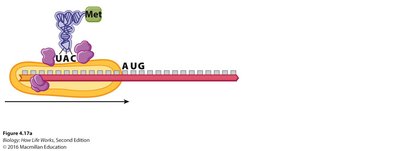
Initiation: The ribosome assembles at the 5' cap of mRNA and scans for the start codon (AUG).
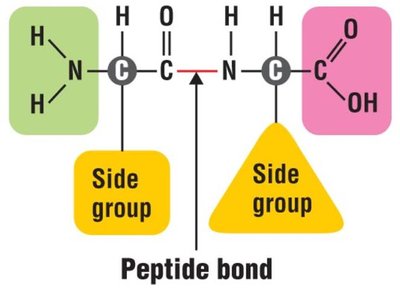
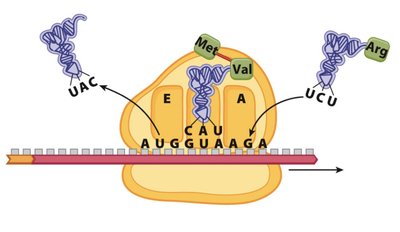
Elongation: tRNAs bring amino acids to the ribosome, matching their anticodon to the mRNA codon. Peptide bonds form between amino acids.
Termination: When a stop codon is reached, the polypeptide is released.
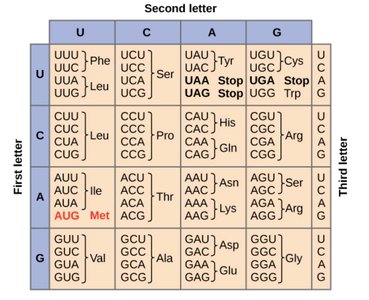
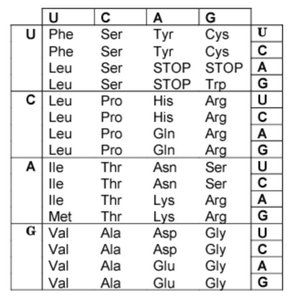
Codon Table and Genetic Code
Codons: Three-nucleotide sequences in mRNA that specify amino acids.
Start Codon: AUG (Methionine) signals the beginning of translation.
Stop Codons: UAA, UAG, UGA signal the end of translation.
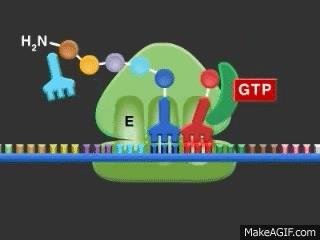
Polypeptide Synthesis
Direction: Polypeptides are synthesized from the N-terminus to the C-terminus.
Peptide Bond: Formed between the carboxyl group of one amino acid and the amino group of the next.
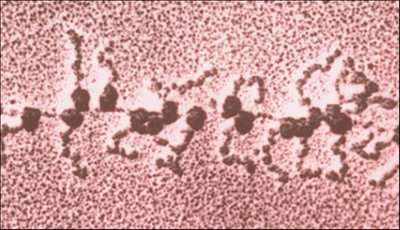
Polyribosomes
Multiple ribosomes can translate a single mRNA simultaneously, increasing efficiency.
Mutations and Their Effects
Types and Consequences
Mutations are changes in the DNA sequence. They can be harmless, harmful, or beneficial, and may affect protein function or gene expression.
Point Mutation: A single nucleotide change can alter the amino acid sequence (e.g., sickle cell anemia).
Deletion: Loss of a nucleotide or codon can truncate or alter protein function (e.g., cystic fibrosis).
Conservative Change: Amino acid change with similar properties may be tolerated.
Amino Acid Properties
Classification and Practice
Amino acids are classified based on the properties of their side chains:
Nonpolar
Polar (not acidic or basic)
Polar, acidic
Polar, basic
Practice and Application
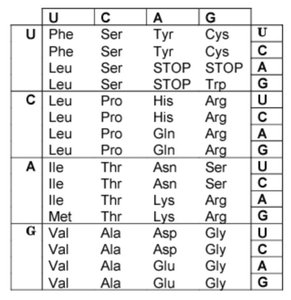
Using the Codon Table
Identify the amino acid encoded by a given mRNA codon using the codon table.
Predict the effect of mutations on protein sequence.
Summary
The central dogma explains how genetic information flows from DNA to RNA to protein.
Replication, transcription, and translation are essential processes for gene expression.
Mutations can alter protein function and lead to genetic diseases.
Understanding codon tables and amino acid properties is crucial for interpreting genetic information.
