 Indietro
DNA Synthesis and Replication: Structure, Enzymes, and Mechanisms
Guida di studio - Note intelligenti
 Appunti personalizzati basati sui tuoi materiali, ampliati con definizioni chiave, esempi e contesto.
DNA Synthesis
Making a Polynucleotide
DNA synthesis is the process by which new DNA molecules are formed from nucleotide building blocks. This process is essential for cell division and the transmission of genetic information from one generation to the next.
Polynucleotide Formation: DNA is a polymer made up of nucleotide monomers joined by phosphodiester bonds.
Condensation Reaction: The formation of a phosphodiester bond between the 3' hydroxyl group of one nucleotide and the 5' phosphate group of another releases a molecule of water.
Directionality: DNA synthesis always proceeds in the 5' to 3' direction, adding nucleotides to the free 3' OH end.
Template Strand: The existing DNA strand serves as a template for the synthesis of a new complementary strand.
Deoxyribonucleotide Triphosphates (dNTPs): These are the substrates for DNA synthesis (dATP, dGTP, dCTP, dTTP).
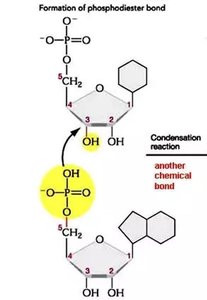
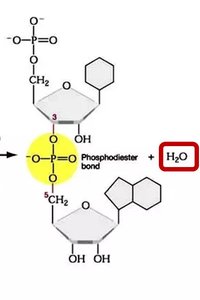
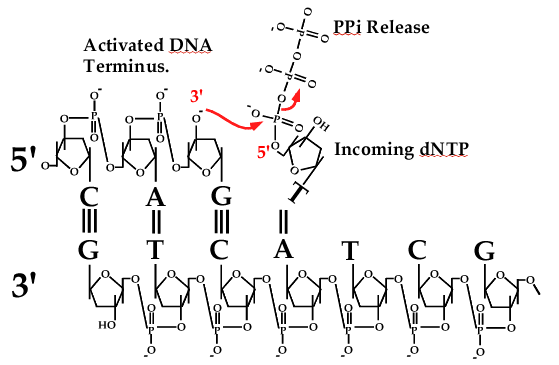
Example: During DNA replication, DNA polymerase catalyzes the addition of nucleotides to the growing DNA strand, using the template strand to ensure correct base pairing.
Attributes of Heritable Material
Properties of DNA as Genetic Material
For a molecule to serve as the genetic material, it must possess several key attributes:
Stability: DNA is chemically stable and not easily degraded, allowing it to persist through generations.
Replication: DNA must be capable of being accurately copied and transmitted to progeny.
Information Storage: DNA contains the instructions for the development, function, and phenotype of living organisms.
Variability: DNA must be capable of change (mutation) to allow for evolution and adaptation.
DNA-Protein Interactions
Structural and Functional Roles
Proteins interact with DNA to maintain its structure, package it within the cell, and regulate its functions such as replication, transcription, and repair.
Sequence-Specific Binding: Some proteins recognize and bind to specific DNA sequences (e.g., transcription factors).
Non-Sequence-Specific Binding: Other proteins bind DNA without regard to sequence, often for structural purposes (e.g., histones, single-strand binding proteins).
Functions: DNA-protein interactions are essential for stability, packaging, replication, gene expression, and repair.
Example: DNA polymerase binds to DNA in a sequence-independent manner during replication, while restriction enzymes bind sequence-specifically to cut DNA at defined sites.
DNA Replication
Overview and Cellular Context
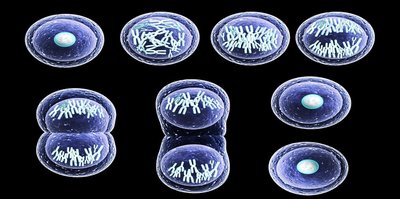
DNA replication is the process by which a cell duplicates its DNA before cell division. In eukaryotes, this occurs in the nucleus, while in prokaryotes, it occurs in the cytoplasm.
Requirement for Cell Division: Accurate DNA replication is essential for the perpetuation of life and inheritance of genetic information.
DNA-Protein Interactions: Replication involves a complex interplay between DNA and various proteins/enzymes.
Key Players in DNA Replication
Template DNA: The original DNA strand that guides the synthesis of the new strand.
Free Nucleotides (dNTPs): Building blocks for new DNA synthesis.
Enzymes and Proteins: Multiple enzymes are required for initiation, unwinding, synthesis, stabilization, and repair.
Major Enzymes and Their Functions
Enzyme/Protein | Function |
|---|---|
Helicase | Unwinds the DNA double helix by breaking hydrogen bonds between bases. |
Gyrase (Topoisomerase) | Relieves supercoiling and torsional strain by cutting and rejoining DNA strands. |
Single-Strand Binding Proteins | Stabilize single-stranded DNA and prevent re-annealing or degradation. |
Primase (RNA Polymerase) | Synthesizes short RNA primers to provide a free 3' OH group for DNA polymerase. |
DNA Polymerase | Adds nucleotides to the growing DNA strand in the 5' to 3' direction. |
Ligase | Seals nicks in the DNA backbone by forming phosphodiester bonds. |
Endonucleases/Exonucleases | Remove incorrect or damaged nucleotides for repair. |
Mechanisms of Replication
Prokaryotic (Theta Model) vs. Eukaryotic Replication
Replication mechanisms differ between prokaryotes and eukaryotes due to differences in genome size, structure, and complexity.
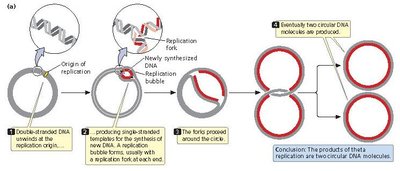
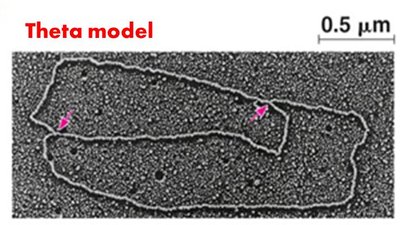
Prokaryotes: Typically have a single, circular chromosome with one origin of replication (OriC). Replication proceeds bidirectionally, forming a theta structure.
Eukaryotes: Have multiple, linear chromosomes with many origins of replication (ARS sites). Replication occurs simultaneously at multiple sites to accommodate larger genome size.
Speed: Prokaryotic replication is faster (~1000 nucleotides/sec) compared to eukaryotic replication (~50 nucleotides/sec).
Initiation of Replication
Prokaryotes: Initiator proteins bind to the OriC site, unwind DNA, and recruit helicase to form a replication bubble.
Eukaryotes: Multiple ARS sites are recognized by the Origin Recognition Complex (ORC). Helicase is recruited and activated at the start of S phase to initiate replication bubbles.
Enzyme Actions During Replication
Helicase: Breaks hydrogen bonds to separate DNA strands.
Gyrase: Relieves torsional strain ahead of the replication fork.
Single-Strand Binding Proteins: Prevent re-annealing and degradation of single-stranded DNA.
Primase: Synthesizes RNA primers to initiate DNA synthesis.
DNA Polymerase: Extends the new DNA strand by adding nucleotides to the 3' end.
Ligase: Joins Okazaki fragments on the lagging strand.
Summary Table: Key Enzymes in DNA Replication
Enzyme | Action |
|---|---|
Helicase | Unwinds DNA by breaking H-bonds |
Gyrase | Relieves supercoiling by cutting and rejoining DNA |
Single-Strand Binding Proteins | Stabilize single-stranded DNA |
Primase | Synthesizes RNA primers |
DNA Polymerase | Adds nucleotides to the new DNA strand |
Ligase | Seals nicks in the DNA backbone |
Why Use RNA Primers in DNA Synthesis?
DNA polymerases cannot initiate synthesis de novo; they require a free 3' OH group. Primase synthesizes a short RNA primer to provide this starting point for DNA polymerase.
RNA Primer: Short segment of RNA synthesized by primase, later replaced by DNA.
Necessity: Ensures that DNA polymerase can begin elongation of the new strand.
Example: On the lagging strand, multiple RNA primers are needed to initiate synthesis of Okazaki fragments.
Equations and Chemical Reactions
Phosphodiester Bond Formation:
Hydrolysis of Pyrophosphate Drives the Reaction:
Summary
DNA replication is a highly coordinated process involving multiple enzymes and proteins. It ensures the faithful transmission of genetic information and is fundamental to all living organisms. Understanding the mechanisms and players involved in DNA synthesis is crucial for studies in genetics, molecular biology, and biotechnology.
