 Indietro
Ecological Communities: Interactions, Structure, and Energy Flow
Guida di studio - Note intelligenti
 Appunti personalizzati basati sui tuoi materiali, ampliati con definizioni chiave, esempi e contesto.
Ecological Communities
Introduction to Community Ecology
Ecological communities are assemblages of populations of different species living in close proximity and interacting with one another. These interactions shape the structure, diversity, and function of the community.
Species Interactions in Communities
Types of Species Interactions
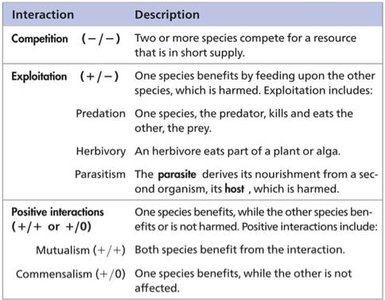
Competition (−/−): Both species are harmed as they compete for limited resources.
Exploitation (+/−): One species benefits at the expense of another. Includes predation, herbivory, and parasitism.
Positive Interactions (+/+ or +/0): At least one species benefits, and neither is harmed. Includes mutualism and commensalism.
Competition and Resource Partitioning
Competition: Occurs when species vie for the same limiting resource, reducing survival and reproduction for both.
Competitive Exclusion Principle: Two species competing for the same limiting resource cannot coexist indefinitely; one will outcompete the other.
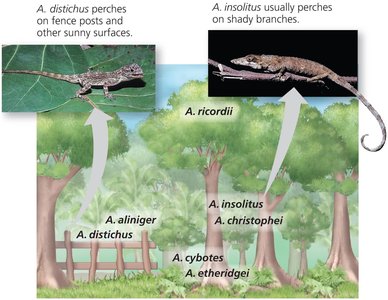
Ecological Niche: The sum of a species' use of biotic and abiotic resources. Differentiation of niches (resource partitioning) allows similar species to coexist.
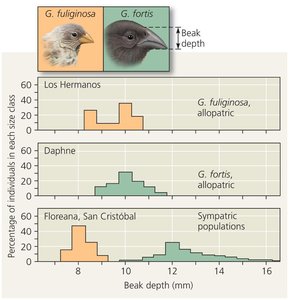
Character Displacement: Differences among similar species are accentuated in regions where the species co-occur (sympatry) but are minimized where they do not (allopatry).
Exploitation: Predation, Herbivory, and Parasitism
Predation (+/−): Predators kill and eat prey. Prey have evolved behavioral, morphological, and chemical defenses.
Herbivory (+/−): Herbivores consume parts of plants or algae, which may develop chemical or structural defenses.
Parasitism (+/−): Parasites derive nourishment from a host, harming it. Endoparasites live inside the host; ectoparasites live on the surface.
Defensive Adaptations in Animals
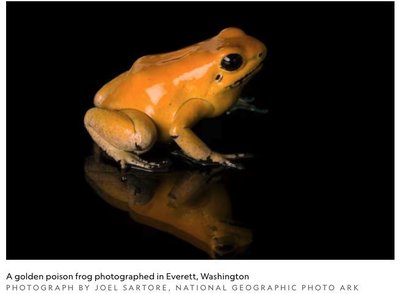
Chemical Defenses: Some animals produce toxins or poisons as a defense mechanism.
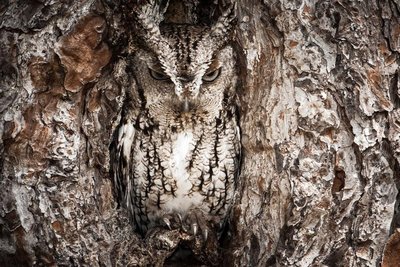
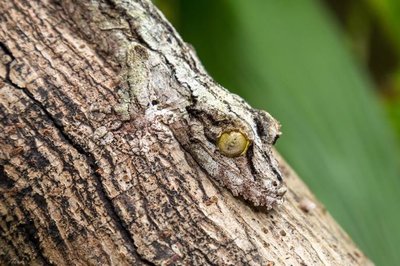
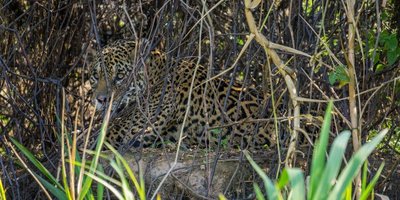
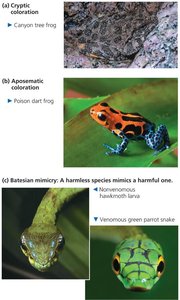
Cryptic Coloration (Camouflage): Allows prey to blend into their environment, avoiding detection by predators.
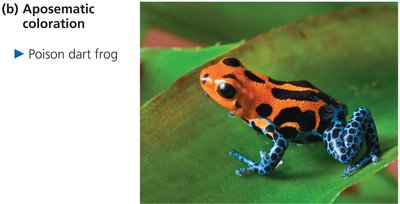
Aposematic Coloration: Bright warning colors signal toxicity or unpalatability to predators.
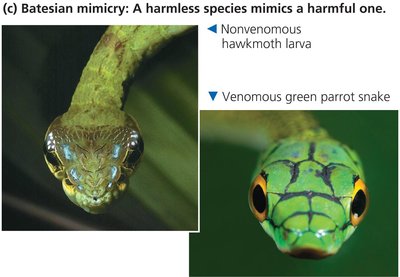
Batesian Mimicry: A harmless species mimics the appearance of a harmful one to deter predators.
Positive Interactions: Mutualism and Commensalism
Mutualism (+/+): Both species benefit. Some mutualisms are obligate (required for survival), while others are facultative.
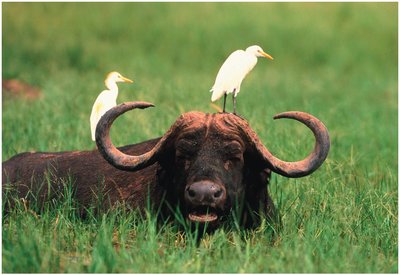
Commensalism (+/0): One species benefits, and the other is neither helped nor harmed.
Community Structure and Trophic Relationships
Species Diversity
Species Richness: The number of different species in a community.
Relative Abundance: The proportion of each species in the community.
Higher diversity communities are more productive, stable, and resistant to invasive species.
Trophic Structure: Food Chains and Food Webs
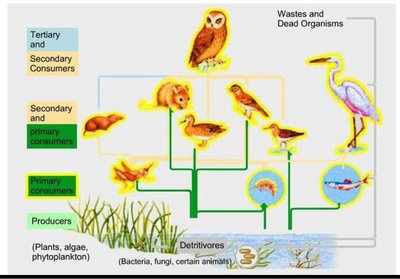
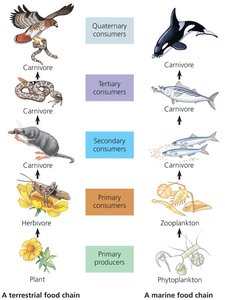
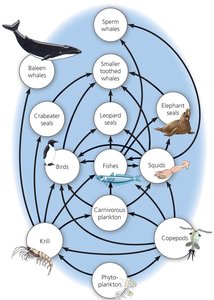
Trophic structure describes the feeding relationships among organisms in a community, organizing them into trophic levels:
Producers: Autotrophs (plants, algae, phytoplankton) that convert solar energy into chemical energy.
Primary Consumers: Herbivores that eat producers.
Secondary Consumers: Carnivores that eat herbivores.
Tertiary and Quaternary Consumers: Higher-level carnivores.
Detritivores: Decomposers (bacteria, fungi) that recycle nutrients from dead organisms.
Species with Large Impacts
Foundation Species: Have large effects due to size or abundance, often providing habitat or resources.
Keystone Species: Exert strong control on community structure through pivotal ecological roles, not abundance.
Disturbance and Succession in Communities
Disturbance and Community Dynamics
Disturbance: An event (e.g., fire, storm, human activity) that changes a community by removing organisms or altering resource availability.
Intermediate Disturbance Hypothesis: Moderate levels of disturbance foster greater diversity than high or low levels.
Nonequilibrium Model: Communities are constantly changing after disturbances.
Ecological Succession
Primary Succession: Occurs in lifeless areas (e.g., new volcanic islands, retreating glaciers).
Secondary Succession: Occurs where a disturbance removes most organisms but leaves soil intact.
Succession involves a predictable sequence of colonization and replacement by different species over time.
Energy Flow and Chemical Cycling in Ecosystems
Physical Laws in Ecosystems
First Law of Thermodynamics: Energy cannot be created or destroyed, only transformed.
Second Law of Thermodynamics: Every energy transfer increases entropy; energy conversions are inefficient, and some energy is lost as heat.
Law of Conservation of Mass: Matter cannot be created or destroyed; elements are recycled within ecosystems.
Biogeochemical Cycles
Water Cycle: Involves evaporation, transpiration, condensation, precipitation, and movement through surface and groundwater.
Carbon Cycle: Carbon moves between the atmosphere, organisms, and fossil fuels via photosynthesis, respiration, and combustion.
Nitrogen Cycle: Nitrogen is fixed from the atmosphere, assimilated by plants, and returned via decomposition and denitrification.
Phosphorus Cycle: Phosphorus cycles through rocks, soil, water, and living organisms, mainly as phosphate.
Summary Table: Types of Species Interactions
Interaction | Effect on Species 1 | Effect on Species 2 | Description |
|---|---|---|---|
Competition | − | − | Both species are harmed by competition for limited resources. |
Predation | + | − | Predator kills and eats prey. |
Herbivory | + | − | Herbivore eats parts of a plant or alga. |
Parasitism | + | − | Parasite derives nourishment from host, harming it. |
Mutualism | + | + | Both species benefit from the interaction. |
Commensalism | + | 0 | One species benefits; the other is unaffected. |
Additional info: This guide covers core concepts from General Biology chapters on community ecology, species interactions, trophic structure, disturbance, succession, and ecosystem energy flow and nutrient cycling. It is suitable for exam preparation and foundational understanding of ecological communities.
