 Indietro
Ecological Communities: Interactions, Structure, and Energy Flow
Guida di studio - Note intelligenti
 Appunti personalizzati basati sui tuoi materiali, ampliati con definizioni chiave, esempi e contesto.
Ecological Communities
Definition and Overview
An ecological community is an assemblage of populations of different species living in close proximity and interacting with each other. These interactions can be beneficial, harmful, or neutral to the species involved, shaping the structure and dynamics of the community.
Species Interactions in Communities
Types of Interactions
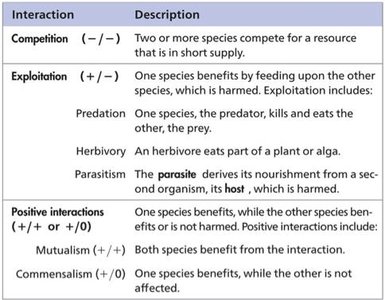
Competition (−/−): Both species are harmed as they compete for limited resources.
Exploitation (+/−): One species benefits at the expense of another. Includes predation, herbivory, and parasitism.
Positive Interactions: At least one species benefits, and neither is harmed. Includes mutualism (+/+) and commensalism (+/0).
Competition and Competitive Exclusion
Competition occurs when species vie for the same limiting resource, reducing survival and reproduction for both.
Competitive Exclusion Principle: Two species competing for the same limiting resource cannot coexist indefinitely; one will outcompete the other.
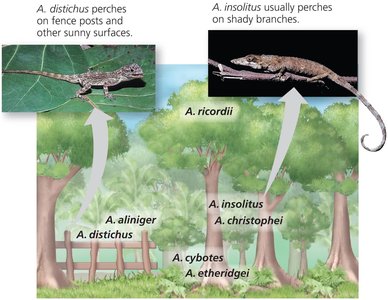
Resource Partitioning: Similar species can coexist if they use resources differently, reducing direct competition.
Ecological Niches
Ecological niche: The sum of a species’ use of biotic and abiotic resources in its environment.
Fundamental niche: The full range of conditions a species can occupy.
Realized niche: The actual conditions occupied, limited by competition.
Character Displacement
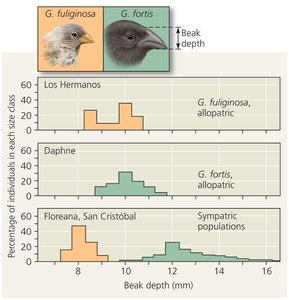
Character displacement occurs when differences among similar species are accentuated in regions where the species co-occur (sympatry) but are minimized where their distributions do not overlap (allopatry). This is evidence of past competition.
Exploitation: Predation, Herbivory, and Parasitism
Predation
Predation is an interaction where one species (predator) kills and eats another (prey). Predators have adaptations for capturing prey, while prey have evolved defenses.
Behavioral defenses: Hiding, fleeing, forming groups.
Morphological/physiological defenses: Spines, toxins.
Chemical defenses: Some prey are toxic or unpalatable.
Cryptic coloration (camouflage): Prey blend into their environment to avoid detection.
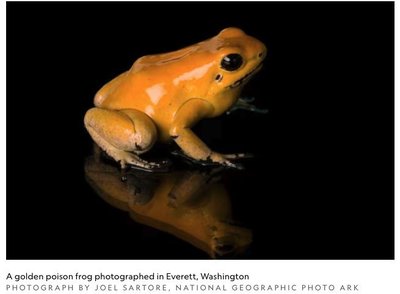
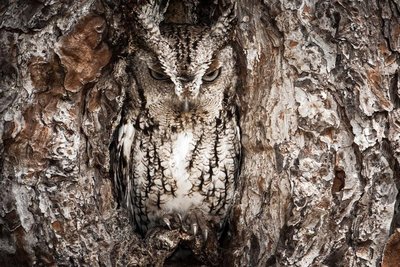
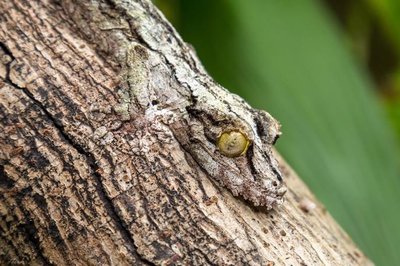
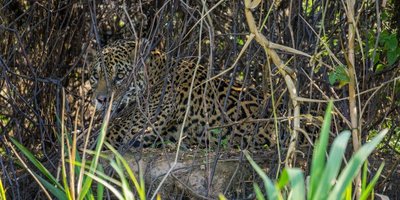
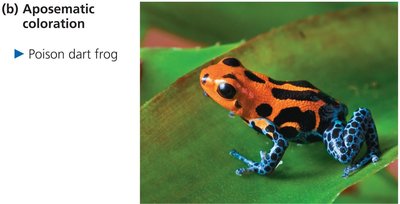
Aposematic coloration: Bright warning colors signal toxicity to predators.
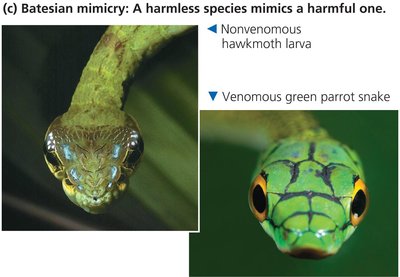
Batesian mimicry: A harmless species mimics a harmful one to avoid predation.
Herbivory
Herbivory is an interaction where an herbivore eats parts of a plant or alga. Plants have evolved defenses such as toxins and physical barriers (spines, thorns).
Parasitism
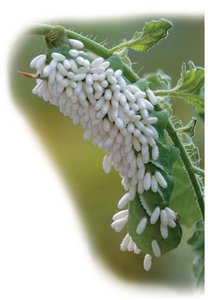
Parasitism is a (+/−) interaction where the parasite derives nourishment from its host, harming it. Parasites can be internal (endoparasites) or external (ectoparasites), and may have complex life cycles involving multiple hosts.
Positive Interactions: Mutualism and Commensalism
Mutualism
Mutualism is a (+/+) interaction where both species benefit. Some mutualisms are obligate (required for survival), while others are facultative (optional).
Example: Mycorrhizal fungi and plants exchange nutrients and sugars.
Commensalism
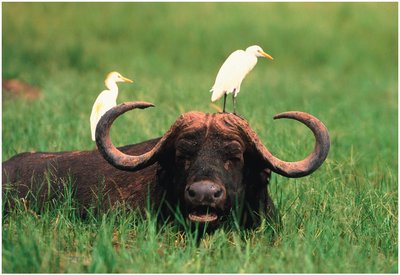
Commensalism is a (+/0) interaction where one species benefits and the other is unaffected.
Example: Cattle egrets feed on insects stirred up by buffalo, but do not affect the buffalo.
Community Structure: Diversity and Trophic Structure
Species Diversity
Species richness: Number of different species in a community.
Relative abundance: Proportion each species represents of all individuals.
High diversity communities are more productive, stable, and resistant to invasive species.
Trophic Structure
Trophic structure describes the feeding relationships among organisms in a community. Organisms are grouped into trophic levels:
Producers: Plants, algae, phytoplankton
Primary consumers: Herbivores
Secondary consumers: Carnivores that eat herbivores
Tertiary and quaternary consumers: Higher-level carnivores
Detritivores: Decompose dead organic matter
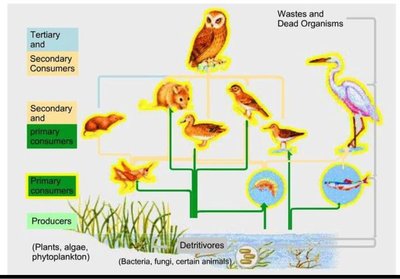
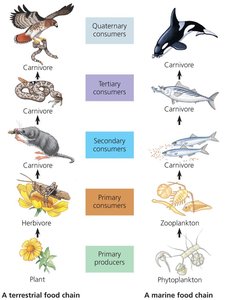
A food web is a network of interconnected food chains, showing complex feeding relationships.
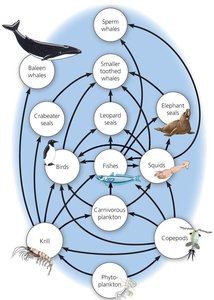
Species with Large Impacts
Foundation species: Have strong effects due to size or abundance (e.g., trees in a forest).
Keystone species: Exert strong control by their ecological roles, not abundance (e.g., sea stars controlling mussel populations).
Disturbance and Community Dynamics
Disturbance
A disturbance is an event that changes a community by removing organisms or altering resource availability (e.g., fire, storms, human activity). The nonequilibrium model describes communities as constantly changing after disturbances.
Intermediate disturbance hypothesis: Moderate levels of disturbance foster greater diversity than high or low levels.
Ecological Succession
Ecological succession is the sequence of community changes after a disturbance:
Primary succession: Occurs in lifeless areas (e.g., after glacial retreat).
Secondary succession: Occurs where disturbance removes most but not all organisms.
Pathogens and Community Structure
Pathogens (disease-causing microorganisms and viruses) can dramatically alter community structure, especially when introduced to new habitats. Many emerging human diseases are zoonotic, transferred from animals to humans, often via vectors like ticks or mosquitoes.
Ecosystems and Energy Flow
Physical Laws in Ecosystems
First law of thermodynamics: Energy cannot be created or destroyed, only transformed.
Second law of thermodynamics: Every energy transfer increases entropy; energy is lost as heat.
Law of conservation of mass: Matter cannot be created or destroyed; elements are recycled in ecosystems.
Biogeochemical Cycles
Water Cycle
Essential for all life; involves evaporation, transpiration, condensation, precipitation, and movement through water bodies.
Carbon Cycle
Carbon is cycled through photosynthesis, respiration, decomposition, and combustion of fossil fuels.
Nitrogen Cycle
Nitrogen is cycled through fixation, nitrification, denitrification, and assimilation by organisms.
Phosphorus Cycle
Phosphorus moves through weathering of rocks, uptake by organisms, and return via decomposition.
Decomposers play a key role in recycling nutrients, and their activity is influenced by temperature, moisture, and nutrient availability.
*Additional info: This guide expands on the provided lecture slides and textbook images, offering definitions, examples, and academic context for each major topic in community ecology and ecosystem energy flow.*
