 Indietro
Ecology: Interactions, Food Webs, and Keystone Species
Guida di studio - Note intelligenti
 Appunti personalizzati basati sui tuoi materiali, ampliati con definizioni chiave, esempi e contesto.
Ecology: The Study of Interactions
Definition and Scope of Ecology
Ecology is the scientific study of how organisms interact with each other and with their environment. It encompasses the relationships between living (biotic) and non-living (abiotic) components of the natural world, and examines how these interactions shape the distribution and abundance of organisms.
Biotic factors: Living components such as plants, animals, fungi, and microorganisms.
Abiotic factors: Non-living chemical and physical elements like temperature, light, water, and nutrients.
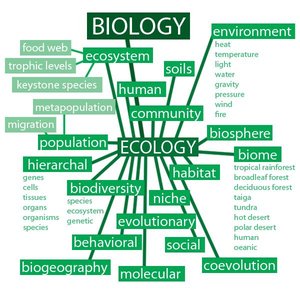
Biotic and Abiotic Components
Abiotic Factors
Abiotic factors are the non-living elements of an ecosystem that influence living organisms. These include:
Temperature: Affects metabolic rates and distribution of species.
Light: Essential for photosynthesis in plants and influences animal behavior.
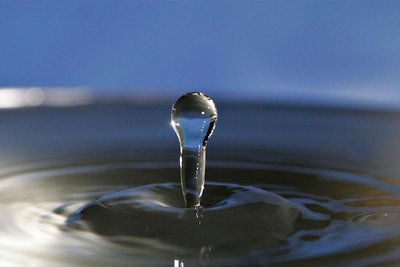
Water: Required for all life processes; availability determines ecosystem types.
Nutrients: Chemical elements like nitrogen and phosphorus needed for growth.
Biotic Factors
Biotic factors are the living components of an ecosystem. They interact in various ways, including:
Competition: Organisms compete for resources such as food, space, or mates.
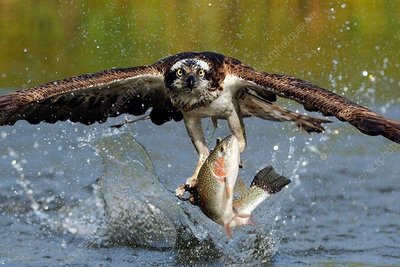
Predation: One organism (predator) feeds on another (prey).
Disease and Parasitism: Pathogens and parasites harm their hosts.
Commensalism: One species benefits, the other is unaffected.
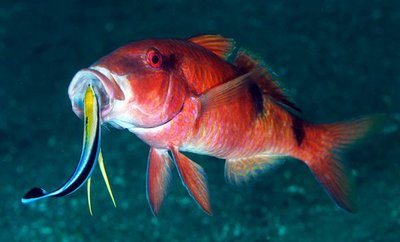
Mutualism (Symbiosis): Both species benefit from the interaction.
Food Webs and Trophic Levels
Structure of Food Webs
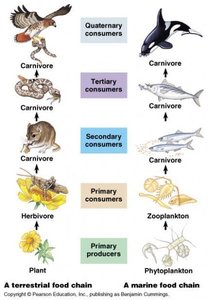
Food webs illustrate the complex feeding relationships within an ecosystem. They show how energy and nutrients flow from one organism to another through various trophic levels:
Primary producers: Autotrophs (e.g., plants, phytoplankton) that produce energy-rich compounds via photosynthesis.
Primary consumers: Herbivores that eat primary producers.
Secondary consumers: Carnivores that eat herbivores.
Tertiary and quaternary consumers: Higher-level carnivores.
Decomposers: Organisms that break down dead material, recycling nutrients.
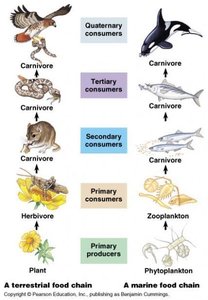
Terrestrial vs. Marine Food Webs
Terrestrial systems: Primary producers are mainly plants.
Marine systems: Primary producers are mainly phytoplankton.
Keystone Species and Ecosystem Balance
Definition and Importance of Keystone Species
A keystone species is one whose impact on its ecosystem is disproportionately large relative to its abundance. The presence or absence of a keystone species can greatly affect the structure and stability of an ecosystem.
Keystone species help maintain the balance of food webs.
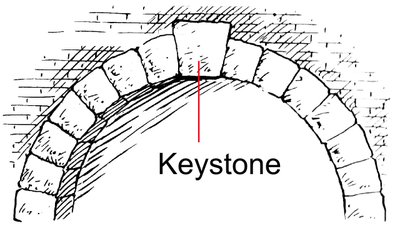
The term "keystone" comes from architecture, where the central stone in an arch holds the structure together.
Case Study: Sea Otters in Kelp Forests
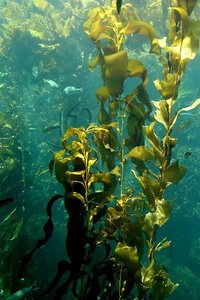
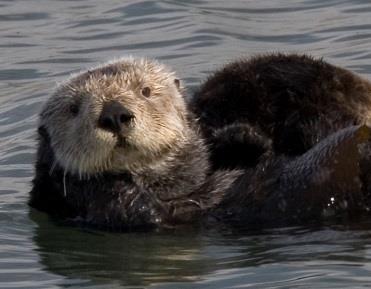
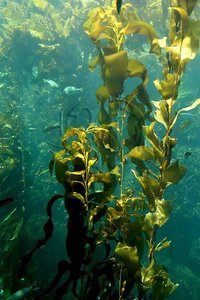
Sea otters are a classic example of a keystone species in North Pacific kelp forest ecosystems.
Primary producers: Kelp forms the base of the food web.
Primary consumers: Sea urchins feed on kelp.
Secondary consumers: Sea otters feed on sea urchins, controlling their population.
Without otters, sea urchin populations explode, leading to the destruction of kelp forests and loss of biodiversity.
Trophic Level | Example Organism | Role |
|---|---|---|
Primary Producer | Kelp | Photosynthesis, base of food web |
Primary Consumer | Sea urchin | Herbivore, eats kelp |
Secondary Consumer | Sea otter | Predator, eats sea urchins |
Ecological Niches and Competition
The Ecological Niche
An ecological niche is the sum of a species' use of the biotic and abiotic resources in its environment. Each species has a unique niche, which includes its habitat, food sources, and interactions with other organisms.
Fundamental niche: The full range of environmental conditions a species could theoretically occupy.
Realized niche: The actual conditions a species occupies, limited by competition and other interactions.
Competition and Niche Differentiation
When two species compete for the same resources, they may undergo niche differentiation to reduce competition. This can lead to:
Character displacement: Evolutionary divergence in traits (e.g., beak size) in sympatric populations (living together) compared to allopatric populations (living apart).
Example: Two barnacle species in Scotland—when one is removed, the other expands its range, demonstrating competition for space.
Summary Table: Key Ecological Concepts
Concept | Definition | Example |
|---|---|---|
Abiotic Factor | Non-living environmental component | Light, water, temperature |
Biotic Factor | Living component of ecosystem | Plants, animals, fungi |
Food Web | Network of feeding relationships | Terrestrial and marine food chains |
Keystone Species | Species with disproportionate ecosystem impact | Sea otter in kelp forests |
Ecological Niche | Sum of species' resource use | Fundamental vs. realized niche |
Character Displacement | Divergence of traits due to competition | Beak size in sympatric bird species |
Additional info: The nature of biotic and abiotic interactions can change over time and space, influencing evolutionary processes and ecosystem dynamics.
