 Indietro
Ecology: Levels of Study, Distribution, Climate, and Biomes
Guida di studio - Note intelligenti
 Appunti personalizzati basati sui tuoi materiali, ampliati con definizioni chiave, esempi e contesto.
Ecology: The Study of Interactions and Environments
Levels of Ecological Study
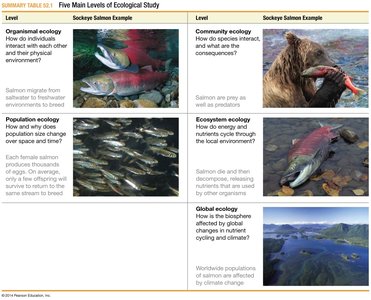
Ecology is the scientific study of how organisms interact with each other and their environment. It is organized into several hierarchical levels, each focusing on different aspects of biological interactions and environmental influences.
Organismal Ecology: Examines how individual organisms adapt to their environment and survive. Example: Salmon migrate from freshwater to saltwater to breed.
Population Ecology: Studies groups of individuals of the same species and how their numbers change over time. Example: Salmon breeding in groups and population fluctuations.
Community Ecology: Investigates how species interact and the consequences of these interactions. Example: Salmon are prey for bears.
Ecosystem Ecology: Focuses on energy flow and nutrient cycling within ecosystems. Example: Salmon die and decompose, returning nutrients to the environment.
Global Ecology: Explores how the biosphere is affected by global changes in nutrient cycling and climate. Example: Worldwide salmon populations affected by climate change.
Importance of Ecology
Understanding ecology is crucial as Earth's environment is changing rapidly due to habitat loss, environmental degradation, pollution, and invasive species. Ecology and evolution are closely linked, as evolutionary processes shape how species adapt to changing environments.
Distribution and Abundance of Organisms
Biogeography: Abiotic and Biotic Factors
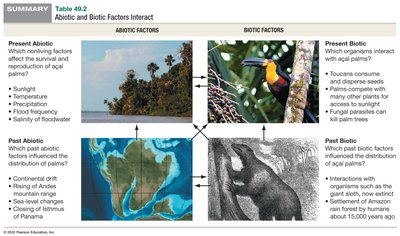
The distribution and abundance of organisms are influenced by both abiotic (non-living) and biotic (living) factors.
Abiotic Factors: Include temperature, salinity, altitude, sunlight, and physical barriers. Areas with similar abiotic conditions may have different species due to historical or biotic influences.
Biotic Factors: Include interactions such as competition, mutualism, predation, and parasitism. These interactions can limit where species live.
Niche Models and Heat Tolerance
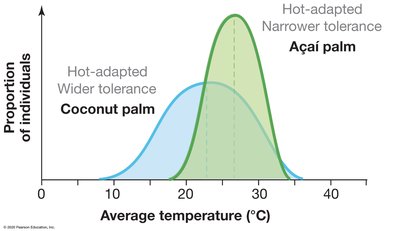
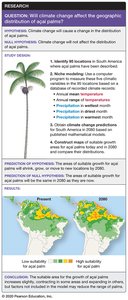
Species have different tolerances to environmental conditions, which define their ecological niche. For example, the açaí palm and coconut palm have different temperature tolerances, affecting their distribution.
Case Study: Distribution of Tsetse Fly and Cattle
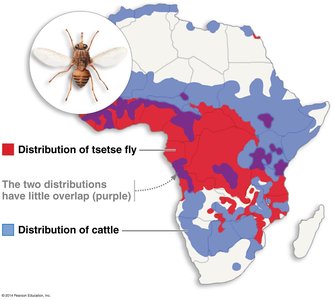
The distribution of species can be limited by both biotic and abiotic factors. For example, the tsetse fly limits the distribution of cattle in Africa, as their ranges overlap minimally.
Historical Impacts on Distribution
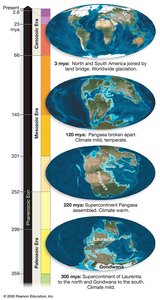
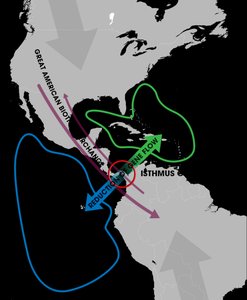
Past climate patterns, river flow, and geographic formations have shaped the dispersal and speciation of organisms. The breakup of supercontinents and formation of land bridges have enabled or restricted species dispersal.
The Wallace Line and Biogeography
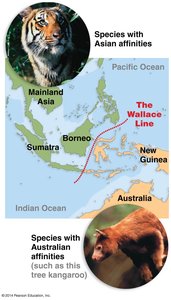
Alfred Russel Wallace identified a boundary (the Wallace Line) separating Asian and Australian species, even in areas with similar ecosystems. Physical barriers like ocean trenches prevented dispersal.
Human Impact on Dispersal
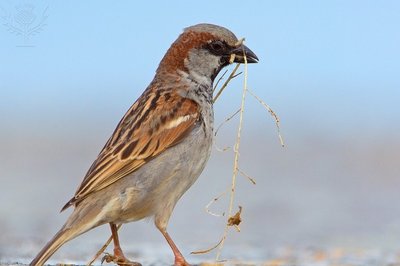
Humans have transported plants, animals, and diseases globally, often resulting in invasive species. For example, house sparrows and European starlings were introduced to North America.
Case Study: Argentine Ants
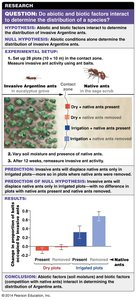
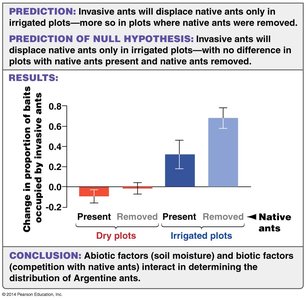
Argentine ants have been introduced worldwide, requiring moist soil for survival. Their distribution is also affected by competition with native ants.
Climate Patterns
What is Climate?
Climate refers to long-term weather patterns, including temperature, wind, clouds, and precipitation. It is typically averaged over 30 years and is influenced by air circulation, Earth's rotation, and other large-scale factors.
Global Climate Patterns: Hadley Cells
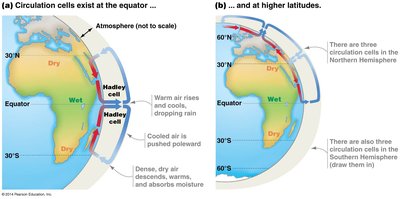
Hadley cells are large-scale air circulation patterns that create wet tropics and dry subtropics. Warm air rises at the equator, cools, and drops rain, while dry air descends at higher latitudes.
Why are Tropics Warm and Poles Cold?
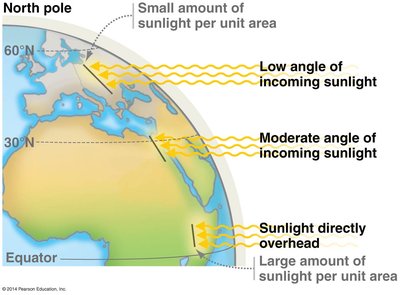
The angle of incoming sunlight affects temperature. The equator receives sunlight directly overhead, resulting in higher temperatures, while the poles receive sunlight at a low angle, resulting in colder temperatures.
Seasonality and Weather
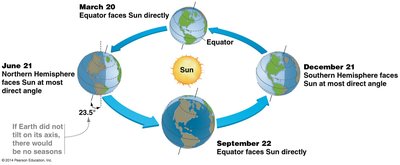
Seasons are caused by Earth's tilt on its axis, leading to regular fluctuations in temperature and precipitation throughout the year.
Regional Effects: Mountains and Oceans
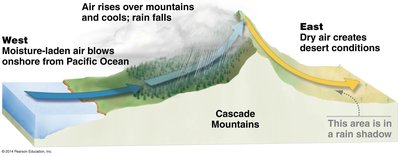
Rain Shadows: Mountains can create rain shadows, where moist air rises and cools, dropping rain on one side, while dry air descends on the other, creating desert conditions.
Oceans: Oceans moderate temperature by absorbing and releasing heat, influencing coastal climates.
Biomes
What is a Biome?
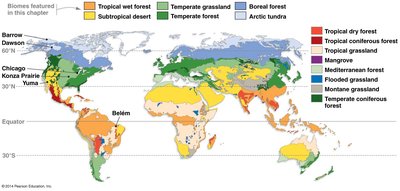
A biome is a region defined by distinct abiotic characteristics and dominant vegetation types. Biomes are broad categories, and similar biomes can occur in different parts of the world.
Terrestrial Biomes
Terrestrial biomes are governed by temperature, precipitation, and their annual variation. The combination of these factors determines the type of vegetation and animal life present.
Net Primary Productivity (NPP)
NPP is the amount of carbon fixed by photosynthesis minus the amount used for cellular respiration. It estimates biomass production and indicates how much life a biome can sustain.
High NPP: Found in regions with high temperature and precipitation.
Low NPP: Found in regions with low temperature or precipitation.
Biome Case Studies
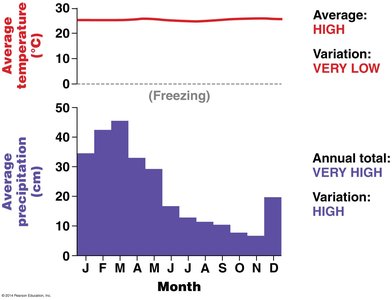
Tropical Wet Forest
Characterized by high average temperature, very low variation, and very high annual precipitation with high variation.
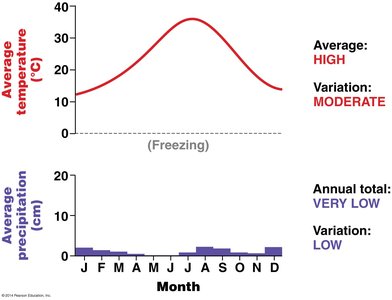
Subtropical Desert
Characterized by high average temperature, moderate variation, and very low annual precipitation with low variation.
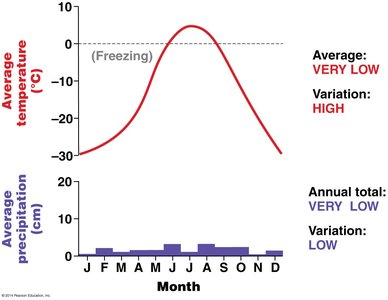
Arctic Tundra
Characterized by very low average temperature, high variation, and very low annual precipitation with low variation.
Climate Change Impacts on Terrestrial Biomes
Climate change is increasing variability in temperature and precipitation, leading to more extreme weather events. These extremes can decrease species diversity by making environments less stable.
Aquatic Biomes
Characteristics of Aquatic Biomes
Aquatic biomes are distinguished by salinity, water depth, water flow, and nutrient availability. These factors influence the types of organisms that can live in aquatic environments.
Water Depth and Light Penetration
Light penetration decreases with water depth, affecting photosynthesis and the distribution of aquatic life.
Ocean Upwelling and Nutrient Availability
Ocean upwelling brings nutrients from deep water to the surface, supporting high productivity in coastal regions.
Lake Turnover and Nutrients
Lake turnover redistributes nutrients throughout the water column, supporting aquatic life.
Additional info: Some details about aquatic biomes, upwelling, and lake turnover were inferred based on standard General Biology content.
