 Indietro
Ecology: Scope, Climate Patterns, and Biome Distribution
Guida di studio - Note intelligenti
 Appunti personalizzati basati sui tuoi materiali, ampliati con definizioni chiave, esempi e contesto.
Ecology: Scope and Organization
Definition and Hierarchy of Ecology
Ecology is the scientific study of the interactions between organisms and their environment. Ecologists investigate these interactions at multiple levels, from individual organisms to the entire biosphere.
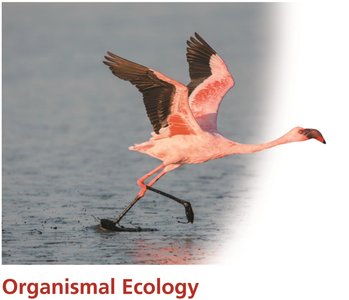
Organismal Ecology: Examines how an organism’s structure, physiology, and behavior help it survive in its environment.
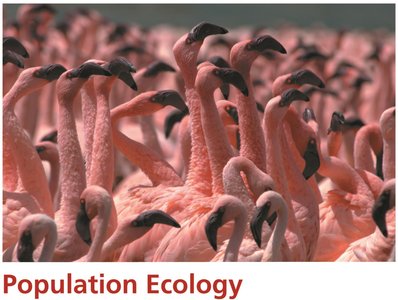
Population Ecology: Focuses on factors that affect population size and composition over time.
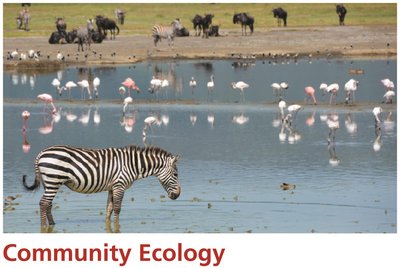
Community Ecology: Studies interactions between species and how these affect community structure and organization.
Ecosystem Ecology: Emphasizes energy flow and chemical cycling among organisms and their environment.
Landscape Ecology: Investigates exchanges of energy, materials, and organisms across multiple ecosystems.
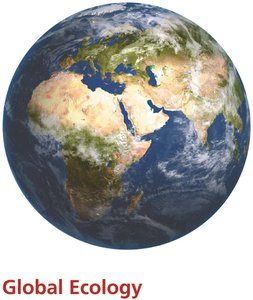
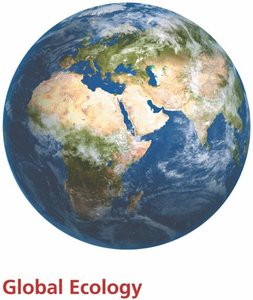
Global Ecology: Considers the biosphere as a whole, examining global patterns and processes.
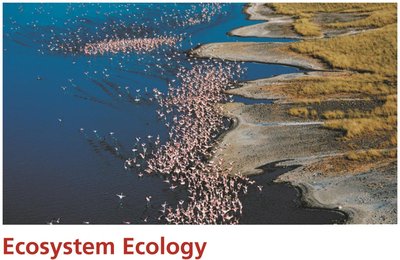
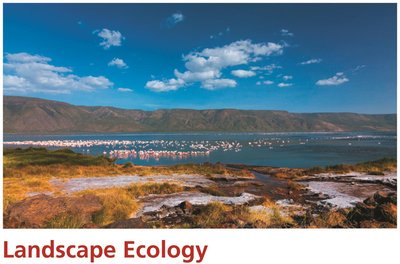
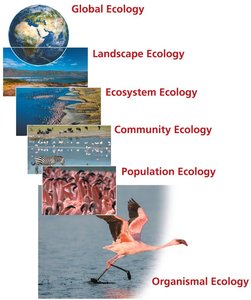
Additional info: These hierarchical levels allow ecologists to address questions ranging from the physiology of a single organism to the functioning of the entire planet.
Climate and Its Role in Biome Distribution
Global Climate Patterns
Global climate patterns are primarily determined by solar energy input and Earth's movement in space. The sun’s energy warms the atmosphere, land, and water, creating temperature variations that drive evaporation and the circulation of air and water. These processes result in latitudinal variations in climate.
Temperature, precipitation, sunlight, and wind are the four major physical components of climate (abiotic factors).
Latitudinal variation in sunlight intensity is caused by Earth’s curvature, leading to more direct sunlight at the equator and lower angles at the poles.
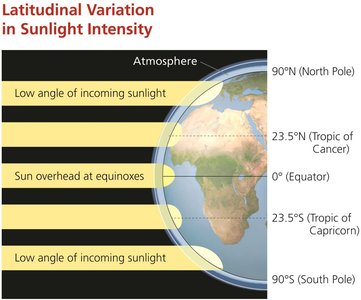
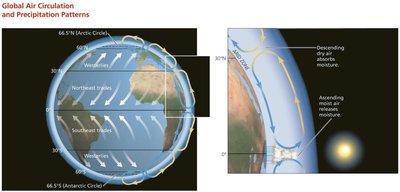
Additional info: These patterns explain why the tropics are warm and wet, while deserts are typically found at 30° latitude.
Regional and Local Climate Effects
Regional and local climates are influenced by seasonality, large bodies of water, and mountain ranges.
Seasonality: Caused by Earth’s axial tilt and orbit, leading to variations in light and temperature throughout the year.
Bodies of Water: Oceans and lakes moderate climate by absorbing and releasing heat, influencing coastal climates and creating breezes.
Mountains: Affect climate by creating rain shadows and influencing sunlight exposure and temperature with elevation.
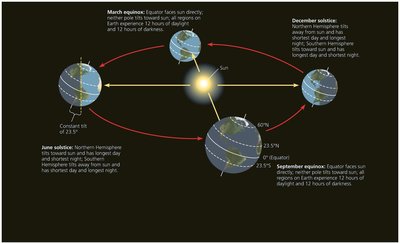
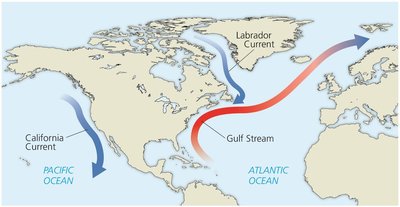
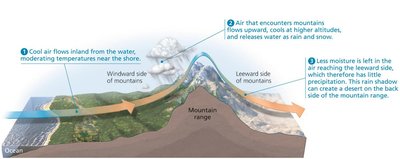
Additional info: Rain shadows are responsible for many of the world’s deserts, and ocean currents like the Gulf Stream have a major impact on regional climates.
Terrestrial Biomes
Definition and Classification
Biomes are major life zones defined by their predominant vegetation (terrestrial biomes) or physical environment (aquatic biomes). Climate is the primary factor determining the distribution of terrestrial biomes.
Terrestrial biomes are named for their physical or climatic features and dominant vegetation.
Vertical layering (e.g., canopy, understory, forest floor) provides diverse habitats for animals.
Biomes often grade into each other through ecotones, which are areas of intergradation.
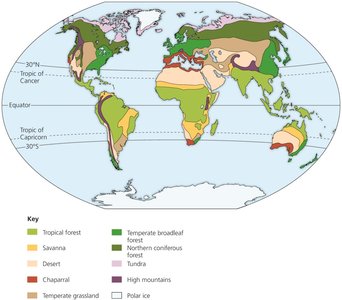
Additional info: The distribution of biomes reflects latitudinal climate patterns, with tropical forests near the equator and tundra near the poles.
Climographs and Biome Distribution
A climograph plots the annual mean temperature and precipitation for a region, helping to visualize the climate conditions that define each biome. Patterns of temperature and precipitation throughout the year also influence biome distribution.
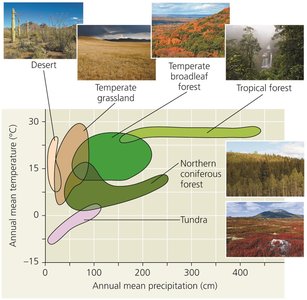
Additional info: Some regions have regular precipitation year-round, while others have distinct wet and dry seasons, affecting the types of vegetation present.
Disturbance and Biome Dynamics
Both natural and human-caused disturbances can alter the distribution of biomes. A disturbance is any event that changes a community by removing organisms or altering resource availability (e.g., fire, storms, human activity).
Frequent fires can prevent the transition of savanna to woodland by killing woody plants.
Summary Table: Major Terrestrial Biomes
Biome | Climate | Dominant Vegetation | Example Location |
|---|---|---|---|
Tropical Forest | Warm, high precipitation | Broadleaf evergreen trees | Amazon Basin |
Desert | Low precipitation, variable temperature | Cacti, succulents | Sahara Desert |
Temperate Grassland | Moderate precipitation, cold winters, hot summers | Grasses, few trees | North American prairies |
Temperate Broadleaf Forest | Moderate to high precipitation, warm summers, cold winters | Deciduous trees | Eastern United States |
Northern Coniferous Forest | Cold, moderate precipitation | Conifers (pines, spruces) | Canada, Siberia |
Tundra | Very cold, low precipitation | Mosses, lichens, low shrubs | Arctic regions |
Key Concepts and Applications
Ecology provides a framework for understanding the distribution and abundance of organisms.
Climate is the most important factor in determining the distribution of terrestrial biomes.
Disturbances can reset ecological communities and influence biome boundaries.
Climographs are useful tools for visualizing the relationship between climate and biome distribution.
