Indietro
Energy and Metabolism: Foundations of Biological Processes
Guida di studio - Note intelligenti
 Appunti personalizzati basati sui tuoi materiali, ampliati con definizioni chiave, esempi e contesto.
Energy and Metabolism
Introduction to Energy
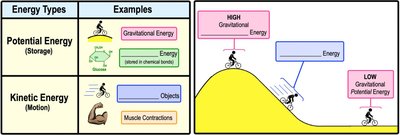
Energy is defined as the ability to perform work. In biological systems, work refers to the transfer of energy that causes an overall change in the state or motion of matter. Energy exists in two main forms: potential and kinetic energy.
Potential Energy: Stored energy that is available to do work, such as energy stored in chemical bonds or as gravitational energy.
Kinetic Energy: The energy of motion, such as moving objects or muscle contractions.
Example: A glucose molecule contains potential energy stored in its chemical bonds, while a moving bicycle demonstrates kinetic energy.
Thermodynamics: System vs. Surroundings
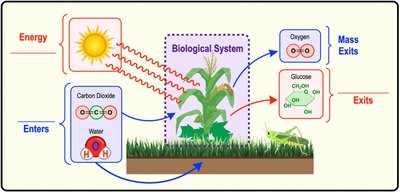
Thermodynamics is the study of energy transfers between bodies of matter. In biology, we distinguish between the system (the specific portion of matter being studied) and the surroundings (everything else outside the system). Biological systems exchange both energy and mass with their surroundings.
System: The part of the universe being studied (e.g., a plant, an animal, or a cell).
Surroundings: Everything outside the system.
Example: A plant as a biological system absorbs energy from sunlight and mass in the form of carbon dioxide and water, and releases oxygen and glucose.
Laws of Thermodynamics
First Law of Thermodynamics
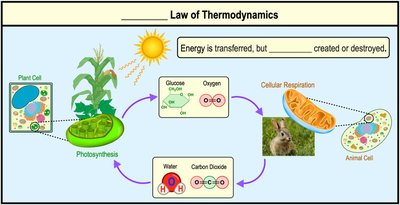
The first law states that energy can be transferred and transformed, but it cannot be created or destroyed. This is also known as the Principle of Conservation of Energy. The total amount of energy in the universe does not change.
Equation:
Example: Energy from sunlight is converted by plants into chemical energy during photosynthesis, which is then used by animals during cellular respiration.
Entropy
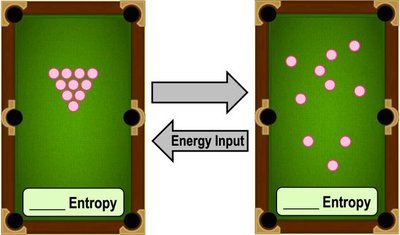
Entropy is a measure of disorder or randomness in a system. The greater the disorder, the higher the entropy. The natural tendency of reactions is to move the universe toward a state of higher entropy (greater disorder). Reactions can decrease the entropy of a system with an energy input.
Low Entropy: Ordered systems (e.g., neatly arranged billiard balls).
High Entropy: Disordered systems (e.g., scattered billiard balls).
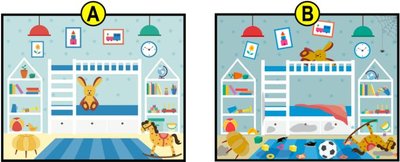
Example: A tidy room (low entropy) versus a messy room (high entropy).
Second Law of Thermodynamics
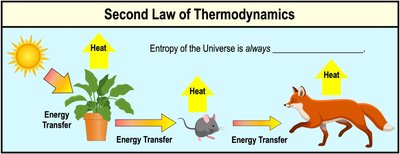
The second law states that no energy conversion is 100% efficient; some energy is always lost as heat, increasing the entropy of the universe. Heat is a form of kinetic energy transferred between objects with different temperatures.
Equation: (where is entropy)
Example: As energy moves up the food chain, some is lost as heat at each step.
Chemical Reactions
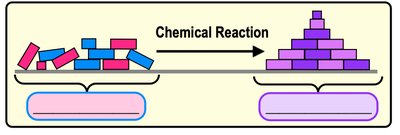
Chemical reactions involve the making and/or breaking of chemical bonds, leading to changes in matter. The starting materials are called reactants, and the resulting materials are products.
Reactants: Substances present before the reaction.
Products: Substances formed as a result of the reaction.
Types of Chemical Reactions
Chemical reactions are categorized based on their energy requirements:
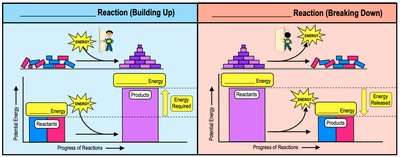
Endergonic Reactions: Require an input of energy (energy enters the reaction).
Exergonic Reactions: Release energy (energy exits the reaction).
ATP: The Energy Currency of the Cell
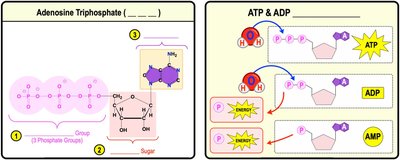
Adenosine Triphosphate (ATP) is a high-energy molecule used to power cellular activities. ATP consists of three main components:
A chain of three phosphate groups
A ribose sugar
An adenine nitrogenous base
ATP hydrolysis is the process of breaking bonds between phosphate groups, generating chemical energy and ADP (adenosine diphosphate). Sometimes, ADP can be hydrolyzed to form AMP (adenosine monophosphate).
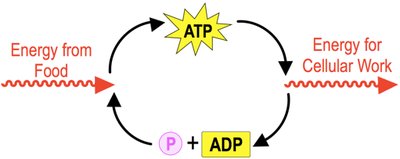
ATP Cycle: Energy from food is used to regenerate ATP from ADP and inorganic phosphate (Pi), and ATP is then used to power cellular work.
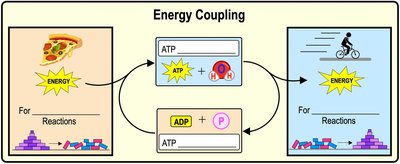
Energy Coupling
Energy coupling occurs when energy released by an exergonic reaction is used to drive an endergonic reaction. ATP hydrolysis is commonly coupled to endergonic reactions to provide the necessary energy input.
Phosphorylation
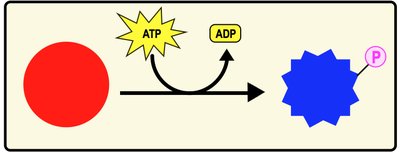
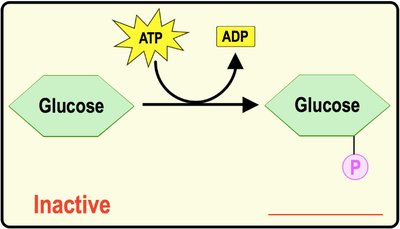
Phosphorylation is the transfer of a phosphate group from ATP to another molecule, providing energy. This process can activate a target molecule to react or change the shape of a target protein, affecting its function.
Enzymes
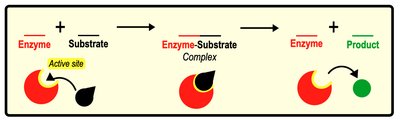
An enzyme is a molecule that catalyzes (speeds up) a chemical reaction without being consumed. The reactants in an enzyme-catalyzed reaction are called substrates.

Functions of Enzymes
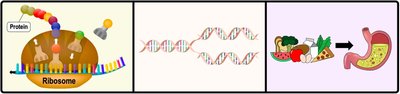
Enzymes perform a variety of functions in living cells, including:
Building proteins
Copying DNA
Digesting food
Environmental Factors Affecting Enzyme Activity
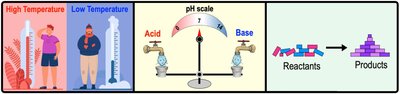
Enzyme activity is a measure of the amount of product an enzyme can produce in a certain amount of time. Factors that affect enzyme activity include:
Temperature
pH
Concentration of reactants
Extreme conditions (e.g., high temperature or acidity) can denature enzymes, causing them to lose their shape and activity.
Enzyme Activation Energy
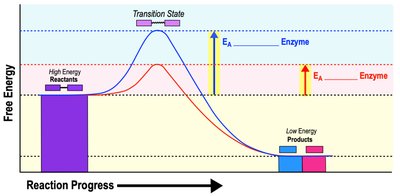
Activation energy (EA) is the minimum amount of energy required to start a chemical reaction. The higher the activation energy, the slower the reaction. The transition state is a temporary state of high energy during a reaction.
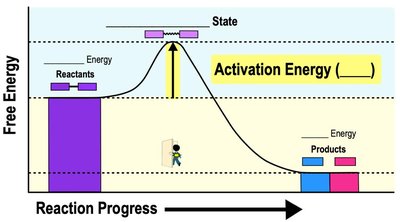
Enzymes catalyze reactions by lowering the activation energy barrier, allowing reactions to occur much faster.
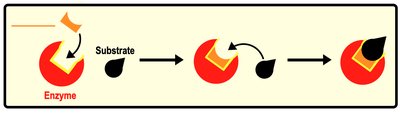
Enzyme Binding Factors
A substrate binds to an enzyme at the active site, forming the enzyme-substrate complex (ES complex). After catalysis, products are released, and the enzyme remains unchanged.
Some enzymes require cofactors (non-protein substances, such as metal ions) for catalysis. Organic cofactors derived from vitamins are called coenzymes.
Enzyme Inhibition
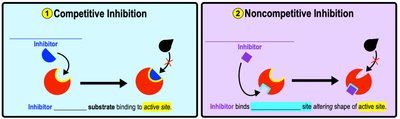
Enzyme inhibitors are compounds that interfere with and selectively block the catalysis of specific enzymes.
Competitive Inhibitors: Compete with the substrate for the active site and can only bind when the active site is free.
Noncompetitive Inhibitors: Bind at an allosteric site (not the active site), changing the enzyme's shape and reducing its activity.
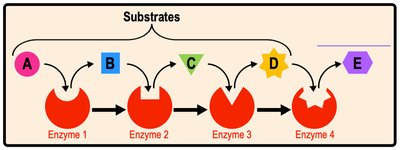
Introduction to Metabolism
Metabolism is the sum of all chemical reactions in an organism. Metabolic pathways are series of reactions that alter a substrate multiple times before the final product is formed.
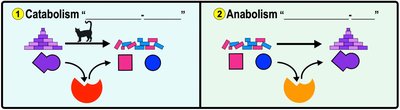
Catabolic Pathways (Catabolism): Release energy by breaking down large molecules into smaller ones.
Anabolic Pathways (Anabolism): Consume energy to build larger molecules from smaller ones.
Negative & Positive Feedback
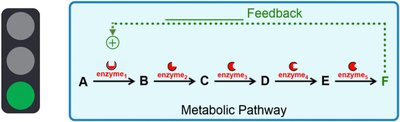
Negative Feedback: When the final product of a metabolic pathway inhibits an earlier step in the same pathway, acting as a regulatory "red light."
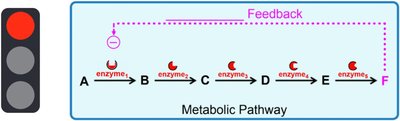
Positive Feedback: When the final product of a metabolic pathway stimulates an earlier step, acting as a regulatory "green light."