 Indietro
Energy & Metabolism: Foundations of Cellular Work
Guida di studio - Note intelligenti
 Appunti personalizzati basati sui tuoi materiali, ampliati con definizioni chiave, esempi e contesto.
Energy & Metabolism
Overview of Metabolic Pathways
Metabolism encompasses all enzyme-regulated chemical reactions in an organism, organized into metabolic pathways. These pathways are classified as either catabolic or anabolic, each playing a distinct role in cellular energy management.
Catabolic Pathways: Break down complex molecules into simpler ones, releasing energy. Example: Cellular Respiration occurs in mitochondria, where glucose is broken down in the presence of oxygen to produce ATP, carbon dioxide, and water.
Anabolic Pathways: Build complex molecules from simpler ones, requiring energy input. Example: Photosynthesis occurs in chloroplasts, using sunlight to synthesize glucose from carbon dioxide and water, releasing oxygen.
Summary Equations:
Cellular Respiration:
Photosynthesis:
Atmospheric Oxygen is produced photosynthetically and is entirely biologically generated.
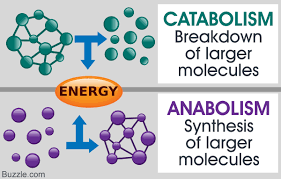
Comparison of Catabolic and Anabolic Pathways
Pathway | Definition | Energy | Example | Location | Summary Formula |
|---|---|---|---|---|---|
Catabolic | Complex molecules broken down to simpler molecules | Energy released | Cellular Respiration | Mitochondrion | |
Anabolic | Simple molecules united to form complex molecules | Energy input/applied | Photosynthesis | Chloroplast |
Forms of Chemical Energy
Chemical bonds store energy in two main forms:
Potential Energy: Energy stored in intact chemical bonds.
Kinetic Energy: Energy released when bonds are broken.

Thermodynamics in Biology
Thermodynamics studies energy transformations in biological systems. Two fundamental laws apply:
First Law (Conservation of Energy): Energy cannot be created or destroyed, only transformed.
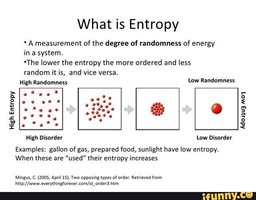
Second Law: Each transformation loses some energy as heat, increasing entropy (degree of disorder).
Continuous input of sunlight is essential to counteract entropy in biological systems.

ATP: The Cellular Energy Currency
Structure and Function of ATP
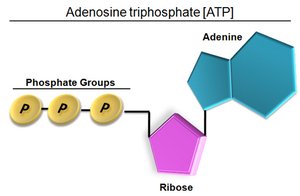
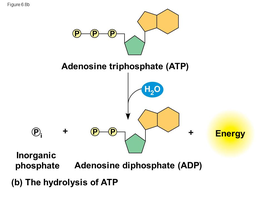
ATP (Adenosine Triphosphate) is a high-energy molecule that powers cellular work, such as muscle contraction, movement of chromosomes, and active transport.
Structure: Composed of an adenosine group (adenine + ribose) and three phosphate groups.
High-Energy Bond: The terminal phosphate bond contains the highest potential energy.
ATP Hydrolysis: Energy Release
Energy is extracted from ATP by breaking the terminal phosphate bond, converting ATP to ADP (adenosine diphosphate) and inorganic phosphate (Pi), releasing energy for cellular use.
Reaction:
ADP: Adenosine diphosphate
Pi: Inorganic phosphate
Enzymes and Energy in Metabolism
Role of Enzymes
Enzymes are biological catalysts that facilitate reactions without being consumed. They are proteins with a specific three-dimensional structure, essential for their function.
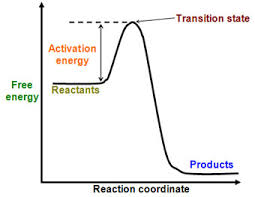
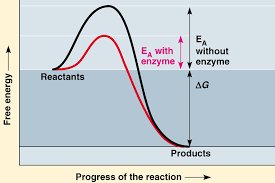
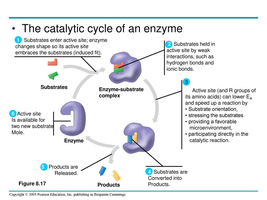
Enzymes lower the activation energy (EA) required for reactions.
Activation energy is the energy needed to convert reactants to products, often visualized as a "hump" in a reaction graph.
Enzyme Mechanism: Lowering Activation Energy
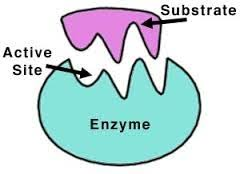
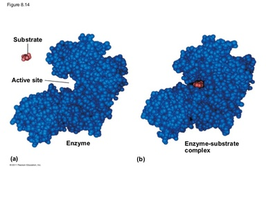
Enzymes provide an active site where reactants (substrates) bind, facilitating the reaction and lowering the activation energy.
The active site is a region with a specific electron configuration matching the substrate.
Substrates temporarily bind to the active site, forming an enzyme-substrate complex.
After the reaction, products are released and the enzyme is reused.
Enzyme Inhibition
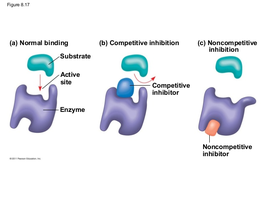
Enzyme activity can be reduced by two main forms of inhibition:
Competitive Inhibition: An extraneous molecule competes for the active site, blocking substrate binding. Many toxins act as competitive inhibitors.
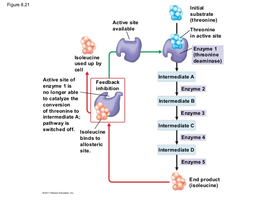
Feedback Inhibition: The end product of a metabolic pathway inhibits the first enzyme in the pathway, preventing overproduction.
Summary Table: Metabolic Pathways
Pathway | Definition | Energy | Example | Location | Summary Formula |
|---|---|---|---|---|---|
Catabolic | Breakdown of complex molecules | Energy released | Cellular Respiration | Mitochondrion | |
Anabolic | Synthesis of complex molecules | Energy input | Photosynthesis | Chloroplast |
Key Terms and Concepts
Metabolism: All chemical reactions in an organism.
Catabolic Pathway: Breakdown of molecules, energy release.
Anabolic Pathway: Synthesis of molecules, energy input.
ATP: Cellular energy currency.
Enzyme: Biological catalyst.
Activation Energy: Energy required for a reaction.
Entropy: Degree of disorder in a system.
Feedback Inhibition: Regulation of metabolic pathways.
