 Indietro
Energy and Metabolism: Thermodynamics, ATP, and Enzymes
Guida di studio - Note intelligenti
 Appunti personalizzati basati sui tuoi materiali, ampliati con definizioni chiave, esempi e contesto.
Energy & Metabolism
Thermodynamics in Biological Systems
Thermodynamics is the study of energy and its transformations, governing all activities from cellular processes to cosmic events. Biological systems are open systems, exchanging energy with their surroundings, unlike closed systems.
First Law of Thermodynamics: Energy cannot be created or destroyed; it can only be transferred or converted between forms.
Second Law of Thermodynamics: When energy is converted, some usable energy is lost as heat, increasing the disorder (entropy) of the universe.
Heat: The kinetic energy of randomly moving particles.
Key Thermodynamic Concepts
Entropy (S): A measure of disorder or randomness. Organized energy has low entropy; disorganized energy (heat) has high entropy.
Enthalpy (H): The total potential energy of a system, essentially the total bond energy.
Free Energy (G): The energy available to do work in a biochemical reaction.
The relationship between these variables is given by: As entropy increases, free energy decreases.
Changes in Free Energy
Changes in free energy () determine whether a reaction releases energy or requires energy input:
Exergonic Reactions: Release energy; is negative. These reactions are spontaneous but require activation energy.
Endergonic Reactions: Require energy input; is positive. These reactions are non-spontaneous.
Diffusion as an Exergonic Process
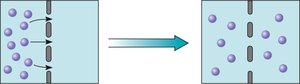
Diffusion is the movement of particles down their concentration gradient, increasing entropy and decreasing free energy.
Concentration Gradient: A region with higher concentration adjacent to a region with lower concentration; represents potential energy.
ATP: The Energy Currency of the Cell
Adenosine triphosphate (ATP) is a nucleotide composed of adenine, ribose, and three phosphate groups. ATP stores energy temporarily and releases it through hydrolysis, an exergonic reaction yielding ADP and inorganic phosphate.
ATP Hydrolysis:
ATP Formation:
ATP links exergonic (energy-releasing) and endergonic (energy-requiring) reactions in cells. 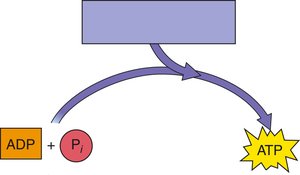
Coupled Reactions
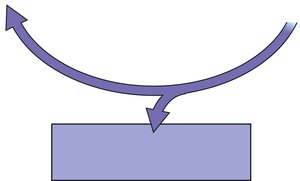
Endergonic reactions are coupled to exergonic reactions, often involving ATP breakdown, to make them thermodynamically favorable.
Example: Formation of sucrose from glucose and fructose is coupled to ATP hydrolysis.
Metabolism
Metabolism encompasses all chemical reactions in an organism, divided into:
Anabolism: Synthesis of complex molecules from simpler ones (requires energy).
Catabolism: Breakdown of complex molecules into simpler ones (releases energy).
Enzymes and Their Role in Metabolism
Enzymes: Biological Catalysts
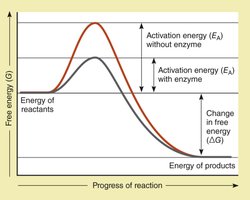
Enzymes are proteins (or RNA molecules) that catalyze chemical reactions by lowering the activation energy required. They are not consumed in the reaction and are highly specific to their substrates.
Activation Energy (EA): The energy required to break bonds and initiate a reaction.
Enzyme Function: Enzymes lower EA but do not affect the overall free-energy change ().
Enzyme-Substrate Complex
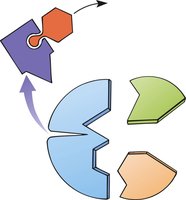
Enzymes form an unstable intermediate complex with their substrate, facilitating the reaction.
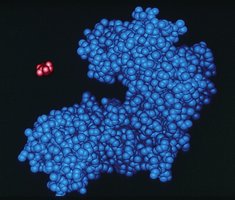
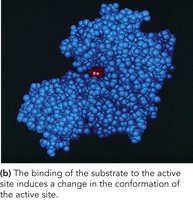
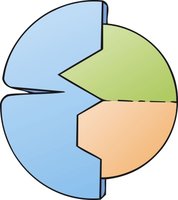
Active Site: The region of the enzyme where substrates bind and reactions occur.
Induced Fit: Binding of substrate causes a conformational change in the enzyme, distorting substrate bonds and promoting reaction.

Enzyme Specificity and Classification
Enzyme specificity is determined by the shape of the active site.
Enzymes are classified into six major classes based on the type of reaction they catalyze.
Factors Affecting Enzyme Activity
Temperature: Each enzyme has an optimal temperature; high temperatures can denature enzymes.
Concentration: Enzyme and substrate concentrations affect reaction rates.
Cofactors: Many enzymes require cofactors (metal ions or coenzymes) for activity.
Enzyme Regulation
Feedback Inhibition: The product of a pathway inhibits an earlier step, regulating the pathway.
Allosteric Regulation: Enzymes may have allosteric sites where regulators bind, altering enzyme activity.
Enzyme Inhibition:
Reversible Inhibition: Inhibitor binds weakly; can be competitive (active site) or noncompetitive (other site).
Irreversible Inhibition: Inhibitor permanently inactivates the enzyme.
Cofactors and Coenzymes
Cofactors: Non-protein components required for enzyme activity (metal ions).
Coenzymes: Organic molecules serving as cofactors (e.g., NADH, FADH2, ATP, Coenzyme A).
Most vitamins are coenzymes or their precursors.
Potential and Kinetic Energy in Cells
Potential Energy: Stored energy due to position or state (e.g., chemical bonds).
Kinetic Energy: Energy of motion (e.g., muscle contraction).
Chemical Energy: Potential energy stored in food molecules, converted to kinetic energy in cells.
Summary Table: Types of Metabolic Reactions
Type | Description | Energy Change |
|---|---|---|
Anabolism | Synthesis of complex molecules | Requires energy (endergonic) |
Catabolism | Breakdown of complex molecules | Releases energy (exergonic) |
Summary Table: Types of Enzyme Inhibition
Type | Mechanism | Example |
|---|---|---|
Competitive | Inhibitor binds active site | Sulfa drugs |
Noncompetitive | Inhibitor binds elsewhere | Allosteric inhibition |
Irreversible | Inhibitor permanently inactivates enzyme | Heavy metals, nerve gases |
Summary
Energy transformations in cells obey the laws of thermodynamics.
ATP is central to energy transfer, linking exergonic and endergonic reactions.
Enzymes catalyze reactions by lowering activation energy, are highly specific, and are regulated by various mechanisms.
