 Indietro
Energy Coupling, ATP, and Redox Reactions in Cellular Metabolism
Guida di studio - Note intelligenti
 Appunti personalizzati basati sui tuoi materiali, ampliati con definizioni chiave, esempi e contesto.
Energy Coupling in Cells
Exergonic and Endergonic Reactions
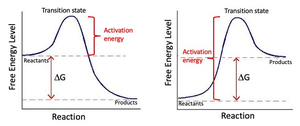
Cells perform many chemical reactions, some of which require energy input (endergonic), while others release energy (exergonic). To drive endergonic reactions, cells couple them with exergonic reactions, most commonly the hydrolysis of ATP.
Exergonic reactions: Release energy; products have lower free energy than reactants.
Endergonic reactions: Require energy input; products have higher free energy than reactants.
Energy coupling: The process of linking an exergonic reaction to an endergonic one so that the energy released can drive the energy-requiring process.
Adenosine Triphosphate (ATP): Structure and Function
ATP Structure and Energy Release
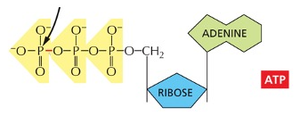
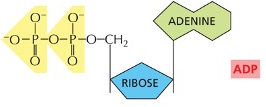
ATP (Adenosine Triphosphate) is the primary energy currency of the cell. Its structure consists of adenine, ribose, and three phosphate groups. The bonds between the phosphate groups, especially the terminal (farthest) phosphate, are high-energy linkages due to negative charge repulsion. Breaking this bond via hydrolysis releases a large amount of energy, making it highly exergonic and suitable for coupling to endergonic reactions.
ATP hydrolysis: ATP + H2O → ADP + Pi + energy
High-energy phosphate bond: The bond between the second and third phosphate group is broken to release energy.
Readily usable energy: The energy released is used for cellular activities such as muscle contraction, active transport, and biosynthesis.
ATP Production and Cellular Respiration
ATP as a Rechargeable Energy Source
Cells require a constant supply of ATP. ATP is regenerated from ADP and inorganic phosphate (Pi) in mitochondria using energy derived from the breakdown of glucose. This process is analogous to recharging a battery.
Glucose breakdown: High-energy covalent bonds in glucose are broken, releasing electrons and energy.
ATP regeneration: ADP is re-energized to form ATP using energy from glucose.
Redox Reactions: Oxidation and Reduction
Electron Transfers and Energy Flow
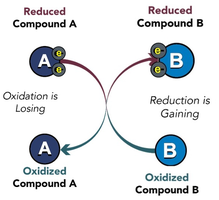
Redox reactions (reduction-oxidation) are fundamental to cellular energy transfer. In these reactions, electrons are transferred from one molecule (oxidized) to another (reduced). The molecule losing electrons is oxidized, while the molecule gaining electrons is reduced. This transfer of electrons is coupled, and the energy in the electrons is harnessed to make ATP.
Oxidation: Loss of electrons (or electrons move farther from the atom).
Reduction: Gain of electrons (or electrons move closer to the atom).
Electron carriers: Molecules like NAD+ and FAD accept electrons during glucose breakdown and become reduced (NADH, FADH2).
Glucose: Structure and Energy Storage
Why Glucose Stores a Large Amount of Energy
Glucose is a high-energy molecule due to its numerous covalent bonds, especially C-H bonds. When these bonds are broken during cellular respiration, electrons are released and transferred to electron carriers, ultimately used to generate ATP. The energy stored in glucose is extracted efficiently through a series of redox reactions.
C-H bonds: High-energy bonds in glucose; breaking them releases electrons and energy.
CO2 and H2O: Low-energy products formed after glucose is fully oxidized.
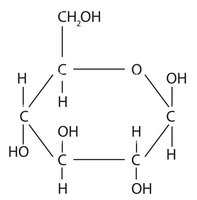
Summary Table: Energy Coupling, ATP, and Redox Reactions
Process | Key Molecules | Energy Flow | Example |
|---|---|---|---|
ATP Hydrolysis | ATP, ADP, Pi | Exergonic (energy released) | Muscle contraction |
Redox Reaction | NAD+, FAD, Glucose | Electron transfer (energy captured) | Cellular respiration |
Glucose Breakdown | Glucose, CO2, H2O | High-energy bonds broken | ATP production |
Additional info: The process of aerobic cellular respiration, which will be covered in detail in the next unit, involves the complete oxidation of glucose to CO2 and H2O, with the energy released used to synthesize ATP.
