 Indietro
Energy, Enzymes, and Metabolism: Foundations of Cellular Processes
Guida di studio - Note intelligenti
 Appunti personalizzati basati sui tuoi materiali, ampliati con definizioni chiave, esempi e contesto.
Energy and Chemical Reactions
Thermodynamics in Biological Systems
Thermodynamics describes how energy is transferred and transformed in biological systems. Living cells rely on energy to drive all cellular processes, and the laws of thermodynamics govern these energy changes.
First Law of Thermodynamics: Energy cannot be created or destroyed, only converted from one form to another.
Second Law of Thermodynamics: Every energy transformation increases the entropy (disorder) of a system, meaning some energy becomes unusable, often lost as heat.
Importance: Cells must continually acquire energy to maintain order and perform work.
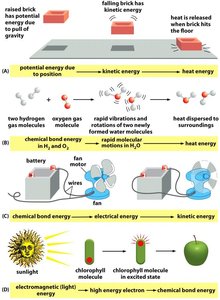
Types of Energy in Biology
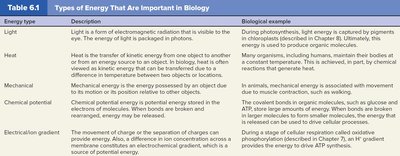
Cells utilize various forms of energy to perform work, including kinetic, potential, chemical, and electrical energy. The transformation of energy types is central to metabolism and cellular function.
Kinetic Energy: Energy of motion, such as molecules moving or muscle contraction.
Potential Energy: Stored energy, such as energy in chemical bonds or concentration gradients.
Chemical Potential Energy: Energy stored in the bonds of molecules, such as glucose or ATP.
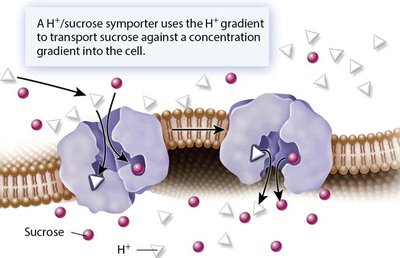
Electrochemical Gradients: Energy stored in the separation of charges or concentration differences across membranes.
Chemical Reactions and Free Energy
Chemical reactions in cells involve the transformation of reactants into products. The direction and rate of these reactions are governed by energy changes and the presence of catalysts.
Free Energy (G): The portion of a system's energy that can perform work.
Enthalpy (H): Total energy of a system.
Entropy (S): Measure of disorder or randomness.
Key Equation:
Change in Free Energy:
Spontaneity: If , the reaction is exergonic (spontaneous); if , it is endergonic (requires energy input).
Exergonic vs. Endergonic Reactions
Reactions are classified based on their energy changes:
Exergonic Reactions: Release energy, have a negative , and occur spontaneously.
Endergonic Reactions: Require energy input, have a positive , and are not spontaneous.
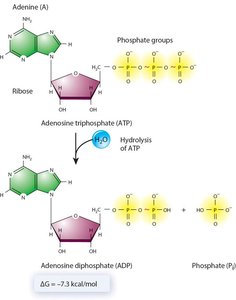
ATP Hydrolysis: The breakdown of ATP to ADP and inorganic phosphate is a key exergonic reaction that powers cellular processes.
Enzymes and Ribozymes
Enzyme Characteristics and Function
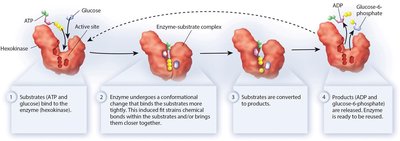
Enzymes are biological catalysts, usually proteins, that speed up chemical reactions by lowering the activation energy required. They are highly specific for their substrates and are not consumed in the reaction.
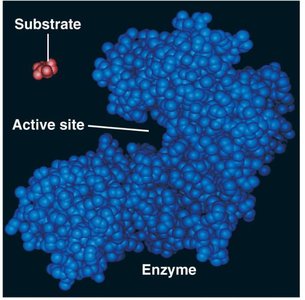
Active Site: The region of the enzyme where substrates bind and the reaction occurs.
Substrate: The reactant molecule(s) that bind to the enzyme.
Product: The molecule(s) produced by the reaction.
Induced Fit: Binding of the substrate induces a conformational change in the enzyme, enhancing catalysis.
Enzyme Mechanism and Specificity
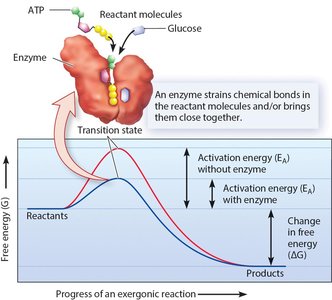
Enzymes lower the activation energy barrier, allowing reactions to proceed more rapidly. They do not alter the free energy change () of the reaction, only the rate.
Transition State: The high-energy state that reactants must reach for the reaction to proceed.
Activation Energy (Ea): The energy required to reach the transition state.
Specificity: Determined by the unique 3D structure of the enzyme's active site.
Enzyme Inhibition
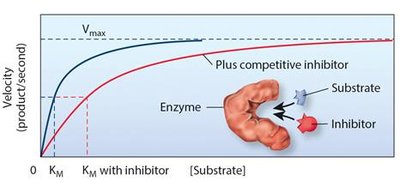
Enzyme activity can be regulated by inhibitors, which decrease the rate of reaction. There are two main types:
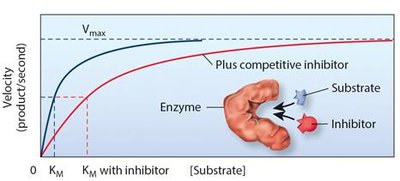
Competitive Inhibitors: Bind to the active site, blocking substrate binding. Can be overcome by increasing substrate concentration.
Noncompetitive Inhibitors: Bind to an allosteric site, changing the enzyme's shape and reducing activity. Cannot be overcome by increasing substrate concentration.
Factors Affecting Enzyme Activity
Enzyme function is influenced by physical and chemical factors:
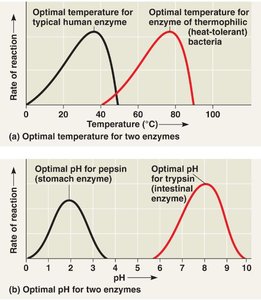
Temperature: Each enzyme has an optimal temperature; extreme temperatures can denature enzymes.
pH: Each enzyme has an optimal pH; deviations can reduce activity.
Ionic Conditions: Salt concentration and ions can affect enzyme structure and function.
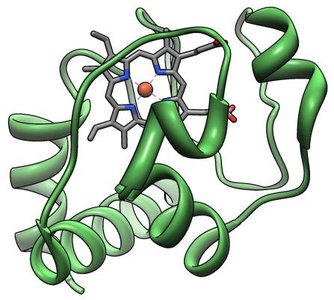
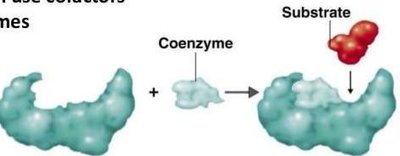
Cofactors and Coenzymes: Nonprotein molecules or ions required for enzyme activity (e.g., metal ions, vitamins).
Overview of Metabolism
Metabolic Pathways
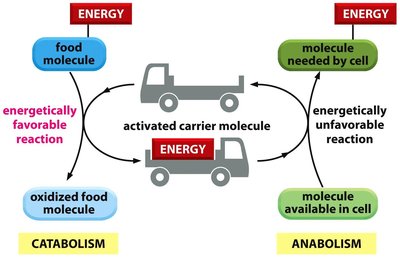
Metabolism is the sum of all chemical reactions in a cell, organized into metabolic pathways. These pathways are essential for energy transformation and the synthesis or breakdown of molecules.
Catabolic Pathways: Break down molecules, releasing energy (exergonic).
Anabolic Pathways: Build complex molecules from simpler ones, requiring energy (endergonic).
Energy Intermediates: Molecules like ATP and NADH that store and transfer energy within cells.
Redox Reactions in Metabolism
Oxidation-reduction (redox) reactions are central to energy transfer in cells. These reactions involve the transfer of electrons from one molecule to another.
Oxidation: Loss of electrons from a molecule.
Reduction: Gain of electrons by a molecule.
OIL RIG: Oxidation Is Loss, Reduction Is Gain.
Electron Carriers: Molecules like NAD+ and NADH facilitate electron transfer.
Regulation of Metabolic Pathways
Cells regulate metabolism at multiple levels to ensure efficiency and respond to environmental changes.
Gene Regulation: Turning genes on or off to control enzyme production.
Cellular Regulation: Cell signaling pathways can modify enzyme activity.
Biochemical Regulation: Feedback inhibition, where the end product of a pathway inhibits an enzyme early in the pathway, preventing overproduction.
Additional info: This guide covers foundational concepts in energy, enzymes, and metabolism, including thermodynamics, enzyme structure and function, metabolic pathways, and regulatory mechanisms. Understanding these principles is essential for further study in cellular respiration, photosynthesis, and molecular biology.
