 Indietro
Energy, Metabolism, and Enzyme Function in Cells
Guida di studio - Note intelligenti
 Appunti personalizzati basati sui tuoi materiali, ampliati con definizioni chiave, esempi e contesto.
Energy and Thermodynamics in Biology
Forms of Energy
Energy is the capacity to cause change or do work. In biological systems, energy exists in various forms, including potential energy (stored energy due to position or arrangement) and kinetic energy (energy of motion). Cells transform energy as they perform work, often converting potential energy to kinetic energy.
Potential Energy: Stored in chemical bonds, such as in glucose.
Kinetic Energy: Associated with movement, such as thermal energy (heat).
Fuel: Molecules that store chemical energy in their bonds.
The Laws of Thermodynamics
The laws of thermodynamics govern energy transformations in living organisms:
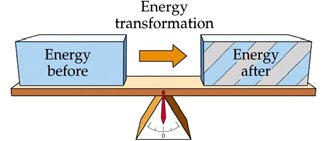
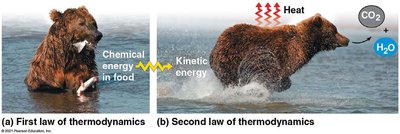
First Law (Conservation of Energy): Energy cannot be created or destroyed, only transformed. The total energy of the universe remains constant.
Second Law: Every energy transfer increases the entropy (disorder) of the universe. While life increases order within organisms, it increases overall disorder.
Entropy: A measure of disorder or randomness in a system.
Metabolism: Catabolic and Anabolic Pathways
Overview of Metabolism
Metabolism is the sum of all chemical reactions in a cell. It includes both the breakdown and synthesis of molecules:
Catabolism: The process of breaking down large molecules into smaller components, releasing energy.
Anabolism: The synthesis of new molecules from smaller components, requiring energy input.


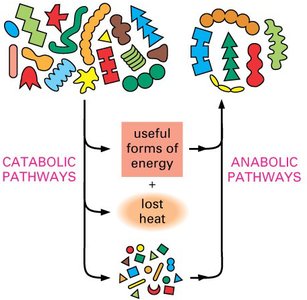
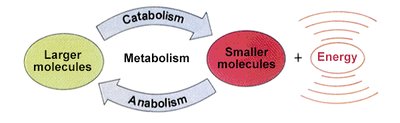
Example: Proteins are broken down to amino acids (catabolism), and amino acids are used to build proteins (anabolism).
Metabolic Pathways
Metabolic pathways are sequences of chemical reactions, each catalyzed by a specific enzyme. These pathways are often compartmentalized in organelles in eukaryotic cells.
Reactants: Starting molecules in a reaction.
Products: Molecules produced by the reaction.

Free Energy and Cellular Reactions
Exergonic and Endergonic Reactions
Cellular reactions are classified based on their energy changes:
Exergonic Reactions: Release free energy, are spontaneous, and have a negative ΔG.
Endergonic Reactions: Require input of free energy, are nonspontaneous, and have a positive ΔG.
Free Energy (G): The energy available to do work in a cell.
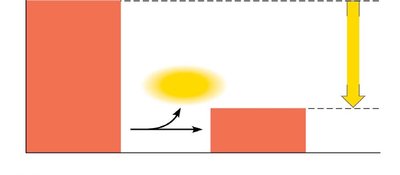
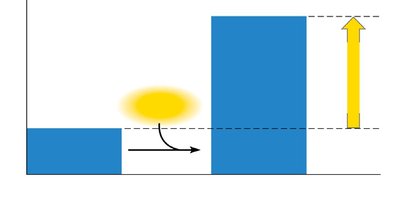
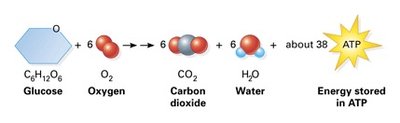
Example: Cellular respiration is exergonic, releasing energy slowly and producing ATP. Photosynthesis is endergonic, absorbing energy from sunlight to produce energy-rich sugars.
Energy Coupling and ATP
Cells couple exergonic and endergonic reactions to perform work, often using ATP as the energy currency. ATP synthesis is endergonic, while ATP hydrolysis is exergonic.
Energy Coupling: Using energy released from exergonic reactions to drive endergonic reactions.
ATP: Adenosine triphosphate, the main energy carrier in cells.
Enzymes and Catalysis
Role of Enzymes
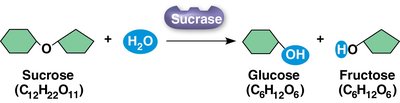
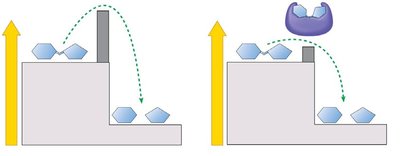
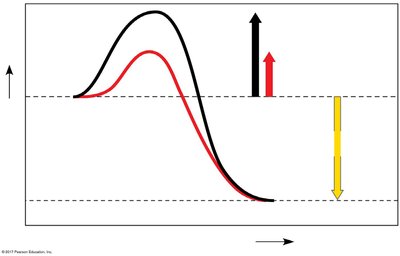
Enzymes are biological catalysts that speed up chemical reactions without being consumed. They lower the activation energy required for reactions, allowing metabolic processes to occur rapidly and efficiently.
Catalyst: Substance that increases the rate of a reaction without being altered.
Activation Energy (Ea): The energy barrier that must be overcome for a reaction to proceed.
Enzyme Structure and Function
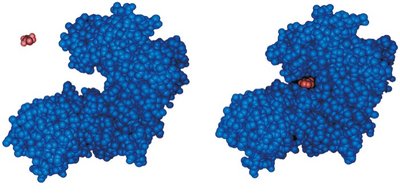
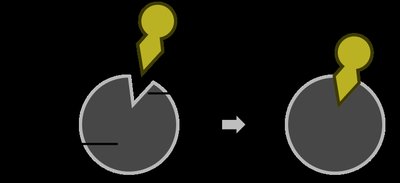
Enzymes are highly specific, recognizing and binding their substrates at the active site. The substrate-enzyme interaction forms an enzyme-substrate complex, often involving an induced fit where the enzyme changes shape for a snug fit.
Substrate: The reactant molecule that binds to the enzyme.
Active Site: The region of the enzyme where the substrate binds.
Induced Fit: The enzyme changes shape to better accommodate the substrate.

Enzyme Activity and Activation Energy
Enzymes lower the activation energy barrier, making reactions proceed faster. However, they do not affect the overall free energy change (ΔG) of the reaction.
Factors Affecting Enzyme Activity
Enzyme activity is influenced by environmental factors (temperature, pH, ionic strength) and specific inhibitors.
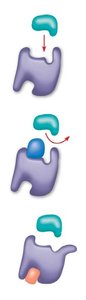
Competitive Inhibition: Inhibitor binds to the active site, blocking substrate binding.
Noncompetitive Inhibition: Inhibitor binds elsewhere, changing the enzyme's shape and reducing activity.
Allosteric Regulation: Regulatory molecules change enzyme shape, activating or inhibiting function.

Cofactors and Coenzymes
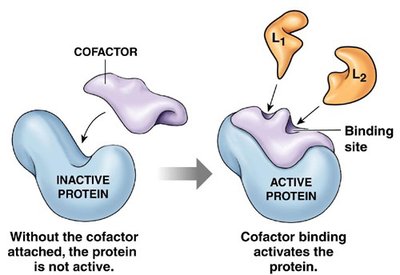
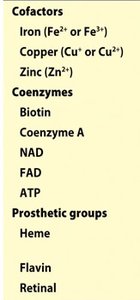
Many enzymes require cofactors (inorganic ions) or coenzymes (organic molecules) for activity. These molecules assist in enzyme function and are essential for many metabolic reactions.
Feedback Inhibition
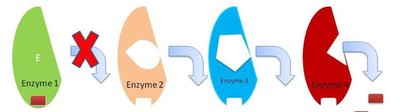
Feedback inhibition is a regulatory mechanism where the end product of a metabolic pathway inhibits an earlier step, preventing overproduction and maintaining homeostasis.
Summary Table: Catabolic vs. Anabolic Pathways
Pathway | Function | Energy Change | Example |
|---|---|---|---|
Catabolic | Breaks down molecules | Releases energy | Cellular respiration |
Anabolic | Builds molecules | Requires energy | Protein synthesis |
Key Terms and Concepts
Substrate
Active site
Activation energy
Conformational change
Allosteric regulation
Phosphorylation
Feedback inhibition
Chemical energy
Thermal energy
Entropy
Metabolism
Spontaneous reaction
Free energy
Catalyst
Equations and Formulas
Free Energy Change:
Cellular Respiration:
Study Guide Questions
Give cellular examples of potential and kinetic energy.
Define and understand the two laws of thermodynamics.
Distinguish between catabolic and anabolic pathways; synthesis and breakdown pathways; kinetic and potential energy.
What are the differences between exergonic and endergonic reactions? Which is spontaneous? Which releases/absorbs energy? Free energy of reactants vs products?
What types of cellular reactions require energy to take place? What does it mean if reactions are "coupled"?
Where is the potential energy stored in an ATP molecule?
Explain why an investment of activation energy is necessary to initiate a spontaneous reaction.
Describe the effect enzymes have on activation energy and free energy within a reaction.
Enzymes are highly specific. What does this refer to?
Name nonspecific factors that can affect enzyme activity.
Describe how enzymes and substrates interact.
Contrast competitive and noncompetitive inhibition. List examples of each. Explain how allosteric regulation can both activate and inhibit enzymes.
