 Indietro
Energy, Thermodynamics, and Enzymes in Biological Systems
Guida di studio - Note intelligenti
 Appunti personalizzati basati sui tuoi materiali, ampliati con definizioni chiave, esempi e contesto.
Energy and Thermodynamics in Biology
Introduction to Energy in Biological Systems
Energy is a fundamental concept in biology, as it powers all cellular processes. Organisms must acquire, transform, and utilize energy to maintain life, grow, and reproduce.
Energy: The ability to cause change or do work. In biological systems, energy exists in various forms, including kinetic (movement) and potential (stored) energy.
Matter: Refers to substances that have mass and occupy space, such as atoms and molecules.
Chemical Energy: A form of potential energy stored in the bonds of molecules, which can be released during chemical reactions.
The Laws of Thermodynamics
The laws of thermodynamics govern energy transformations in biological systems.
First Law of Thermodynamics: Energy cannot be created or destroyed, only transformed from one form to another.
Second Law of Thermodynamics: Every energy transfer increases the entropy (disorder) of the universe. Spontaneous processes increase entropy.
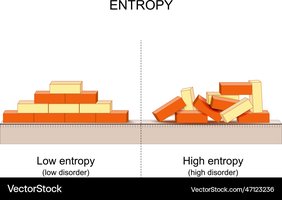
Entropy (S): A measure of disorder or randomness in a system. Systems tend to move toward higher entropy.
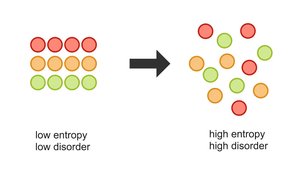
Biological systems maintain order by expending energy, counteracting the natural tendency toward disorder.
Energy Transformations and Chemical Reactions
Chemical reactions in cells involve changes in energy. Some reactions release energy (exergonic), while others require energy input (endergonic).
Exergonic Reactions: Release energy to the surroundings; occur spontaneously (downhill).
Endergonic Reactions: Absorb energy from the surroundings; do not occur spontaneously (uphill).
Gibbs Free Energy (G): A measure of the usable energy in a system. The change in free energy () determines whether a reaction is spontaneous.
If , the reaction is exergonic and spontaneous.
If , the reaction is endergonic and non-spontaneous.
Reaction Coupling and ATP
Cells couple exergonic and endergonic reactions to drive processes that require energy. ATP (adenosine triphosphate) is the primary energy currency of the cell.
ATP Hydrolysis: The breakdown of ATP to ADP and inorganic phosphate releases energy ( is negative), which can be used to power cellular work.
Cells use ATP hydrolysis to drive endergonic reactions, such as active transport and molecular movement.
Example: Active transport of ions across membranes is coupled with ATP hydrolysis to make the process energetically favorable.
Enzymes and Activation Energy
Role of Enzymes in Biological Reactions
Enzymes are biological catalysts that speed up chemical reactions by lowering the activation energy required for the reaction to proceed.
Activation Energy (Ea): The initial energy input needed to start a chemical reaction.
Enzymes work by binding reactants (substrates) at their active site, bringing them into close proximity, stressing bonds, and stabilizing the transition state.
Enzymes are highly specific for their substrates and are not consumed in the reaction.
Enzyme Inhibition and Regulation
Enzyme activity can be regulated by inhibitors, which can be competitive or noncompetitive.
Competitive Inhibition: Inhibitor competes with the substrate for binding at the active site.
Noncompetitive Inhibition: Inhibitor binds to a site other than the active site (allosteric site), changing the enzyme's shape and reducing its activity.
Enzyme regulation is essential for controlling metabolic pathways and responding to cellular needs.
Protein Structure and Denaturation
Levels of Protein Structure
Proteins are complex molecules with specific shapes that determine their function. Protein structure is organized into four levels:
Primary Structure: The sequence of amino acids in a polypeptide chain.
Secondary Structure: Local folding into alpha-helices and beta-pleated sheets, stabilized by hydrogen bonds.
Tertiary Structure: The overall 3D shape of a single polypeptide, determined by interactions between side chains.
Quaternary Structure: The assembly of multiple polypeptide subunits into a functional protein complex (e.g., hemoglobin).
Denaturation of Proteins
Denaturation involves the disruption of the bonds that stabilize a protein's 3D structure, leading to loss of function. This can be caused by heat, pH changes, or chemicals.
Example: Cooking an egg denatures the ovalbumin protein, changing its structure and appearance.
Summary Table: Types of Reactions and Energy Changes
Type of Reaction | Energy Change | Spontaneity | Example |
|---|---|---|---|
Exergonic | Releases energy () | Spontaneous | Cellular respiration |
Endergonic | Requires energy input () | Non-spontaneous | Photosynthesis |
Catabolic | Breaks down molecules, releases energy | Often exergonic | Hydrolysis of ATP |
Anabolic | Builds molecules, requires energy | Often endergonic | Protein synthesis |
