 Indietro
Enzyme Activity and Experimental Investigation in General Biology
Guida di studio - Note intelligenti
 Appunti personalizzati basati sui tuoi materiali, ampliati con definizioni chiave, esempi e contesto.
Enzymes: Structure, Function, and Specificity
Definition and Role of Enzymes
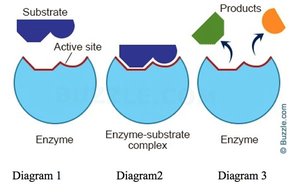
Enzymes are proteins that act as biological catalysts, speeding up chemical reactions in living organisms by lowering the activation energy required for the reaction. They are essential for metabolic processes and are highly specific to their substrates.
Catalysis: Enzymes facilitate reactions without being consumed or altered permanently.
Substrate: The reactant molecule upon which an enzyme acts.
Product: The molecule(s) formed after the enzymatic reaction.
Specificity: Each enzyme is specific to a particular substrate and reaction.
Optimal Conditions: Enzyme activity depends on temperature, pH, and ion concentration. Deviations from optimal conditions can slow or inhibit reactions.
Example: The enzyme pectinase breaks down pectin in fruit cell walls, facilitating juice extraction.
Enzyme Activity: Experimental Investigation
Demonstrating Enzyme Function in Juice Extraction
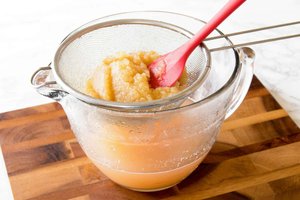
This experiment investigates how the addition of enzymes, specifically pectinase, increases juice yield from applesauce. It also explores the effects of temperature and pH on enzyme activity.
Objective: Determine if adding enzymes increases juice yield.
Variables: Temperature and pH are manipulated to observe their effects on enzyme activity.
Application: Enzymes are used in food processing to enhance extraction and modify texture.
Pectin and Pectinase: Biological Context
Pectin: Structure and Function
Pectin is a large polysaccharide found in plant cell walls, especially in fruits. It holds fruit tissues together and is commonly used in making jellies and jams.
Role: Provides structural integrity to plant cells.
Industrial Use: Added to fruit juices for gelling properties.
Pectinase: Enzyme Action
Pectinase is an enzyme that breaks down pectin molecules, allowing fruit cells to separate more easily and increasing juice release.
Mechanism: Hydrolyzes pectin, reducing viscosity and enhancing juice yield.
Biotechnological Application: Used in fruit juice production and clarification.
Experimental Setup and Laboratory Procedures
Station Setup and Equipment
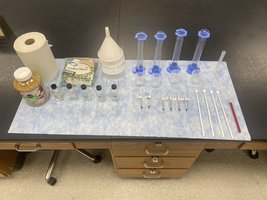
Proper setup and labeling of equipment are crucial for accurate and contamination-free experiments. The station includes spatulas, wax pencils, labeled syringes, graduated cylinders, beakers, and spoons.
Spatulas: Used for stirring mixtures.
Wax Pencils: For labeling equipment to prevent cross-contamination.
Syringes: Used for precise measurement and addition of enzymes.
Graduated Cylinders: For accurate volume readings.
Spoons: For scooping applesauce.

Experimental Procedure
The experiment involves measuring juice yield from applesauce with and without enzyme addition, using labeled syringes and graduated cylinders for accuracy.
Step 1: Scoop applesauce into beakers using a spoon.
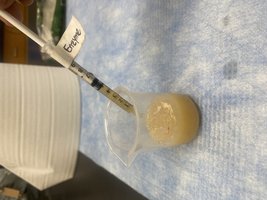
Step 2: Add enzyme using a labeled syringe.
Step 3: Stir and allow reaction to proceed.
Step 4: Measure juice yield using graduated cylinders.
Enzyme Activity: Effects of Temperature and pH
Optimal Conditions for Enzyme Function
Enzymes function best within specific temperature and pH ranges. Deviations from these conditions can denature the enzyme or reduce its activity.
Temperature: Most enzymes have an optimal temperature range. High temperatures can denature enzymes, while low temperatures slow activity.
pH: Each enzyme has an optimal pH. Extreme pH values can alter the enzyme's structure and function.
Equation: The general reaction catalyzed by an enzyme can be represented as:
Where E is the enzyme, S is the substrate, ES is the enzyme-substrate complex, and P is the product.
Laboratory Clean-Up and Safety
Post-Experiment Procedures
Proper clean-up ensures safety and maintains laboratory standards. All equipment must be cleaned, coffee filters disposed of, and enzymes stored appropriately.
Clean Equipment: Rinse and dry graduated cylinders, beakers, and syringes.
Dispose of Waste: Used coffee filters are thrown away.
Store Enzymes: Enzymes are placed in the fridge; iced enzyme in the freezer.
Remove Labels: Wax pencil markings are wiped off.
Summary Table: Enzyme Experiment Components
Component | Purpose |
|---|---|
Enzyme (Pectinase) | Breaks down pectin to increase juice yield |
Applesauce | Substrate for enzyme activity |
Syringe | Precise addition of enzyme |
Graduated Cylinder | Measurement of juice yield |
Beaker | Reaction vessel |
Spoon | Scooping applesauce |
Wax Pencil | Labeling equipment |
Additional info: The experiment is designed to reinforce concepts from General Biology, including enzyme specificity, catalysis, and the importance of optimal conditions for biological reactions.
