 Indietro
Enzyme Structure, Function, and Regulation: Study Notes for General Biology
Guida di studio - Note intelligenti
 Appunti personalizzati basati sui tuoi materiali, ampliati con definizioni chiave, esempi e contesto.
Enzyme Structure and Function
Catabolic vs. Anabolic Reactions
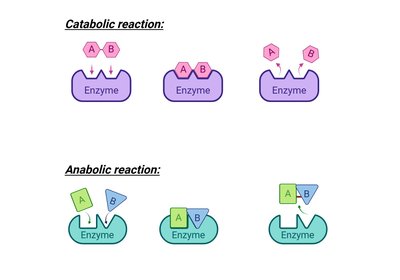
Enzymes are biological catalysts that facilitate chemical reactions in cells. These reactions can be classified as catabolic or anabolic:
Catabolic reactions: Break down complex molecules into simpler ones, releasing energy.
Anabolic reactions: Build complex molecules from simpler ones, requiring energy input.
Example: Catabolic: Cellular respiration; Anabolic: Protein synthesis.
Factors Affecting Enzyme Activity
Temperature
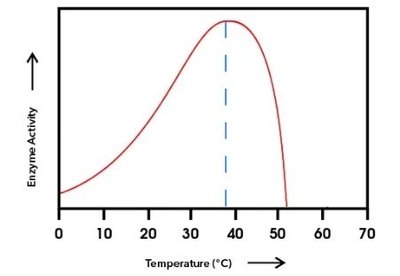
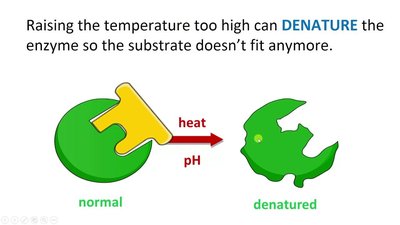
Enzyme activity is highly sensitive to temperature. As temperature increases, enzyme activity rises due to increased molecular collisions, but only up to an optimal point. Beyond this, enzymes denature and lose function.
Optimal temperature: The temperature at which enzyme activity is highest.
Denaturation: Structural change in the enzyme, causing loss of function.
pH
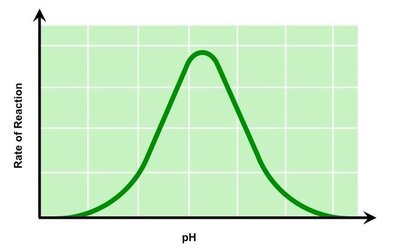
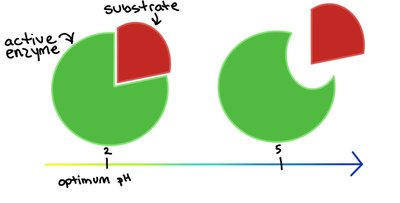
Each enzyme has an optimal pH range. Deviations from this range can disrupt hydrogen bonds, altering the enzyme's shape and reducing activity.
Optimal pH: The pH at which enzyme activity is highest.
Effect of pH: Extreme pH values can denature enzymes.
Salinity and Chemicals
Changes in salinity and the presence of certain chemicals can also affect enzyme structure and function by disrupting ionic and hydrogen bonds.
High salinity: Can cause denaturation or reduced activity.
Chemicals: May act as inhibitors or alter enzyme structure.
Enzyme Cofactors and Coenzymes
Cofactors
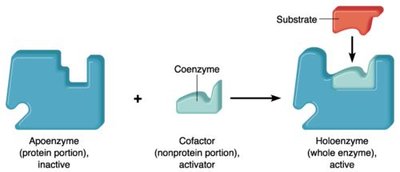
Cofactors are non-protein molecules required for enzyme activity. They can be inorganic (such as metal ions) or organic (coenzymes).
Inorganic cofactors: Metal ions like Mg2+, Fe2+.
Holoenzyme: Enzyme with its cofactor bound and active.
Coenzymes
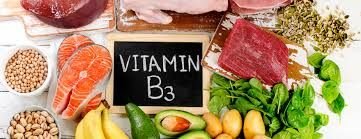
Coenzymes are organic cofactors, often derived from vitamins. For example, niacin (vitamin B3) is used to create NAD+ and NADH, essential for cellular respiration.
Vitamin B3 deficiency: Leads to reduced NAD+ and NADH, causing fatigue due to impaired energy production.
Substrate Concentration and Enzyme Activity
Substrate Saturation
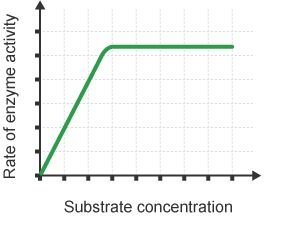
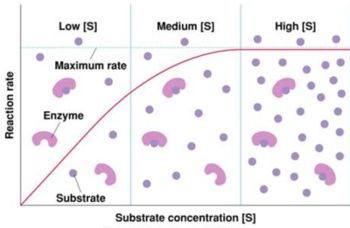
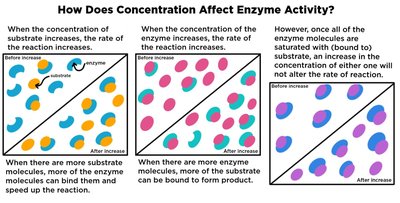
Increasing substrate concentration increases enzyme activity up to a point. Once all enzyme molecules are occupied, the reaction rate plateaus.
Enzyme saturation: All active sites are occupied; further increases in substrate do not increase rate.
Enzyme Inhibition
Competitive Inhibition
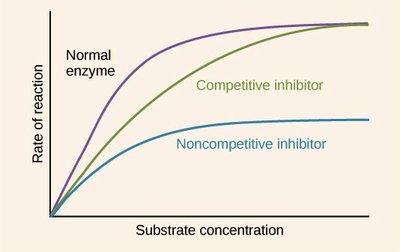
Competitive inhibitors bind to the active site, blocking substrate access. Increasing substrate concentration can overcome inhibition.
Reversible inhibition: Competitive inhibitors can be displaced by excess substrate.

Noncompetitive Inhibition
Noncompetitive inhibitors bind to an allosteric site, changing the enzyme's shape and preventing substrate binding. This inhibition cannot be overcome by increasing substrate concentration.
Allosteric site: Site other than the active site where inhibitors bind.
Permanent inhibition: Inhibitor binds covalently (e.g., toxins like cyanide).
Reversible inhibition: Inhibitor binds non-covalently.

Regulation of Enzyme Activity
Allosteric Regulation
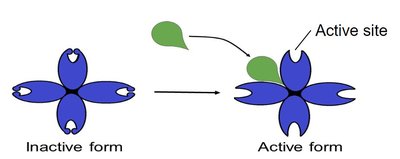
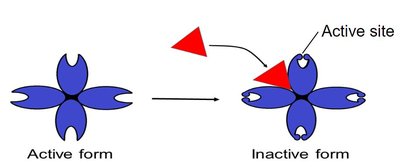
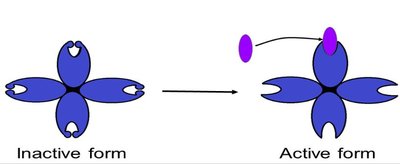
Allosteric enzymes have both an active site and an allosteric site. Binding at the allosteric site can inhibit or activate the enzyme.
Allosteric activator: Stabilizes the active form, keeping active sites open.
Allosteric inhibitor: Stabilizes the inactive form, closing active sites.
Cooperativity: Binding of substrate to one active site stabilizes the active form of other sites.


Feedback Inhibition
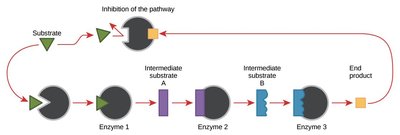
Feedback inhibition occurs when the end product of a metabolic pathway inhibits an early enzyme in the pathway, preventing overproduction.
Example: End product binds to allosteric site of the first enzyme, shutting down the pathway.
Summary Table: Types of Enzyme Regulation
Type | Mechanism | Effect | Reversibility |
|---|---|---|---|
Competitive Inhibition | Inhibitor binds active site | Blocks substrate | Reversible |
Noncompetitive Inhibition | Inhibitor binds allosteric site | Changes enzyme shape | Reversible or permanent |
Allosteric Regulation | Activator/inhibitor binds allosteric site | Activates or inhibits enzyme | Reversible |
Feedback Inhibition | End product inhibits pathway | Regulates pathway | Reversible |
Key Equations
Michaelis-Menten Equation: Describes the rate of enzyme-catalyzed reactions.
Enzyme Saturation: When ,
Conclusion
Enzymes are essential for cellular metabolism, and their activity is regulated by various factors including temperature, pH, cofactors, inhibitors, and allosteric regulation. Understanding these mechanisms is crucial for studying biological processes and their control.
