 Indietro
Enzymes & Proteins: Structure, Function, and Laboratory Investigation
Guida di studio - Note intelligenti
 Appunti personalizzati basati sui tuoi materiali, ampliati con definizioni chiave, esempi e contesto.
Proteins: Structure and Function
Protein Structure and 3-D Complexity
Proteins are essential biological macromolecules whose function depends on their complex three-dimensional structure. The spatial arrangement of atoms within a protein determines the location of bonding electrons, which are crucial for chemical reactivity. If the 3-D structure is altered, the protein loses its ability to function properly, a concept often described as the "key-in-lock" mechanism.
Key Point 1: The 3-D structure is maintained by specific interactions among amino acids, including hydrogen bonds, ionic bonds, and hydrophobic interactions.
Key Point 2: Disruption of this structure (denaturation) results in loss of biological activity.
Example: Cooking an egg denatures the albumin protein, turning it from liquid to solid, and this change is irreversible for most proteins.
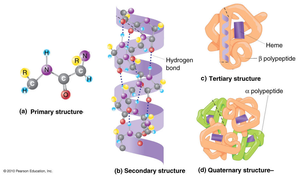
Levels of Protein Structure
Biochemists describe four structural levels of proteins, each contributing to the overall complexity and function.
Primary Structure: The linear sequence of amino acids joined by peptide bonds. Errors in this sequence can cause diseases, such as sickle cell anemia.
Secondary Structure: Hydrogen bonds between non-adjacent amino acids create alpha helices and beta pleated sheets.
Tertiary Structure: Interactions among side chains (R-groups) further fold the protein, imparting unique reactivity.
Quaternary Structure: Multiple polypeptide chains are held together, forming a functional protein complex.
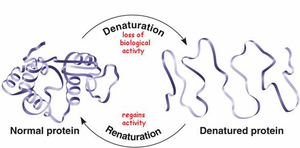
Denaturation and Renaturation
Extreme environmental conditions, such as high or low temperature and strong acids or bases, can disrupt the bonds maintaining protein structure, leading to denaturation. Most denatured proteins cannot regain their original form (renaturation is rare).
Key Point: Denatured proteins lose their biological activity because their active sites are destroyed.
Example: Albumin in cooked egg whites cannot return to its liquid form after cooling.
Enzymes: Biological Catalysts
Definition and Function
Enzymes are proteins that act as biological catalysts, speeding up chemical reactions without being consumed. Their activity depends on maintaining their 3-D structure.
Key Point 1: Enzymes lower the activation energy required for reactions, making them proceed more easily.
Key Point 2: Enzymes are specific to their substrates due to the precise configuration of their active sites.
Activation Energy and Transition State
The energy required to initiate a chemical reaction is called activation energy (EA). Enzymes facilitate reactions by lowering this energy barrier, allowing reactants to reach the transition state more efficiently.
Activation Energy Formula:
Transition State: The point at which old bonds are broken and new bonds begin to form.
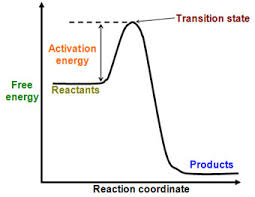
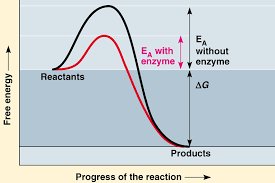
Active Site and Enzyme-Substrate Complex
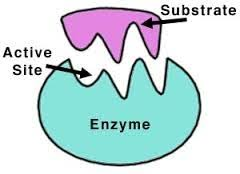
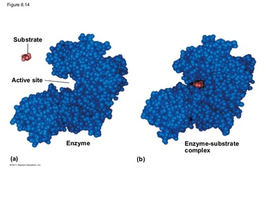
The active site of an enzyme is the region where substrates bind and undergo a chemical reaction. The enzyme-substrate complex is a temporary association that facilitates the conversion of substrates to products.
Key Point: The active site provides a "landing platform" for substrates, ensuring proper orientation for reaction.
Substrate: The reactant that relies on an enzyme for transformation.
Enzyme-Substrate Complex: The intermediate formed when substrate binds to the enzyme's active site.
Catalytic Cycle of Enzyme Action
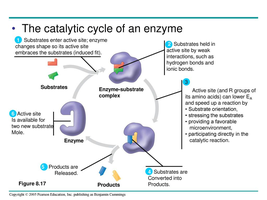
Enzymes operate in a cyclic manner, binding substrates, facilitating reactions, releasing products, and then being reused. Maintaining the 3-D structure is essential for this cycle.
Key Point: Enzymes are not consumed in the reaction and can be reused multiple times.
Enzyme Inhibition
Competitive Inhibition
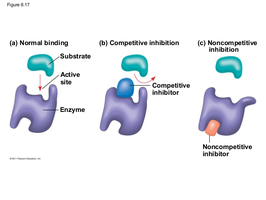
Enzyme activity can be reduced or halted by inhibitors. Competitive inhibitors are molecules that resemble the substrate and compete for the active site, preventing the substrate from binding.
Key Point: Many toxins act as competitive inhibitors, blocking enzyme function.
Example: Phenylthiourea is a competitive inhibitor used in laboratory experiments.
Laboratory Investigation: Catecholase Enzyme
Experimental Conditions and Factors
Experiments with catecholase (enzyme), catechol (substrate), and benzoquinone (product) were conducted under various conditions to study enzyme activity.
Conditions: Room temperature, boiling water bath, ice bath, body temperature, pH 3 (acidic), pH 11 (basic), presence of phenylthiourea, and varying enzyme concentrations.
Factors: Volatility, temperature, pH, denaturing, competitive inhibition.
Qualitative Indications of Enzyme Activity
Acidic Solution (pH 3): Enzyme activity is reduced due to denaturation.
Basic Solution (pH 11): Enzyme activity is reduced due to denaturation.
Phenylthiourea Solution: Enzyme activity is inhibited by competitive inhibition.
Boiling Water Condition: Enzyme is denatured and loses activity.
Ice Bath Condition: Enzyme activity is slowed but not denatured.
Impact of Enzyme Concentration
Key Point: Increasing enzyme concentration generally increases the rate of reaction, up to a point where substrate becomes limiting.
Summary Table: Enzyme Activity Under Different Conditions
Condition | Effect on Enzyme Activity |
|---|---|
Room Temperature | Normal activity (control) |
Boiling Water | Denatured, no activity |
Ice Bath | Slowed activity |
Body Temperature | Optimal activity |
pH 3 (Acidic) | Reduced activity, possible denaturation |
pH 11 (Basic) | Reduced activity, possible denaturation |
Phenylthiourea | Competitive inhibition, reduced activity |
Increased Enzyme Concentration | Increased activity (until substrate is limiting) |
Review Questions
In what category of organic molecule are enzymes placed? Answer: Proteins.
Describe the structural complexity of proteins. Answer: Proteins have four structural levels: primary, secondary, tertiary, and quaternary.
Describe the two steps of enzyme function. Answer: (1) Lowering activation energy; (2) Providing an active site for substrate binding.
What cellular environmental conditions cause denaturing? Answer: Extreme temperature and pH.
Describe the problem of Phenylthiourea, the competitive inhibitor. Answer: It competes with the substrate for the active site, inhibiting enzyme activity.
What happens to an enzyme structure when denatured? Answer: It loses its 3-D complexity and biological activity.
What molecules were used as substrate, product, and enzyme? Answer: Catechol (substrate), benzoquinone (product), catecholase (enzyme).
What are the qualitative indications of enzyme activity under various conditions? Answer: Activity decreases in acid, base, boiling water, and with inhibitors; increases with optimal temperature and enzyme concentration.
What was the impact of increasing the concentration of enzyme? Answer: Increased reaction rate until substrate becomes limiting.
Additional info: These notes integrate foundational concepts from General Biology, including protein structure, enzyme function, and laboratory investigation, suitable for exam preparation.
