 Indietro
Enzymes: Properties, Activity, and Specificity – Lactase as a Model
Guida di studio - Note intelligenti
 Appunti personalizzati basati sui tuoi materiali, ampliati con definizioni chiave, esempi e contesto.
Unit 8: Enzymes
Introduction to Enzymes
Enzymes are essential biological catalysts that accelerate chemical reactions in living organisms by lowering the activation energy required for reactions. This unit focuses on the enzyme lactase, which is crucial for the metabolism of lactose, a disaccharide found in milk. The study of lactase provides insight into enzyme function, specificity, and the effects of environmental factors such as temperature and pH.
Enzyme: A protein that acts as a catalyst, speeding up reactions without being consumed.
Activation Energy: The minimum energy required for a reaction to occur.
Substrate: The reactant(s) that an enzyme acts upon.
Active Site: The region of the enzyme where substrate binding and catalysis occur.
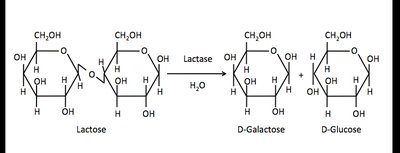
Lactose intolerance is a condition where individuals lack sufficient lactase, preventing the breakdown of lactose into its monosaccharide components, D-galactose and D-glucose.
Example: Pharmaceutical lactase supplements are used to aid lactose digestion in lactose-intolerant individuals.
Metabolism of Lactose by Lactase
Lactase catalyzes the hydrolysis of lactose into D-galactose and D-glucose, which can be utilized for energy in cells.
Lactose: A disaccharide composed of beta-D-galactose and beta-D-glucose.
Lactase: Enzyme that cleaves lactose into its monosaccharide subunits.
Reaction:
8.1 The Effect of Temperature on Enzymatic Activity
Temperature and Enzyme Function
Enzyme activity is highly sensitive to temperature. At low temperatures, molecular motion is reduced, slowing reaction rates. At high temperatures, enzymes may denature, losing their structure and function. Each enzyme has an optimal temperature where its activity is maximized.
Protein Denaturation: Loss of structure and function due to disruption of bonds at high temperatures.
Optimal Temperature: The temperature at which enzyme activity is highest.
Example: Human lactase is most active at body temperature (~37°C).
Experimental Design: Temperature
Microfuge tubes are incubated at various temperatures (0°C, 25°C, 40°C, 60°C, 80°C, 100°C).
Lactase and milk are mixed, and glucose production is measured after 10 minutes.
Key Variables:
Independent Variable: Temperature
Dependent Variable: Glucose concentration (mg/dL)
Table: Enzymatic Activity of Lactase at Varying Temperatures
Temperature (°C) | Glucose (mg/dL) |
|---|---|
0 | [data] |
25 | [data] |
40 | [data] |
60 | [data] |
80 | [data] |
100 | [data] |
Graph: Students are instructed to plot glucose production versus temperature to visualize the effect.

8.2 The Effect of pH on Enzymatic Activity
pH and Enzyme Function
Enzyme activity is also affected by pH. Extreme pH values can denature enzymes, while each enzyme has an optimal pH for maximum activity. The optimal pH for lactase reflects the environment where lactose metabolism occurs in the body.
Optimal pH: The pH at which enzyme activity is highest.
Denaturation: Loss of enzyme structure and function at non-optimal pH.
Example: Human lactase is most active at the pH of the small intestine (~pH 6-8).
Experimental Design: pH
Microfuge tubes are prepared with buffers of varying pH (2, 4, 6, 7, 8, 10, 12).
Lactase and milk are mixed, incubated, and glucose production is measured.
Key Variables:
Independent Variable: pH
Dependent Variable: Glucose concentration (mg/dL)
Table: Enzymatic Activity of Lactase at Varying pH
pH | Glucose (mg/dL) |
|---|---|
2 | [data] |
4 | [data] |
6 | [data] |
7 | [data] |
8 | [data] |
10 | [data] |
12 | [data] |
Graph: Students are instructed to plot glucose production versus pH to visualize the effect.

8.3 Enzymatic Specificity
Substrate Specificity of Enzymes
Enzymes are highly specific for their substrates due to the unique structure of their active sites. Lactase specifically binds and catalyzes the hydrolysis of lactose, but not other disaccharides such as maltose.
Specificity: The ability of an enzyme to bind only its specific substrate.
Active Site: Composed of amino acid side chains that interact with the substrate.
Example: Lactase binds lactose but not maltose due to differences in their chemical structure.
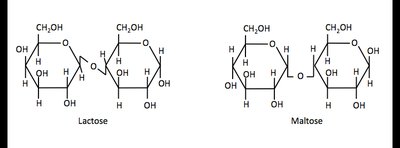
Table: Specificity of Lactase
Substrate | Glucose (mg/dL) |
|---|---|
Lactose | [data] |
Maltose | [data] |
8.4 Determining Cofactors of Enzymes
Cofactors and Enzyme Activity
Cofactors are non-protein molecules or ions required for enzyme activity. Metal ions such as Ca++ and Mg++ can act as cofactors. Chelating agents like EDTA bind and remove metal ions, allowing investigation of their role in enzyme function.
Cofactor: Non-protein molecule or ion required for enzyme activity.
Chelating Agent: Substance that binds metal ions, e.g., EDTA.
Example: If EDTA reduces lactase activity, metal ions may be required as cofactors.
Table: Effect of EDTA on Lactase Activity
Solution | Glucose (mg/dL) |
|---|---|
diH2O (Control) | [data] |
EDTA | [data] |
Statistical Analysis in Enzyme Experiments
Key Statistical Terms
Probability: Numerical indication of likelihood (0 to 1).
Null Hypothesis (A=B): No difference between two variables.
Alternate Hypothesis (A≠B): There is a difference between two variables.
t-Test: Statistical test to compare two sets of data.
p-value: Probability that observed differences are due to random chance. A p-value < 0.05 is considered statistically significant.
Example: If the p-value for glucose production from lactose vs. maltose is < 0.05, lactase is significantly more specific for lactose.
Summary Table: Key Concepts
Concept | Definition | Example/Application |
|---|---|---|
Enzyme | Protein catalyst | Lactase breaks down lactose |
Substrate | Reactant for enzyme | Lactose for lactase |
Optimal Temperature | Temperature of max activity | ~37°C for human lactase |
Optimal pH | pH of max activity | ~6-8 for human lactase |
Specificity | Enzyme binds only its substrate | Lactase binds lactose, not maltose |
Cofactor | Non-protein required for activity | Metal ions for some enzymes |
t-Test | Statistical comparison | Compare glucose from lactose vs. maltose |
p-value | Probability of random difference | <0.05 indicates significance |
Additional info: The notes above expand on brief points from the original material, providing academic context and definitions for clarity. Data tables are left with placeholders for student results. Graph images are included only as relevant templates for plotting experimental data.
