 Indietro
Enzymes: Properties, Activity, and Specificity – Lactase as a Model
Guida di studio - Note intelligenti
 Appunti personalizzati basati sui tuoi materiali, ampliati con definizioni chiave, esempi e contesto.
Unit 8: Enzymes
Introduction to Enzymes
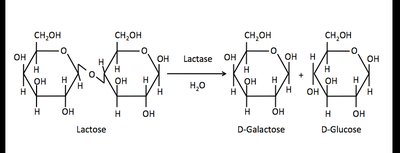
Enzymes are essential biological catalysts that accelerate chemical reactions in living organisms by lowering the activation energy required for reactions. This unit focuses on the enzyme lactase, which is crucial for the metabolism of lactose, a disaccharide found in milk. Lactose intolerance arises when individuals lack sufficient lactase, preventing proper digestion of lactose.
Enzyme: A protein that acts as a catalyst, speeding up reactions without being consumed.
Activation Energy: The minimum energy required for a reaction to occur.
Substrate: The reactant(s) that an enzyme acts upon.
Active Site: The region of the enzyme where substrate binding and catalysis occur.
Lactase specifically catalyzes the hydrolysis of lactose into its monosaccharide components, D-galactose and D-glucose, which can be used for cellular energy.
8.1 The Effect of Temperature on Enzymatic Activity
Temperature and Enzyme Function
Enzyme activity is highly sensitive to temperature. At low temperatures, molecular movement slows, reducing reaction rates. At high temperatures, the enzyme may denature, losing its structure and function. Each enzyme has an optimal temperature where its activity is maximized.
Protein Denaturation: Loss of structure and function due to disruption of bonds at high temperatures.
Optimal Temperature: The temperature at which enzyme activity is highest.
Experimental design involves incubating lactase with lactose at various temperatures and measuring glucose production as an indicator of enzymatic activity.
Experimental Variables
Substrate: Lactose
Enzyme: Lactase
Independent Variable: Temperature
Dependent Variable: Glucose production (mg/dL)
Products: D-galactose and D-glucose
Data Representation
Results are typically graphed to visualize the relationship between temperature and enzyme activity.

8.2 The Effect of pH on Enzymatic Activity
pH and Enzyme Function
Enzyme activity is also influenced by pH. Extreme pH values can denature enzymes, while each enzyme has an optimal pH for maximal activity. The experiment tests lactase activity across a range of pH values, measuring glucose production.
Optimal pH: The pH at which enzyme activity is highest.
Protein Denaturation: Loss of structure and function due to extreme pH.
Experimental Variables
Substrate: Lactose
Enzyme: Lactase
Independent Variable: pH
Dependent Variable: Glucose production (mg/dL)
Products: D-galactose and D-glucose
Data Representation
Results are graphed to show the effect of pH on lactase activity.

8.3 Enzymatic Specificity
Substrate Specificity of Enzymes
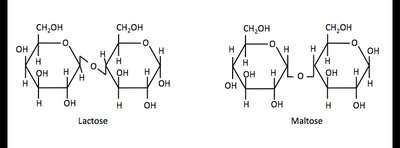
Enzymes are highly specific for their substrates due to the unique structure of their active sites. This experiment compares lactase's ability to hydrolyze lactose versus maltose, demonstrating specificity.
Specificity: The enzyme's preference for a particular substrate due to active site structure.
Active Site: Composed of specific amino acids that interact with the substrate.
The experiment tests glucose production when lactase is incubated with lactose or maltose.
Experimental Variables
Substrate: Lactose or Maltose
Enzyme: Lactase
Independent Variable: Substrate type
Dependent Variable: Glucose production (mg/dL)
Products: D-galactose and D-glucose (for lactose); glucose (for maltose)
8.4 Determining Cofactors of Enzymes
Cofactors and Enzyme Activity
Cofactors are non-protein molecules or ions required for enzyme activity. Metal ions such as Ca++ and Mg++ can act as cofactors. Chelating agents like EDTA bind and remove metal ions, allowing investigation of their role in enzyme function.
Cofactor: A non-protein molecule or ion required for enzyme activity.
Chelating Agent: A molecule that binds metal ions, e.g., EDTA.
Experimental Variables
Substrate: Lactose
Enzyme: Lactase
Independent Variable: Presence of EDTA
Dependent Variable: Glucose production (mg/dL)
Products: D-galactose and D-glucose
Statistical Analysis in Enzyme Experiments
Understanding Statistical Significance
Statistical analysis is essential for validating experimental results. Key concepts include:
Probability: Numerical indication of likelihood (0 to 1).
Null Hypothesis (A=B): Assumes no difference between two variables.
Alternate Hypothesis (A≠B): Assumes a difference exists between two variables.
t-Test: Statistical test comparing two data sets.
p-value: Probability that observed differences are due to random chance. A p-value < 0.05 is considered statistically significant.
Statistical tests help determine whether differences in enzyme activity (e.g., between substrates or conditions) are meaningful or due to random variation.
Summary Table: Experimental Variables and Outcomes
Experiment | Independent Variable | Dependent Variable | Substrate | Enzyme | Product |
|---|---|---|---|---|---|
Temperature Effect | Temperature | Glucose (mg/dL) | Lactose | Lactase | D-galactose, D-glucose |
pH Effect | pH | Glucose (mg/dL) | Lactose | Lactase | D-galactose, D-glucose |
Specificity | Substrate type | Glucose (mg/dL) | Lactose/Maltose | Lactase | D-galactose, D-glucose (lactose); glucose (maltose) |
Cofactor Requirement | EDTA presence | Glucose (mg/dL) | Lactose | Lactase | D-galactose, D-glucose |
Additional info: The study notes expand on brief points from the original material, providing academic context and definitions for key terms, and organizing the content for exam preparation.
