 Indietro
Epigenetic Regulation of Gene Expression in Eukaryotes
Guida di studio - Note intelligenti
 Appunti personalizzati basati sui tuoi materiali, ampliati con definizioni chiave, esempi e contesto.
Epigenetic Regulation and Gene Expression
Introduction to Epigenetics
Epigenetics refers to heritable changes in gene expression that do not involve alterations to the underlying DNA sequence. These changes are primarily mediated by chemical modifications to DNA and histone proteins, which affect how genes are turned on or off in different cells and tissues.
Epigenome: The complete set of chemical modifications to DNA and DNA-associated proteins in a cell, influencing gene expression and heritable through cell division.
Key epigenetic modifications: DNA methylation and histone modification.
Epigenetic changes can result from development, environmental exposures, or stochastic (random) biological processes.
Example: Identical twins, who share the same genome, can become biologically different as they age due to divergence in their epigenomes.
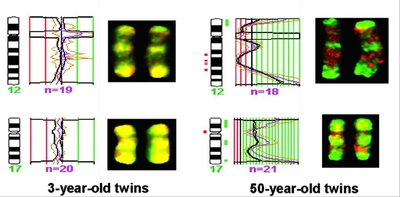
Levels of Control of Gene Expression in Eukaryotes
Overview of Gene Expression Regulation
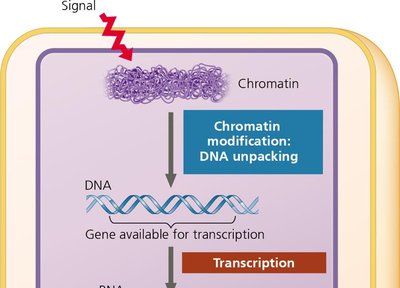
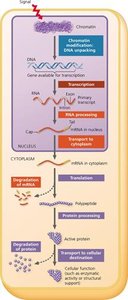
Gene expression in eukaryotes is regulated at multiple levels, from chromatin structure to protein transport. This multilayered control ensures precise spatial and temporal expression of genes.
1. Chromatin modification: DNA unpacking
2. Transcription
3. RNA processing
4. Transport to cytoplasm
5. Degradation of mRNA
6. Translation
7. Protein processing
8. Degradation of protein
9. Transport of protein to cellular destination
Chromatin Structure and Gene Accessibility
Chromatin Organization
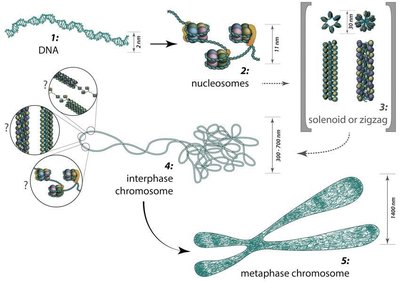
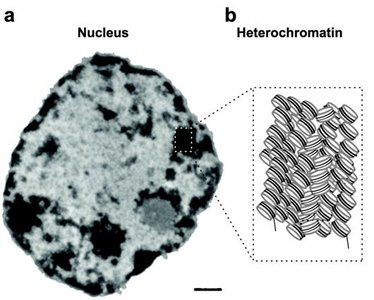
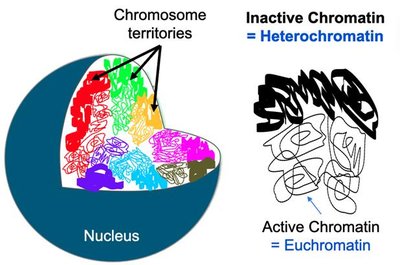
In eukaryotes, DNA is wrapped around histone proteins to form nucleosomes, which further fold into higher-order structures, collectively called chromatin. Chromatin can exist in two main forms:
Euchromatin: Loosely packed, transcriptionally active.
Heterochromatin: Densely packed, transcriptionally inactive.
Genes in open (euchromatic) regions are accessible to transcription machinery, while those in closed (heterochromatic) regions are generally silenced.
DNA Methylation
Mechanism and Function
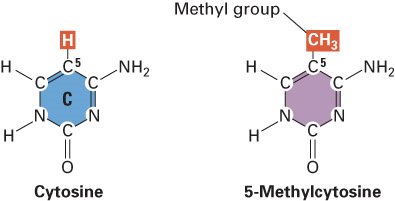
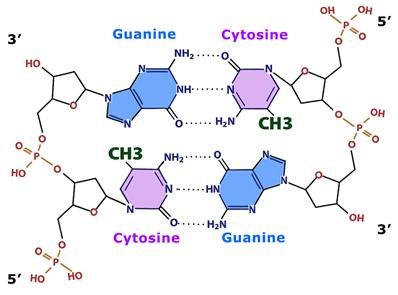
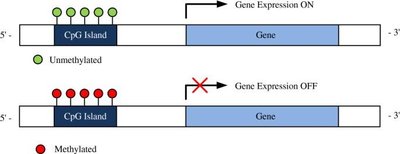
DNA methylation involves the addition of a methyl group to the 5' position of cytosine residues, typically in the context of CpG dinucleotides. This modification is associated with gene silencing.
CpG islands: Clusters of CpG sites often found near gene promoters; methylation here can block transcription factor binding and repress gene expression.
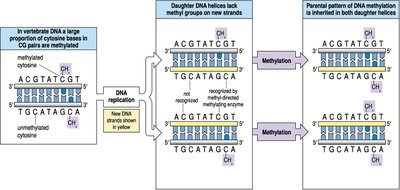
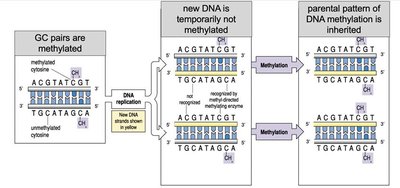
Methylation patterns are heritable during cell division but can be altered by environmental factors or disease.
Biological Implications of DNA Methylation
Different tissues have unique methylation patterns, leading to tissue-specific gene expression.
Highly methylated promoters generally result in gene silencing, even if transcription factors are present.
Methylation patterns are important in development, differentiation, and disease (e.g., cancer).
Epigenetics and Cancer
Altered Methylation in Cancer
Cancer cells often exhibit abnormal DNA methylation patterns, including both hypermethylation (silencing tumor suppressor genes) and hypomethylation (activating oncogenes).
Tumor suppressor genes (e.g., p53) are often silenced by increased methylation in cancer cells.
Proto-oncogenes may become inappropriately active due to hypomethylation, leading to uncontrolled cell division.
Histone Modification
Types and Effects
Histone proteins can be chemically modified (e.g., acetylation, methylation) on their tails, affecting chromatin structure and gene accessibility.
Histone acetylation: Addition of acetyl groups to lysine residues neutralizes positive charges, loosening DNA-histone interaction and promoting gene expression.
Histone deacetylation: Removal of acetyl groups restores positive charge, tightening DNA-histone interaction and repressing gene expression.
These modifications are reversible and play a key role in regulating gene activity in response to developmental cues and environmental signals.
Epigenetics in Development and Environmental Response
Case Study: Honeybee Caste Determination
In honeybees, feeding larvae royal jelly (rich in histone deacetylation inhibitors) leads to the development of queen bees, which have a different gene expression profile compared to worker bees. This demonstrates how environmental factors can influence epigenetic marks and developmental outcomes.
Summary Table: Epigenetic Modifications and Their Effects
Modification | Enzyme | Effect on Chromatin | Effect on Gene Expression |
|---|---|---|---|
DNA Methylation | DNA methyltransferase | Condenses chromatin | Represses transcription |
Histone Acetylation | Histone acetyltransferase (HAT) | Relaxes chromatin | Activates transcription |
Histone Deacetylation | Histone deacetylase (HDAC) | Condenses chromatin | Represses transcription |
Key Equations and Concepts
DNA methylation reaction:
Histone acetylation reaction:
Additional info: Epigenetic marks are dynamic and can be influenced by diet, stress, toxins, and other environmental factors, contributing to phenotypic diversity even among genetically identical individuals.
